President Ahmad al-Sharaa has issued a series of senior security appointments that reshape the leadership of Syria’s intelligence and internal security apparatus, according to the state news agency SANA. The decrees mark one of the most significant administrative overhauls since the start of the transitional period.
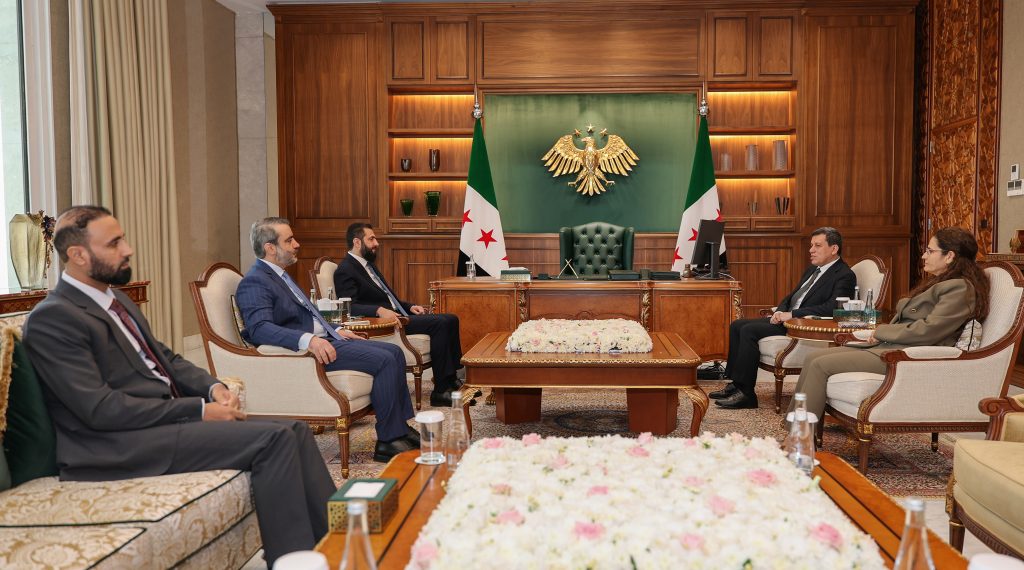
Under the new directives, Interior Minister Engineer Anas Khattab has been named Director of the National Security Office while retaining his ministerial portfolio. Hussein al-Salama has been appointed Assistant Director of the National Security Office, and Mulham al-Shantout will serve as Assistant Minister of Interior for Security Affairs. President al-Sharaa also designated Abdel Qader Tahan as head of the General Intelligence Service.
The changes come as the Ministry of Interior and other security branches intensify operations against ISIS cells and remnants of the deposed regime, while confronting escalating border challenges, including arms smuggling intended for Iran-aligned militias. These pressures have underscored the need for a more integrated and responsive security structure.
Clarifying the Architecture of Syria’s Security Organs
Mahmoud Alloush, an international relations researcher, explained that Syria’s security institutions operate with distinct mandates. The General Intelligence Service functions primarily as an executive body, collecting field intelligence and briefing political and security decision-makers. The National Security Office, by contrast, acts as a coordinating authority, ensuring coherence among the various intelligence branches and preventing jurisdictional overlap. Above both sits the National Security Council, which formulates long-term national security strategy under the direct supervision of intelligence chiefs and senior officials.
Alloush described the new appointments as a critical step toward completing the institutional framework of the state. He noted that Minister Khattab’s dual role reflects President al-Sharaa’s deep confidence in him, citing Khattab’s performance during a difficult transitional period in which the Ministry of Interior assumed expanded responsibilities. Alloush added that the decrees align with broader efforts to consolidate state institutions, pointing to the recent convening of the People’s Assembly and the establishment of the Constitutional Court as markers of a new political phase.
Toward Integrated Intelligence and Field Operations
Nawar Shaban, a researcher at the Omran Center for Strategic Studies, said the appointments represent a strategic reorganization rather than a routine reshuffling. The central objective, he argued, is to close the gap between intelligence collection and field execution. Recent incidents in Damascus demonstrated that countering small, mobile cells requires continuous coordination between intelligence agencies, internal security forces and counter-terrorism units, while preserving each entity’s specialization.
Shaban pointed to the recent arrest of a bombing cell in Damascus as an example of this emerging model. Simultaneous raids were conducted across multiple districts through direct cooperation between the Ministry of Interior and the General Intelligence Service, illustrating the benefits of synchronized operations.
He added that Hussein al-Salama’s move to the National Security Office ensures institutional continuity, carrying over the experience he accumulated as head of General Intelligence. Assigning the National Security Office to Minister Khattab also carries political and practical significance. Politically, it signals that security remains the administration’s foremost priority, which is essential for economic recovery and social stability. Practically, it ensures that the official responsible for national security also commands the country’s largest domestic field apparatus—the police and internal security forces—at a time when the Ministry of Defense is gradually withdrawing military personnel from urban centers.
Domestic and Border Security Tests Ahead
The new leadership faces immediate challenges in stabilizing the domestic front and securing Syria’s extensive borders. Data from the first five months of 2026 show a tactical shift by ISIS, whose actions—despite the group’s record of severe harm and human rights violations—have evolved into persistent assassinations, low-cost ambushes and an escalation in attacks following a February declaration of a “new phase” by its spokesperson Abu Hudhaifa al-Ansari. These attacks have targeted military and internal security personnel, particularly in Deir ez-Zor and Raqqa, with signs of expansion toward Aleppo, Hasakah and the Damascus countryside.
Earlier this month, the Ministry of Interior dismantled the cell responsible for the twin bombings in Damascus during French President Emmanuel Macron’s visit, confirming its links to ISIS.
Beyond terrorism, the security apparatus must confront remnants of the deposed regime, which rely on sleeper networks, hidden arms caches and local connections to incite unrest. Addressing this threat requires intelligence-driven operations capable of dismantling organized networks without harming civilians or destabilizing local communities.
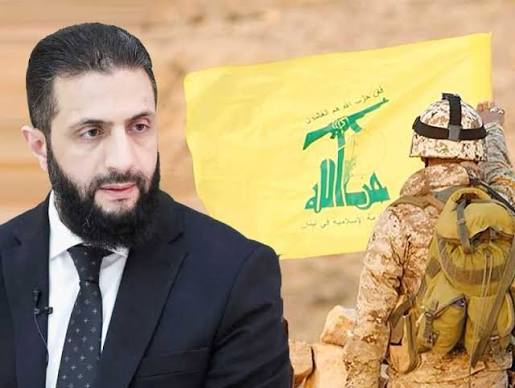
On the geopolitical front, Syria’s borders with Lebanon and Iraq present severe monitoring challenges due to irregular crossings and rugged terrain. These vulnerabilities have facilitated the smuggling of weapons and personnel, including attempts to transfer advanced weaponry to Lebanese Hezbollah. Recently, the Ministry of Interior intercepted a major shipment of sophisticated weapons and missiles entering from Iraq and destined for the group.
A Unified Command for a New Phase
The success of the security overhaul depends on establishing a unified command capable of synchronizing operations between internal security forces, the military and border guards. The overarching objective is to enforce the rule of law, consolidate arms under state authority, protect civilians and maintain strict institutional accountability.
As Syria navigates a fragile transitional period, the new appointments represent an attempt to build a security structure capable of responding to evolving threats while laying the groundwork for political and economic stabilization.
This article was translated and edited by The Syrian Observer. The Syrian Observer has not verified the content of this story. Responsibility for the information and views set out in this article lies entirely with the author.