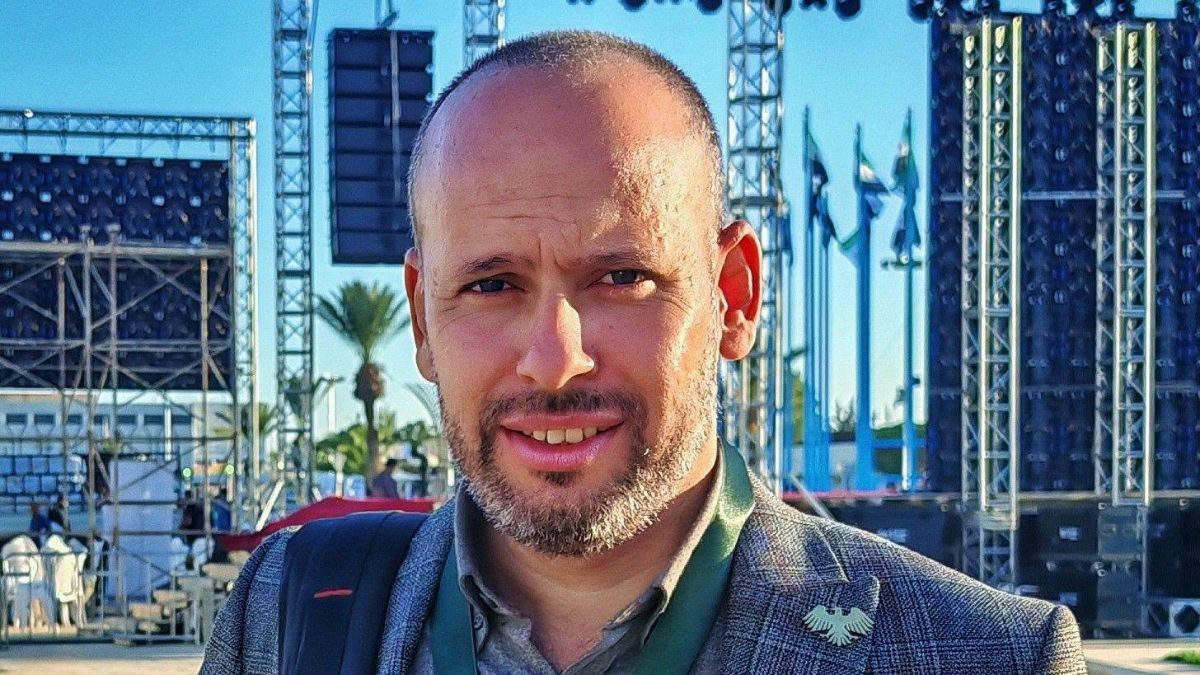
Syrian authorities arrested prominent activist Raed Hamdan on Wednesday evening, June 24, following a cybercrime and defamation complaint filed against him. The arrest, prompted by Hamdan’s frequent online criticism of local officials in the Al-Qutayfah district of Rif Dimashq, has triggered widespread backlash from journalists, civil society actors, and human rights advocates.
According to information obtained by Enab Baladi, the complaint was submitted by Bilal Sakhr, the administrative head of Al-Qutayfah, after a series of escalating disputes between the two men.
Official Stance: Claims of Incitement and Defamation
Adnan al-Hijazi, Director of the Al-Qutayfah Media Office, said the legal action was initiated because of Hamdan’s “repeated false accusations and defamatory statements” targeting local officials, community figures, and the broader provincial administration. He argued that Hamdan’s posts lacked factual basis and interfered in matters beyond his civic role.
Al-Hijazi added that Hamdan’s recent online activity amounted to “incitement,” prompting authorities to seek judicial intervention. He noted that officials had previously met with Hamdan to clarify municipal procedures, but claimed the activist returned to what he described as an “aggressive” and unverified tone.
“The judicial proceedings will run their course, and he will be promptly released if the allegations are proven groundless,” al-Hijazi said.
Hamdan has faced legal trouble before, including a prior detention over a personal dispute that ended after he signed a pledge and deleted the contested posts.
Backlash: Concerns Over Weaponizing Cybercrime Laws
Activist Hazem Suleiman said Hamdan was detained outside a local mosque specifically because of a Facebook post. Suleiman condemned the arrest, arguing that Hamdan’s criticism aimed to “rebuild transparency and guard against remnants of corruption.”
Syrian journalist and researcher Ahmad Abazeid also criticized the move, warning that cybercrime laws are increasingly being used to suppress free expression. “The Syrian revolution was fought for the sake of liberty,” he wrote. “Any measure targeting free speech is a regression from those goals—regardless of whether we like, know, or agree with the individual in question.”
Hamdan’s Final Post
In his last Facebook post before his arrest, Hamdan voiced frustration with what he called the “indifference and administrative incompetence” of local officials. He described attempts to coordinate public initiatives with the Al-Qutayfah administration, claiming they were obstructed by “a distasteful barrier of regionalism and factionalism.” He blamed the district supervisor’s “insular mindset and structural weakness” for deepening mistrust between local authorities and civil society.
Legal Context: How Cybercrime Detention Works in Syria
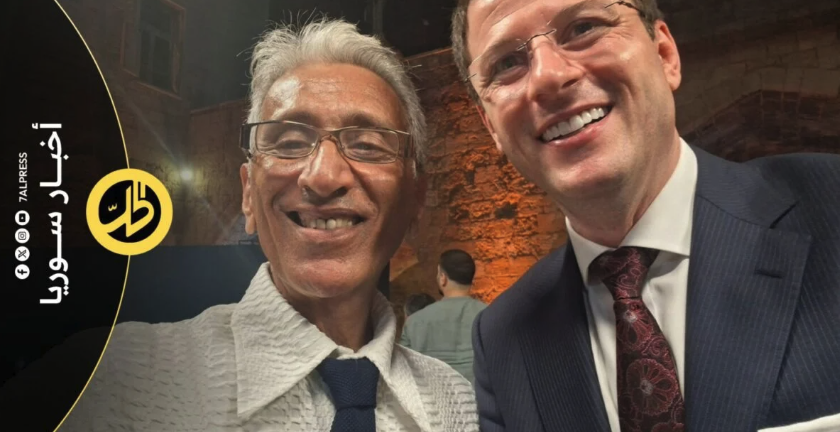
Hamdan’s arrest comes just days after the detention of activist and filmmaker Hassan Akkad on similar charges, intensifying public concern over the application of Syria’s cybercrime legislation.
Under Syrian law, detention periods operate within strict statutory limits. For standard misdemeanors, including most cybercrime-related offenses, suspects may be held for up to 24 hours during the initial investigation, a period that can be extended to seven days by the Public Prosecutor if evidence warrants it. Once the case moves to judicial pre-trial review, investigative judges may renew detention orders in increments of up to seven days, with a hard ceiling of 60 days.
For aggravated or state-security-related felonies, authorities may hold suspects for up to 60 days under exceptional public-security provisions. Judicial pre-trial detention in such cases may be extended in 15-day increments, up to a maximum of six months pending formal indictment.
Legal experts emphasize that once a case is formally referred to the Criminal Court, there is no statutory limit on the duration of the trial itself. Defendants remain in custody unless the court grants provisional release. Any detention exceeding the legally defined windows is considered arbitrary and may constitute enforced disappearance under international law.
This article was translated and edited by The Syrian Observer. The Syrian Observer has not verified the content of this story. Responsibility for the information and views set out in this article lies entirely with the author.