Syria’s new authorities have intensified legal and security action against figures linked to the former regime, reopening high-profile trials in Damascus and announcing the arrest of a former chemical weapons officer accused of overseeing the production of sarin-filled munitions.
Wassim al-Assad Back Before the Court
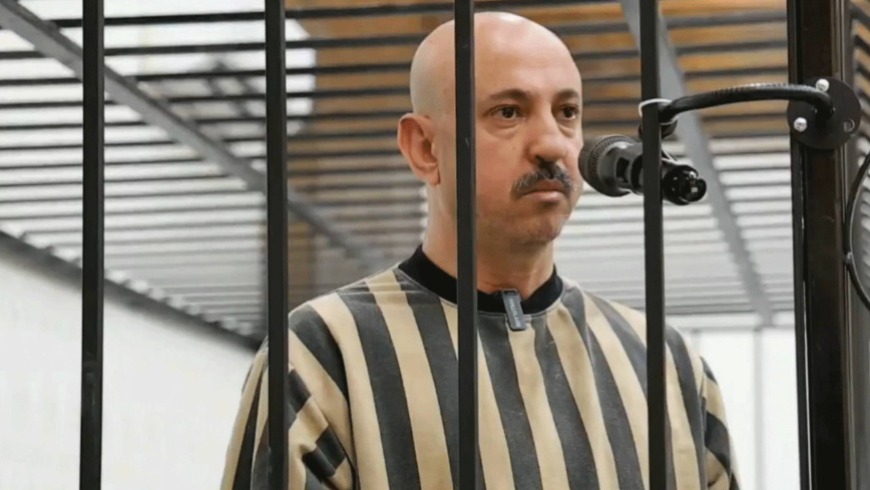
The Fourth Criminal Court in Damascus convened a second public hearing on Wednesday in the case of Wassim al-Assad, a relative of former president Bashar al-Assad. Judge Fakhr al-Din al-Aryan presided over the session, attended by representatives of Syrian and international human rights organisations.
Prosecutors presented witness testimony alongside documents, photographs and video material submitted as evidence. Wassim al-Assad faces multiple charges, including forming armed groups affiliated with the Fourth Division and involvement in drug trafficking. Civilians from Eastern Ghouta have also filed private lawsuits accusing him of abductions, torture and other abuses.
His first hearing took place in June at the Damascus Palace of Justice, broadcast live by the Ministry of Justice, which showed the defendant in the dock as the charges were read.
The Interior Ministry announced his arrest on 21 June 2025, describing it as the result of a “carefully planned” operation by the General Intelligence Service. Ministry spokesman Noureddine al-Baba said investigators had gathered documents and evidence linking Wassim al-Assad to drug trafficking, enforced disappearances and violations against detainees. He added that the defendant had participated in military operations with pro-regime forces, some of which were documented through his own social media posts.
Fifth Hearing for Atef Najib
In a parallel case, the same court held a fifth hearing on Tuesday for Atef Najib, another cousin of Bashar al-Assad and former head of the Political Security branch in Daraa. The closed session focused entirely on witness testimony and was attended by international observers and human rights groups.
Najib is being prosecuted for crimes committed against Syrians during his tenure in various Political Security branches in Damascus, Tartous and, most notably, Daraa. His name became synonymous with the arrest and alleged torture of schoolchildren who wrote anti-government graffiti in early 2011—an incident widely seen as a catalyst for the uprising that began in the city that March.
Human rights accounts from the period accuse Najib of corruption, intimidation and abuses of power, including threatening local dignitaries who demanded the children’s release.
Former Chemical Weapons Officer Detained
The trials coincided with an Interior Ministry announcement that security forces had arrested former Colonel Ahmad Habib Ali in Latakia province. The ministry said Ali, from Harf al-Musaytirah in the Qardaha countryside, had specialised in chemical weapons and previously held a senior post at the Scientific Studies and Research Centre.
According to the ministry, Ali oversaw sarin storage sites and chemical production within Unit 417. Preliminary investigations suggest he supervised the manufacture of roughly 20 sarin-filled bombs, each weighing around 250 kilograms. The ministry alleged the munitions were used in attacks on Syrian towns and cities in 2013 and 2017, though it did not specify which incidents.
Authorities say the investigation is ongoing and that Ali will be referred to the competent judicial bodies once the case file is complete.
A Wider Accountability Drive
These proceedings form part of a broader campaign by Syria’s new leadership to pursue former officials, officers and security personnel accused of crimes during the conflict. The Interior Ministry says recent arrests stem from intelligence-led operations targeting suspects hiding in both urban centres and rural areas. Allegations range from murder and participation in massacres to smuggling and financing armed groups.
Human rights organisations and victims’ associations have urged the authorities to ensure fair, transparent trials and to establish specialised judicial mechanisms capable of handling serious crimes and complex case files. They argue that the credibility of the accountability process will depend not on the number of arrests but on the presentation of documented evidence, the establishment of individual responsibility and the avoidance of politically motivated prosecutions.
Rights advocates warn that delays in creating a comprehensive transitional justice framework risk deepening social fractures and undermining prospects for long-term stability and civil peace.
This article was translated and edited by The Syrian Observer. The Syrian Observer has not verified the content of this story. Responsibility for the information and views set out in this article lies entirely with the author.