In the aftermath of the sweeping geopolitical realignment that followed the fall of Bashar al-Assad, Syria’s new leadership under President Ahmad al-Sharaa is pursuing a measured, highly pragmatic recalibration of its relationship with Moscow. According to a detailed assessment by the International Crisis Group (ICG), Damascus is deliberately reducing Russian influence where viable alternatives exist, while preserving cooperation in areas where no immediate substitutes are available.
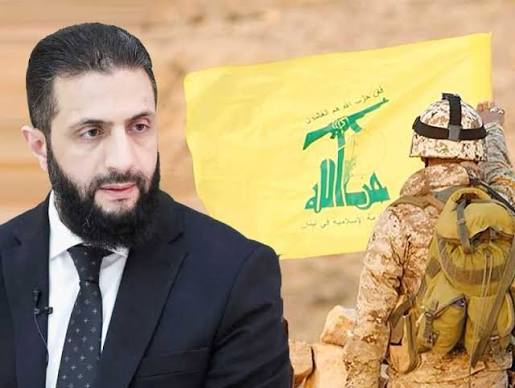
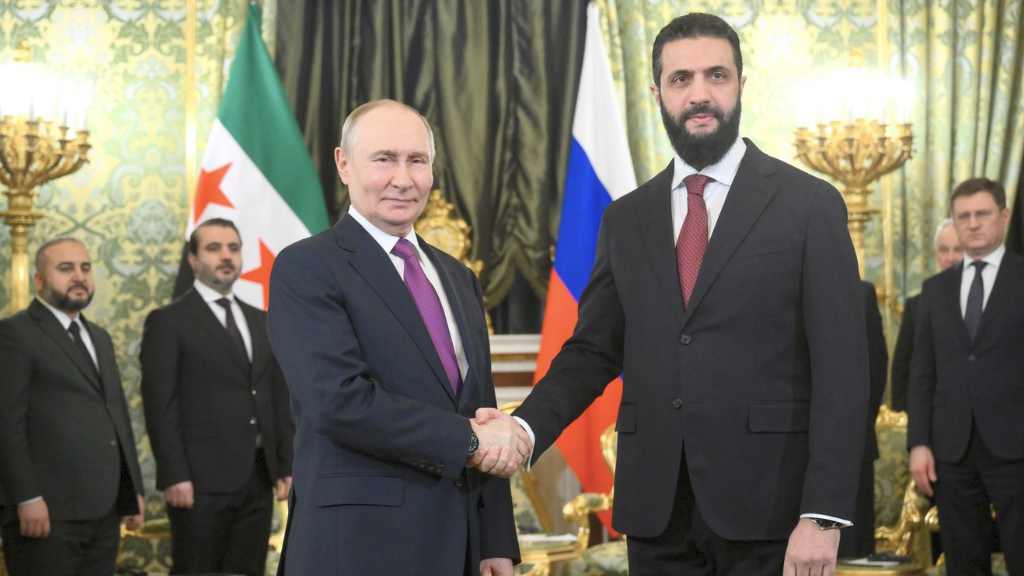
The new government has already severed ties with the former regime’s other principal backers—Iran and Hezbollah, both responsible for severe harm and human rights violations—and has rapidly normalized relations with Western governments, Turkey, and the Gulf states. Yet it has avoided provoking an unnecessary confrontation with the Kremlin. Sharaa has met Russian President Vladimir Putin twice, signaling a relationship that is significantly diminished but still functional.
Managing a Complex Military Legacy
The ICG reports that Russia’s military presence in Syria has contracted dramatically. From tens of thousands of troops at the height of the civil war, Moscow’s forces have fallen to somewhere between the low hundreds and roughly 1,000. Russia has also relinquished key positions, including withdrawing from the Qamishli airport in northeastern Syria after a confrontation between Syrian government forces and the Kurdish-led Syrian Democratic Forces.
Despite this drawdown, Damascus cannot fully sever military ties in the near term. Russia supplied about 70 percent of Syria’s major conventional weapons in the decade before the civil war, leaving the country dependent on Russian-linked spare parts, technical servicing, and training to keep surviving tanks, artillery, and air defenses operational.
Shifting to new defense suppliers would require billions of dollars and years of retraining—costs Syria cannot currently bear. Although Damascus has explored cooperation with Ukrainian President Volodymyr Zelenskyy on counter-drone expertise, the maintenance of heavy armor remains tied to Russian systems.
Russia also retains strategic leverage through its Mediterranean access points at the Tartous naval facility and the Hmeimeem air base. Sharaa has expressed interest in eventually converting these installations into training centers for the Syrian army, but they remain under Russian control for now. The ICG notes that Moscow also holds latent influence through its hosting of exiled former regime figures, including Bashar al-Assad, and its deep knowledge of the old security apparatus—though Russia has shown little inclination to undermine the new government.
Economic Interdependence and Port Diversification
Economically, Damascus has exercised greater freedom to diversify, particularly after Western sanctions were lifted. One of the most significant shifts occurred at the Tartous commercial port, where the government canceled a 49-year management concession held by Stroytransgaz, a Russian firm led by a close Putin ally. Syria then pivoted to the United Arab Emirates, signing a $800 million, 30-year redevelopment agreement with DP World.
Still, Russia retains substantial economic leverage. Since the collapse of the Assad regime and the end of Iranian oil shipments, Syria has relied heavily on Russian crude. Moscow delivered an average of 46,000 barrels per day in 2025, rising to 60,000 barrels per day in early 2026—meeting nearly half of Syria’s total demand.
Beyond energy, Syria’s civil power grid and its three major Euphrates River dams were built on Russian and Soviet engineering specifications, making Russian expertise indispensable for rehabilitation. Russia remains Syria’s primary wheat supplier and holds a 50-year concession over the Palmyra phosphate mines, one of the country’s few reliable sources of foreign currency.
Damascus has taken steps to reduce economic dependence by diversifying its currency printing. While Russia’s state company Goznak played a central role in producing the new Syrian banknotes launched in January, the central bank governor confirmed that printing has since been divided among three global suppliers to avoid reliance on a single patron.
A New Era of Diplomatic Consensus
Diplomatically, the ICG highlights a dramatic shift from the paralysis that defined the Assad era. Syria has largely decoupled its domestic political recovery from the geopolitical friction between Washington and Moscow.
In a rare display of major-power cooperation, the United States, Russia, and China jointly brokered agreements to unanimously lift UN Security Council terrorism sanctions against Hei’at Tahrir al-Sham, President Sharaa, and Interior Minister Anas Khattab. Washington and Moscow also continue to collaborate on drafting Security Council mandates for the UN peacekeeping force in the Golan Heights.
The ICG concludes that Syria’s strategy of selective re-engagement with Moscow is working. By reducing Russian influence where alternatives exist—and preserving it where no immediate replacements are available—the Sharaa government is insulating itself from external dependency while maintaining strong support from Western and regional partners for its post-war recovery.