When investors consider entering a new market, their first point of reference is often perception. A positive image can encourage them to explore opportunities, while a negative one may discourage interest before a single feasibility study is reviewed. Yet investment decisions ultimately depend on more than impressions. Investors need clear answers about how a market functions, how rights are protected, and whether a promising opportunity can be transformed into a stable and profitable enterprise.
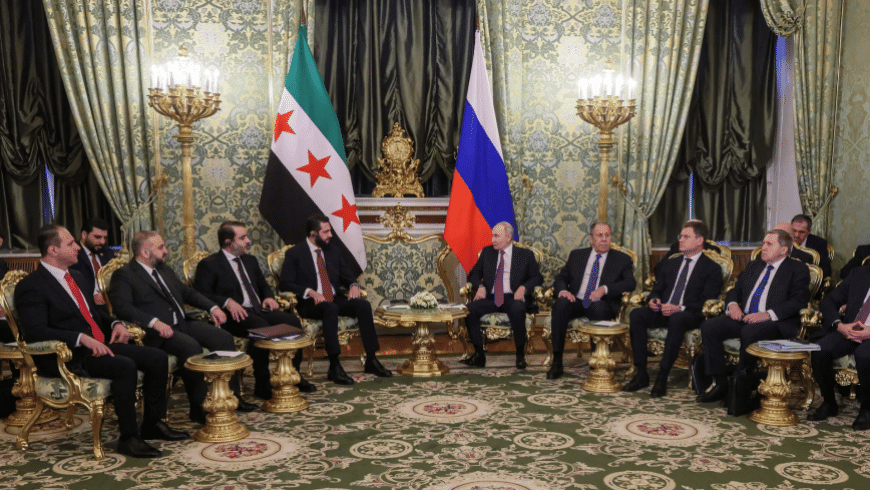
In the case of Syria and Russia, those questions are particularly sensitive. The relationship between the two countries carries the weight of a long political and military history, and many Syrians continue to view Russia through the lens of its support for the former regime. Any effort to build a new economic partnership must therefore begin by acknowledging those concerns and ensuring that cooperation is rooted in respect for Syrian sovereignty, national interests and clearly defined mutual obligations.
Russian companies and technical expertise should be free to compete for projects in strategically important sectors under transparent conditions that enable Syria to select the strongest proposals in terms of quality, cost-effectiveness and technology transfer. This raises a fundamental question: under what conditions can economic cooperation between Syria and Russia deliver lasting benefits for Syrians while remaining sustainable over the long term?
Russia brings significant advantages to any prospective partnership. It possesses a large domestic market, substantial industrial capacity and abundant natural resources. Syria, for its part, offers a strategic geographic location, a skilled workforce and considerable potential in agriculture, industry and trade. These complementary attributes could create meaningful opportunities for cooperation, provided they are linked to genuine economic needs and supported by carefully designed projects. Potential may attract interest, but long-term success depends on competitiveness, market realities and implementation capacity.
According to World Bank data for 2024, Russia’s population exceeds 143 million people, making it a market that warrants serious attention from Syrian exporters. Market size alone, however, does not guarantee commercial success. Entering the Russian market requires a detailed understanding of consumer demand, compliance with technical standards, high-quality packaging, reliable supply chains and products that can compete effectively on price and quality.
From a Syrian perspective, the value of any economic partnership must be measured by its contribution to the domestic economy. Does it create employment opportunities? Does it open new markets for Syrian products? Does it facilitate the transfer of technical expertise and help modernise industrial production? Equally important is the extent to which small and medium-sized enterprises can benefit. These are the criteria that give economic cooperation substance beyond headline investment figures, signed agreements and political declarations.
The scale of Syria’s reconstruction challenge underscores the importance of such considerations. In a report published in October 2025 covering damage sustained between 2011 and 2024, the World Bank estimated that rebuilding damaged physical assets would require approximately $216 billion, including around $82 billion for infrastructure alone. These estimates relate only to physical destruction and do not capture the broader economic losses or the full costs of recovery.
Such figures highlight the need for carefully sequenced priorities. Restoring electricity networks enables factories and workshops to resume production. Improving transport infrastructure helps connect farmers to markets. Expanding storage and packaging facilities can reduce waste and strengthen export competitiveness. In each of these sectors, Russian firms and technical specialists could participate in open tenders that allow Syria to select proposals based on quality, cost and the extent of technology transfer.
Trade cooperation could begin with direct contacts between Syrian producers and Russian importers to assess demand for products such as olive oil and processed food goods. Discussions would need to focus on market specifications, required quantities and pricing structures. Shipping, insurance and payment arrangements could then be established, allowing both sides to test the market through limited pilot shipments before expanding operations. Such an approach requires careful planning, while chambers of commerce and business councils can play an important role in connecting businesses and verifying potential partners.
A distinction must nevertheless be made between signing agreements and implementing them. The success of any commercial arrangement depends on both parties fulfilling their commitments, the availability of reliable payment and transport channels, and a clear understanding of the legal frameworks governing trade. Feasibility studies should address these matters from the outset and identify potential challenges transparently rather than leaving businesses to confront them unexpectedly at a later stage.
The protection of rights remains a central responsibility of state institutions. Investors need clarity on how businesses are established, how contractual claims are enforced and how disputes are adjudicated fairly. At the same time, the public has a legitimate interest in understanding how national resources are utilised and what returns are expected from major investments. Achieving that balance requires transparent procedures, clear contractual obligations and the avoidance of preferential arrangements that distort competition or place disproportionate burdens on the state.
A dedicated government body with a clearly defined mandate could help coordinate procedures and remove administrative obstacles, while professional associations could assist businesses in navigating market requirements and identifying opportunities. Direct engagement is most effective when visits and discussions produce practical implementation plans, clearly assigned responsibilities and enforceable timelines.
The Syrian community in Russia may also have an important role to play. Familiar with the commercial cultures of both countries, Syrian expatriates can help bridge information gaps, communicate opportunities and challenges accurately, and facilitate connections between entrepreneurs. Their contribution is ultimately measured not by intentions but by tangible outcomes, whether in the form of successful agreements, resolved disputes or products entering new markets.
As Syria seeks to rebuild and reintegrate into the global economy, diversifying international partnerships will remain essential to strengthening economic resilience and preserving independent decision-making. Cooperation with Russia can form part of that broader strategy, but only to the extent that it generates tangible results, advances mutual interests and contributes meaningfully to Syria’s long-term recovery.
This article was translated and edited by The Syrian Observer. The Syrian Observer has not verified the content of this story. Responsibility for the information and views set out in this article lies entirely with the author.