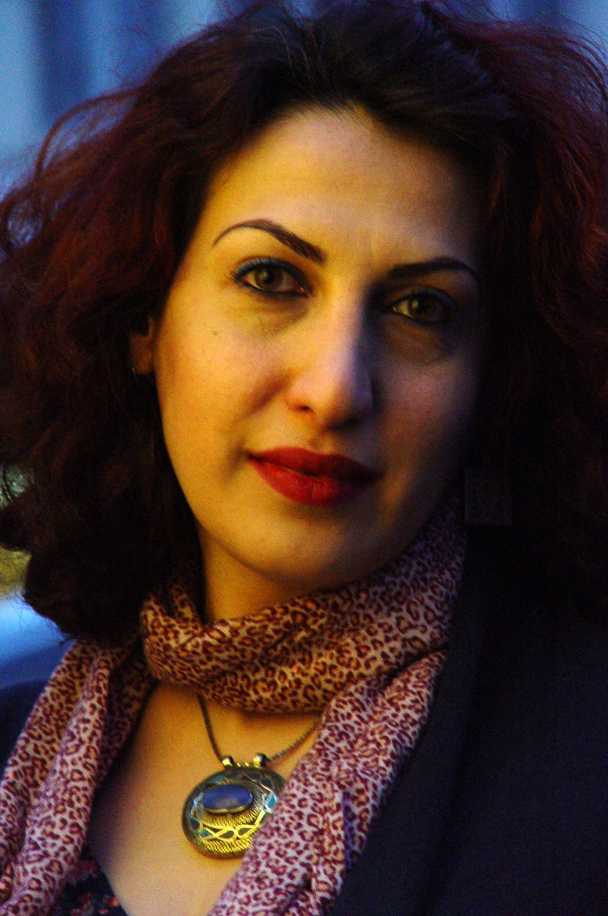
The Syrian researcher and poet Khouloud al-Zghair believes that the violence in Suweida has exposed a crisis far deeper than political rivalry or regime change. In her view, the events in the southern province have laid bare the failure to build a political order capable of accommodating Syria’s religious, ethnic and regional diversity. What has ruptured, she argues, is not merely the authority of a state, but the very meaning of belonging.
Identity after Suweida
For Zghair, the recent assault on Suweida has redrawn the emotional map of Syria. National identity, once imagined as a bond with territory, now begins with the individual: with values, convictions and moral commitments. Only afterwards does it extend toward community and geography.
This shift intensified, she says, after what she describes as an “exterminationist assault” on her province. She identifies herself with modernity, democracy, justice, freedom and equal citizenship. Any identity defined by exclusionary religious ideology cannot command her loyalty.
“One cannot share a homeland with a group that does not recognise you as a human being and a citizen with the same rights and duties,” she says, “but instead regards you as inferior, as an unbeliever whose killing is permissible.”
Her language reflects a profound estrangement felt by many Syrians who once believed that the fall of Bashar al-Assad would open the door to democratic transformation, only to witness the rise of a new authoritarian order.
Damascus was once the city closest to her heart. Every Syrian region felt like part of her home. That emotional geography has contracted. “How can we belong to a place that does not give us safety and dignity?” she asks. “How can we love what we fear?”
What remains of Syria for her is not a territory, but a community of conscience: Syrians who have preserved their principles despite intimidation, social pressure and political opportunism.
Exile beyond borders
Although exile has shaped her intellectual and literary life, Zghair rejects the notion that a writer’s identity can be confined within national boundaries. Her academic work continues to focus on Syria’s political history, elites and institutions. Poetry, however, offers a different horizon.
“In poetry, I do not have a research sample,” she says. “I am freer. I do not need a framework for an idea or a feeling. The poem is larger than nations, and poetry is the identity of the poet.”
She is equally sceptical of the category of “women’s writing,” which she believes risks reducing women to predetermined subjects. A woman, she insists, is a human being before she is a woman, with the same intellectual and emotional range as a man. War, pain and exile may shape her writing, but they do not define its limits.
“What intellectual subject concerns men but not women?” she asks. “And is pain a women’s issue?”
The intellectuals who switched sides
Zghair reserves some of her sharpest criticism for Syrian writers, artists and activists who once presented themselves as opponents of authoritarianism but have since aligned themselves with the country’s new rulers. She calls them “the remnants of the intellectuals,” accusing them of abandoning the duty to challenge power and defend victims.
For years, she says, this milieu combined liberal, left-wing, conservative and even far-right tendencies, while presenting itself as the cultural vanguard of the revolution. Its members spoke the language of freedom and justice. Yet once the identity of the ruling elite changed, many changed with it.
Former advocates of accountability began participating in state institutions and cultural events sponsored by officials who had previously belonged to jihadist factions. Some accepted honours from the new authorities. Others helped polish the government’s image before foreign investors and Western governments.
She accuses this group of minimising identity-based killings, corruption and abuses against women, and of offering polite appeals rather than confronting the nature of the emerging political order.
“Their revolution ended with the installation of al-Jolani and his sheikhs,” she says. “What triumphed was their group, not the values they had worn.”
In her view, Syria’s new system rests on two pillars: armed factions and extremist religious groups on one side, and intellectuals and social-media personalities on the other. The latter, she argues, have been reduced to decorative instruments used to obscure the violence of the former.
A national identity that never consolidated
Zghair’s academic work traces Syrian political identity from the late nineteenth century to the present. Her conclusion is stark: a stable and inclusive national identity never fully emerged.
Attempts by political and cultural elites to formulate a shared identity remained trapped within Arab nationalist or Islamic frameworks. Neither could represent all Syrians without coercion. Although Arabs and Muslims form the demographic majority, she argues, Arabism and Islam cannot serve as compulsory political identities in a country of multiple ethnicities, religions and historical traditions.
“Any identity imposed by the ruling authorities, whether Arab nationalist or Islamic, will not produce internal stability,” she says. “Nor will it express all Syrians or generate a genuine desire to live together.”
After independence in 1946, Syria’s political movements pursued wider ideological projects—Arab unity, Syrian nationalism, Islamism, socialism—while the institutions of citizenship remained underdeveloped. Under Hafez and Bashar al-Assad, Arab nationalist rhetoric dominated, but the state managed communal loyalties rather than building civic institutions.
The result was a security state, not a nation.
After 2011, fragmentation, foreign intervention and the multiplication of armed groups made the formation of a common identity still more difficult. The fall of Assad did not resolve the problem; it exposed divisions long suppressed.
A crisis of political foundation
For Zghair, Syria’s predicament is not merely a crisis of regime or identity. It is a crisis of political foundation.
Modern Syria was assembled a century ago through international arrangements over which its inhabitants had limited control. No genuine national agreement was reached on the fundamental questions of political community: who the Syrian people are, what constitutes legitimacy, how diversity should be governed.
Competing identities—Arab, Islamic, Kurdish, Assyrian, Armenian, sectarian, tribal and regional—remained active beneath the surface. Periods of stability contained them by force rather than resolving them.
A modern state requires a legitimate monopoly on force, neutral institutions and equal citizenship. Syria never secured these conditions. After 2011, even the state’s monopoly on violence disintegrated.
“The Syrian crisis is not simply a crisis of a regime or even of a state,” she says. “It is a crisis of political foundation.”
Centralisation and the fear of difference
Zghair challenges the assumption that centralisation is necessary for unity. Defenders of central rule, she argues, reproduce the conditions that have driven Syria toward repeated conflict. They invoke unity while ignoring the coercion required to sustain it.
Decentralisation, she says, is not a prelude to disintegration. It can be a response to states that have failed to guarantee equality and democratic participation. The greater danger lies in a political system that recognises only one legitimate cultural and religious identity.
She believes the present authorities privilege an Arab-Islamic identity and view the state as part of a wider Islamic nation. Such a vision, she warns, cannot produce a shared social contract.
Why diversity becomes conflict
Religious and ethnic diversity is not inherently destabilising. The decisive issue is the legal and constitutional framework through which it is governed. In much of the Arab world, political culture approaches difference through domination: the majority’s culture becomes the state’s culture, while minorities are expected to accept subordination.
This problem, she argues, is rooted not only in dictatorship but in local religious and social cultures that privilege uniformity over pluralism.
The question is not whether different communities can inhabit the same country, but whether the political order recognises them as equal citizens.
Suweida’s rupture
Zghair believes the violence in Suweida has created a wound that will endure across generations. Children who witnessed relatives being killed will build their understanding of Syria around fear and betrayal. A sentimental discourse of unity cannot erase that transformation.
“If we do not understand what has happened inside people and how their view of the homeland, belonging and identity has changed, we will continue practising a form of national falsification instead of analysing the catastrophe.”
She argues that Suweida’s radicalisation has been driven partly by former opponents of Assad who feel deceived. They lost not only the dream of a democratic Syria, but confidence that they were accepted as part of the Syrian people.
Suweida demanded freedom, equality, democratic governance and the rule of law. It criticised the new authorities for excluding civilian forces, monopolising power and distributing positions according to loyalty. It opposed the composition of the new army, which Zghair describes as a collection of factions sharing similar religious and ideological backgrounds.
The province called for a professional national army drawn from all parts of society and refused to disarm while security institutions remained fragmented.
She believes Suweida was attacked because it continued to defend the democratic principles of the original uprising.
“Suweida fought Syria’s battle for freedom, democracy and civilisation against barbarism and religious fascism,” she says. “Suweida will be remembered as Syria’s Stalingrad.”
Reconciliation without justice
Zghair has little faith in current calls for reconciliation. The term, she says, is used to settle personal disputes rather than address war crimes and collective violence. Reconciliation cannot precede justice, accountability and credible protection.
This is why some in Suweida now advocate what she calls “therapeutic separation”: temporary or permanent distance from a political body they consider terminally diseased.
Revolution and civil war
Fifteen years after the uprising, Zghair argues that the revolution of 2011 must be distinguished from the civil war that followed. Early protests united diverse constituencies, but shared slogans did not reflect shared visions. Islamist movements were present from the beginning and soon emerged as dominant actors.
Secular activists, she says, misread the balance of forces and were later marginalised. Revolutions reflect the societies from which they emerge; where religious culture structures consciousness, revolutionary politics will bear its imprint.
Towards a new meaning of citizenship
Zghair rejects the claim that sectarian identities were created by the war. They long predate the Syrian state. Every community carries memories that shape its fears and alliances. Unless these memories are examined openly, identities will become increasingly antagonistic.
Communal identity does not inevitably lead to separatism. It can contribute to a shared project when that project guarantees equality. It withdraws when the state becomes an instrument of humiliation.
The old model of Syrian citizenship was compulsory rather than consensual. A new model, she argues, must recognise every community on equal terms and allow Syria’s different peoples greater freedom to govern and represent themselves.
She regards such a settlement as the logical solution to Syria’s crisis, though under the current political order she does not consider it a realistic one.
This article was translated and edited by The Syrian Observer. The Syrian Observer has not verified the content of this story. Responsibility for the information and views set out in this article lies entirely with the author.