President Ahmad al-Sharaa declared that Syria is waging an all-out war on drugs, describing the fight against narcotics as a national program that demands the combined efforts of state institutions and society. He said the country had inherited from the former era a dangerous legacy of drug production and trafficking.
Speaking Friday on the occasion of the International Day Against Drug Abuse and Illicit Trafficking, Sharaa said his government has placed counter-narcotics efforts among its highest priorities since taking office. He announced a comprehensive campaign aimed at eliminating sources of drug production, cutting off smuggling routes, and addressing the social and health consequences of addiction.
Sharaa stressed that confronting this threat cannot be achieved through domestic measures alone. He called for regional and international cooperation, saying Syria is extending its hand to neighboring countries and the broader international community to build an effective partnership against the cross-border dangers posed by narcotics.
He emphasized the need to unify efforts to protect families and communities from the harms of drugs, reaffirming the state’s commitment to continuing measures to curb their spread and deepen cooperation with international partners.
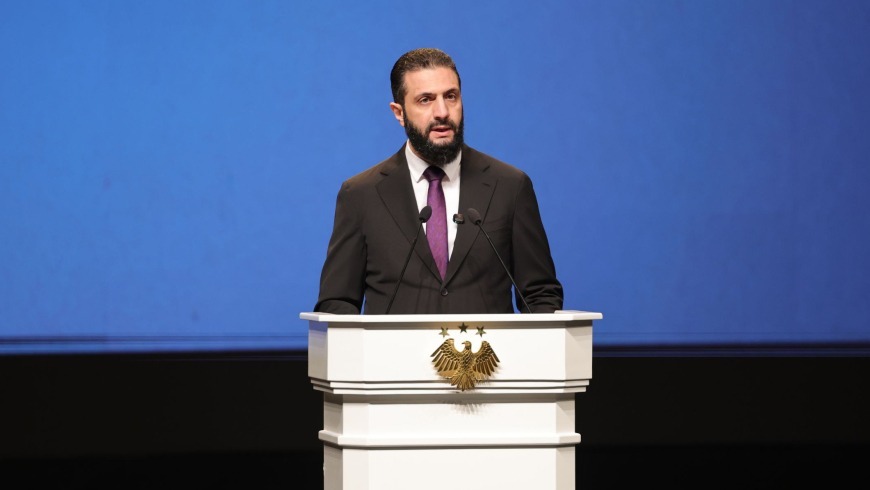
On Friday, the Syrian government also launched a national campaign against drugs and addiction under the slogan “A Syria Without Drugs,” during a ceremony at the Conference Palace in Damascus attended by President Sharaa.
Organized by the Ministries of Interior and Health to coincide with the International Day Against Drug Abuse and Illicit Trafficking, the campaign aims to strengthen prevention efforts, protect society, and raise public awareness about the dangers of narcotics.
In the same context, the Anti-Narcotics Department at the Ministry of Interior announced that it has carried out 1,550 security operations since the fall of the former regime. These operations resulted in the dismantling of 90 international smuggling networks and the seizure of large quantities of narcotics. The ministry said it will continue pursuing production and trafficking networks while expanding regional cooperation.
Brigadier General Khaled Eid, director of the Anti-Narcotics Department, told the Syrian newspaper Al-Thawra that operations conducted since liberation have led to the seizure of 697 million Captagon pills, 15 tons of hashish, 84.5 kilograms of crystal meth, 180 kilograms of cocaine, seven kilograms of heroin, 10 million narcotic tablets, and 221 tons of precursor materials used in drug manufacturing.
This article was translated and edited by The Syrian Observer. The Syrian Observer has not verified the content of this story. Responsibility for the information and views set out in this article lies entirely with the author.