The newly announced “Syrian Arab Front” splintered almost immediately after its debut, exposing deep structural weaknesses inside a political project built on the symbols, rhetoric, and personalities of the former Assad regime.
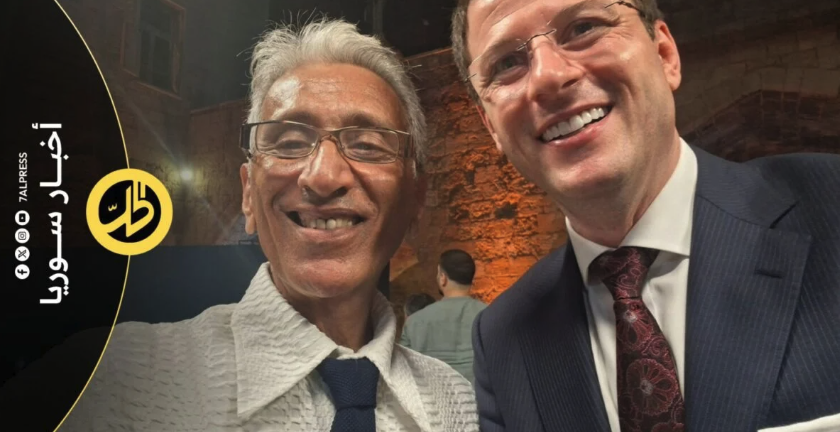
Exclusive information obtained by the Shaam News Network indicates that co-founder Imad Mohammad—who appeared prominently beside the group’s leader during the launch press conference—quit the organisation only hours after its unveiling. His abrupt departure signals discord within the founding committee before the Front has taken a single formal step.
The group’s announcement drew swift and widespread condemnation across Syrian civil society. Critics accused the Front of attempting to reinterpret the Syrian revolution through the lens of the former regime. Its launch featured the two-starred red flag of the pre-uprising era, revived the old military slogan “Homeland, Honor, Loyalty,” and issued a manifesto attacking “foreign projects” while omitting any reference to state-sponsored atrocities committed during the conflict.
Former Regime Media Figures and Militia-Linked Operatives at the Helm
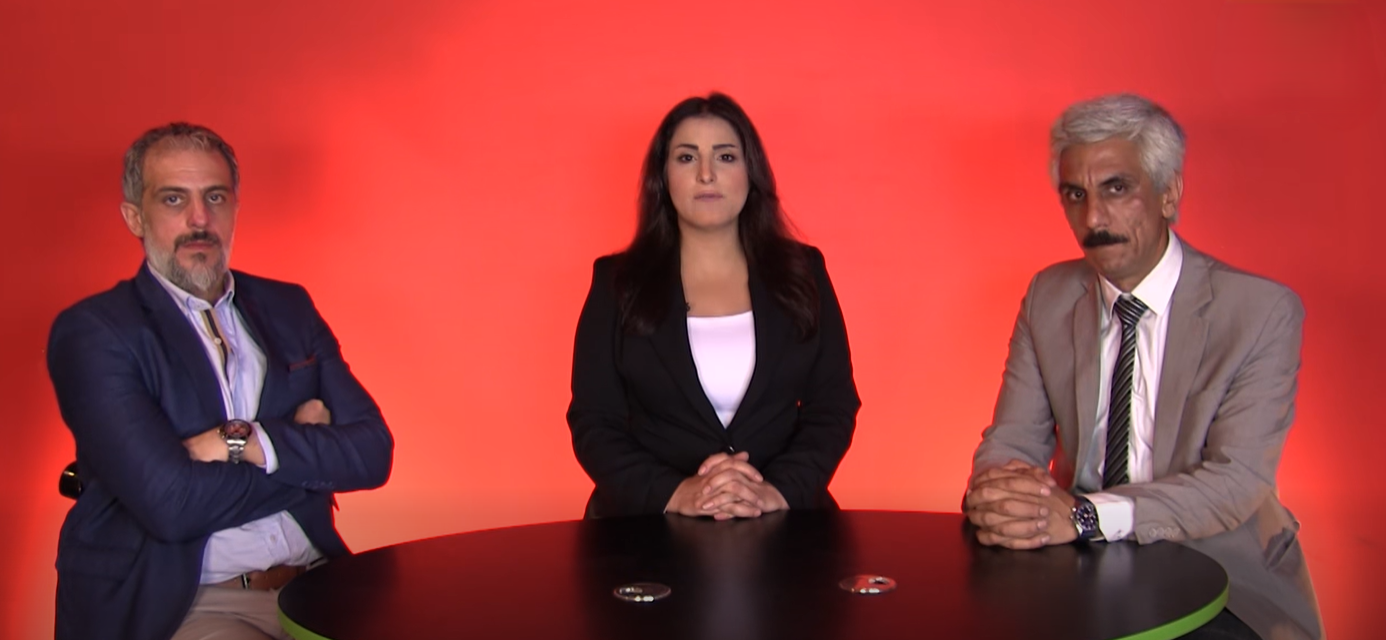
The initiative is led by former state television broadcaster Fatima Jiroudiya, who read the founding statement and now serves as the group’s president. Jiroudiya previously worked for Syrian state TV and Al-Ikhbariya Syria before becoming managing editor of Al-Tufan, a digital outlet known for its pro-Tehran editorial line. After the fall of the regime, she produced videos defending former president Bashar al-Assad and used traditional Ba’athist terminology during the Front’s launch, invoking phrases such as “comrades,” “the nation,” and the “Syrian Arab Army.”
She is joined by Waseem Al-Harastani, who claims leadership of the “Syria Dawn” and “Damascus Dawn” movements. Al-Harastani’s public record includes posts praising Bashar al-Assad, Hafez al-Assad, and regional figures aligned with Iran’s political orbit. Activists in Damascus’s Al-Midan neighborhood allege that he monitored anti-regime demonstrations early in the uprising, reported participants to security services, and later led an auxiliary unit linked to the 4th Armored Division. No judicial rulings have been issued regarding these allegations.
International Representatives and Early Defection
The Front also introduced several individuals tasked with overseeing its overseas offices:
- Basil Khaddour (United Arab Emirates): Presented in former state media as a political analyst, Khaddour’s documented background is in hospitality management, including roles at the Sheraton Damascus and a resort owned by regime-linked businessman Mohammad Hamsho, before moving into hotel operations in Dubai.
- Aqeel Hanano (United States): Grandson of Syrian historical figure Ibrahim Hanano. Public records show he has routinely published material endorsing the former government’s geopolitical alliances.
- Lama Moussa (Canada): Announced as the group’s representative in Canada, though little public information exists about her political or professional background.
Despite the Front’s attempt to project cohesion, the sudden withdrawal of co-founder Imad Mohammad underscores immediate instability. The group chose 1 August—long celebrated by the former regime as “Army Day”—for its official launch, a move analysts interpret as an effort to rally loyalist networks.
Political observers describe the Front as a loosely assembled attempt to gather media personalities, activists, and figures tied to the former government into a unified political platform. Yet the rapid departure of a founding member, combined with widespread public rejection, casts serious doubt on the group’s durability and prospects.
This article was translated and edited by The Syrian Observer. The Syrian Observer has not verified the content of this story. Responsibility for the information and views set out in this article lies entirely with the author.