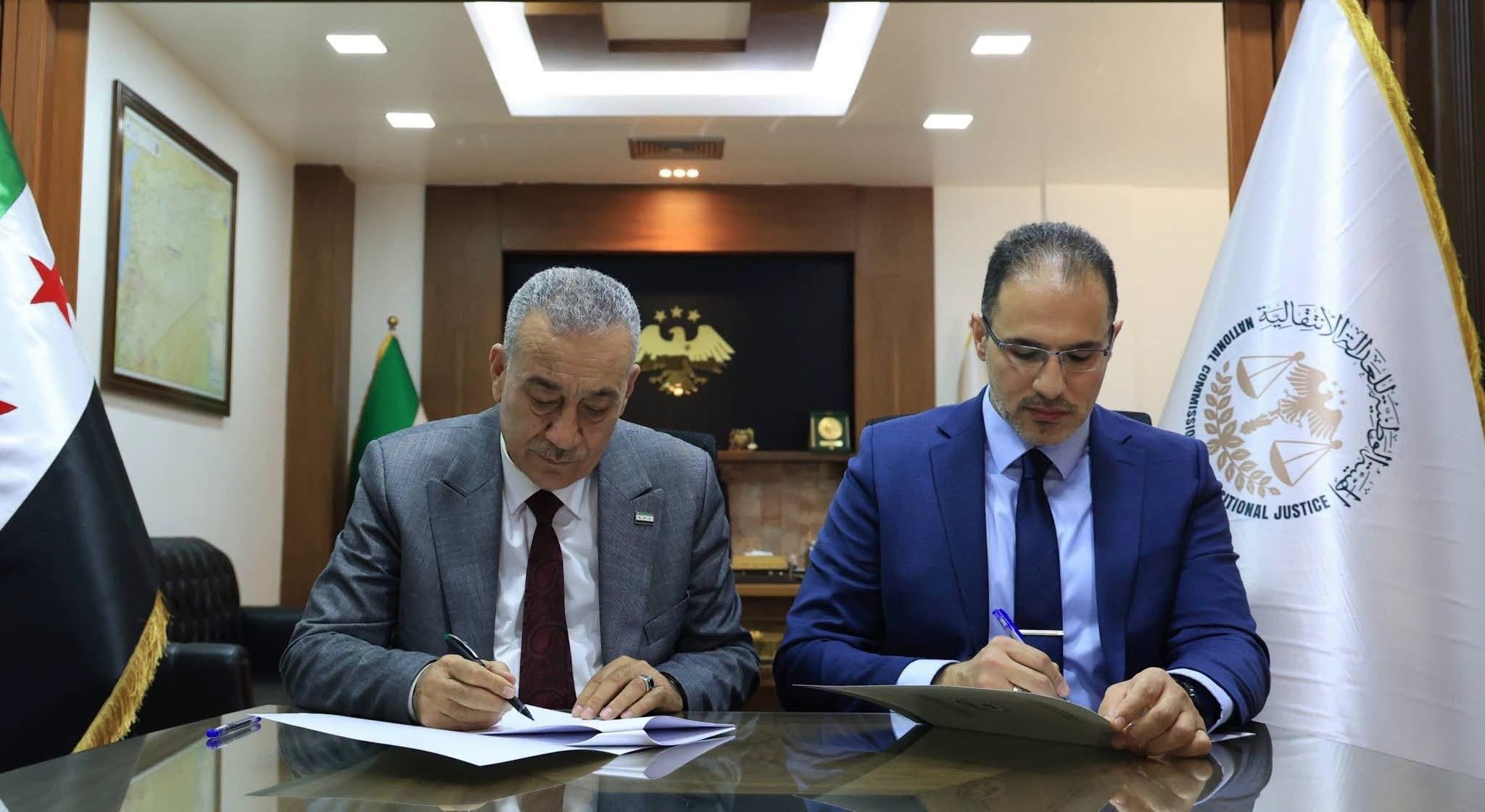
The National Transitional Justice Commission has signed a Memorandum of Understanding with the Syrian Justice and Accountability Centre (SJAC), establishing a technical partnership intended to strengthen truth-seeking and accountability mechanisms. The agreement focuses on enhancing contextual and open-source investigations, developing specialized databases, and classifying violations in line with International Humanitarian Law and International Human Rights Law.
Founded in 2012 through an initiative supported by then–U.S. Secretary of State Hillary Clinton, SJAC is a human rights organization dedicated to advancing genuine justice and accountability in Syria. Its work centers on documenting violations from all available sources, securing the material in a protected repository, and analyzing it through legal expertise and big-data methodologies to support future accountability processes.
Director Responds to Criticism, Reaffirms Political Independence
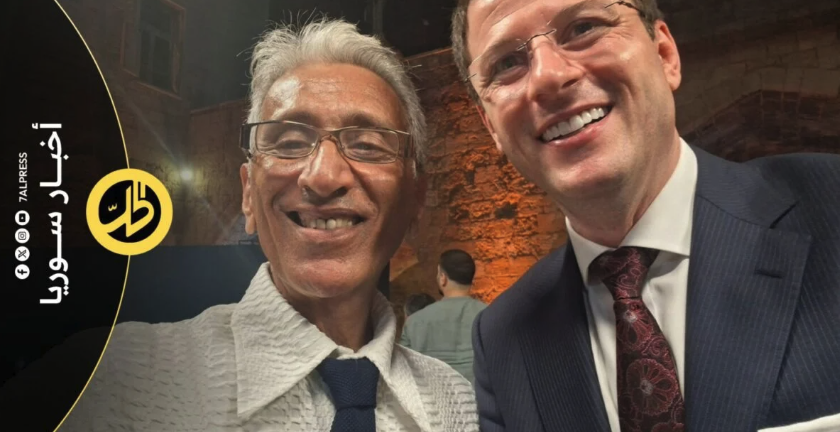
The agreement prompted a wave of domestic criticism targeting SJAC Executive Director Mohammad Al-Abdallah, a well-known critic of Ahmad Al-Sharaa’s government and its approach to national justice.
Ahead of a scheduled television interview, Abdallah issued a rapid clarification on Facebook addressing the questions and objections raised. He stressed that the technical cooperation does not reflect any shift in his political positions. He reiterated his longstanding calls for an inclusive national dialogue, a decentralized governance model, and broader civic participation in state administration.
“My positions regarding the country remain entirely unchanged,” he wrote. Abdallah reaffirmed his opposition to state-perpetrated violations and emphasized that SJAC’s documentation work is carried out by a team “loyal to its principles and nation, not to the authorities.” He also stood by his legal assessment that the events in the Coast and Suwayda regions constitute crimes against humanity—an assessment he noted is consistent with the findings of the two national investigative committees appointed by the government. SJAC plans to monitor the ongoing Coast trials to evaluate their credibility and adherence to judicial standards, publishing periodic assessments.
Between Political Division and Technical Necessity
Abdallah underscored that SJAC publishes quarterly summaries of human rights violations in Syria regardless of the perpetrator, including violations committed by the government. He framed transitional justice as a collective national responsibility, noting that the newly established national bodies tasked with justice and missing-persons files face severe staffing shortages and limited international support despite handling some of the country’s most complex dossiers.
As one of the leading institutions documenting violations, building legal cases, and filing lawsuits in Europe against perpetrators from the former regime, SJAC possesses technical and financial capacities that exceed those of the two national commissions combined. According to Abdallah, the choice was either to leave these state bodies without support or to set aside political differences in order to provide technical assistance for a national cause that ultimately serves victims and their families.
“My professional loyalty belongs to my conscience and to the families of the detainees and victims, not to the authorities,” he said, emphasizing that SJAC does not operate under state directives.
Separating State from Nation
Responding to specific allegations, Abdallah denied that SJAC had received any funding from the commission, noting that the state entity itself is severely underfunded and in need of external assistance. He affirmed that his political critique of the government’s failures would continue and that any future violations committed by state actors would be documented and challenged.
He concluded by stressing the importance of distinguishing between the state and the nation. It is entirely possible, he argued, to oppose a government while simultaneously helping to build national institutions that serve the public. “Governments come and go,” Abdallah said, “but Syria remains.”