A joint announcement by Paris and Damascus to repatriate €51 million from the confiscated assets of the late Rifaat al-Assad has pushed a long-running legal battle into the centre of a rapidly evolving diplomatic relationship. The timing was deliberate: the declaration coincided with French President Emmanuel Macron’s landmark visit to Damascus, a trip laden with political symbolism and economic overtures following the collapse of Bashar al-Assad’s regime.
Yet the financial transfer is far more than a diplomatic gesture. Anchored in definitive French judicial rulings and tied to a sprawling European property empire, the move raises sensitive questions for Syrians about the meaning of justice when high-profile defendants die before facing full accountability for their political and security legacies.
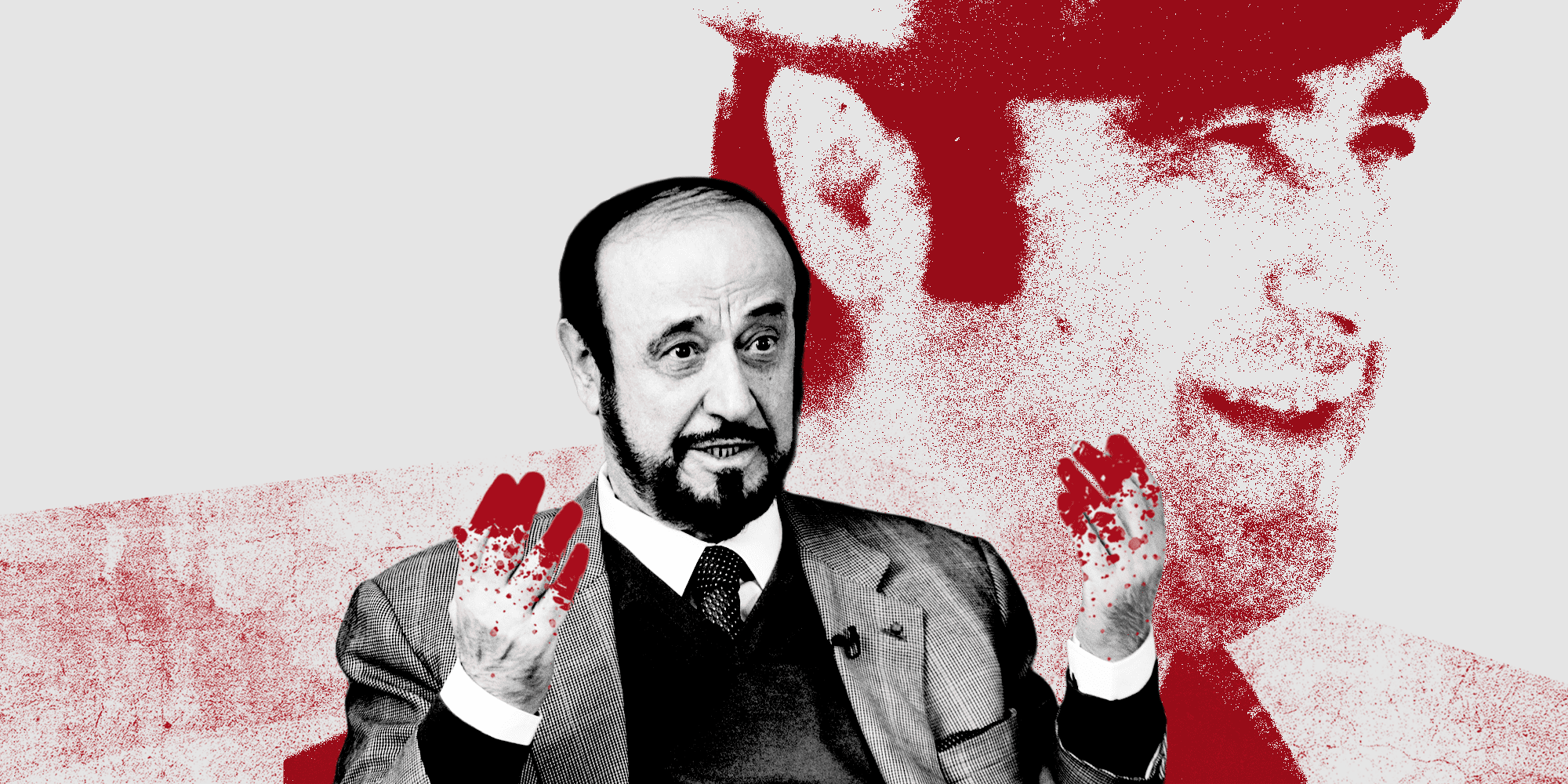
The central issue now extends beyond Rifaat al-Assad himself, who died in January 2026. Although the man is gone, the estate confiscated after his conviction remains an active legal and financial file. As a result, the recovery of these assets has become an early test of the new relationship between Damascus and Paris. The question is whether this repatriation will remain a limited, standalone measure—or whether it will open the door to a broader effort to trace and reclaim wealth accumulated across Europe by former regime figures through shell companies, proxies, lawyers and luxury real estate.
A Decade-Long Legal Battle
The French legal proceedings began in 2013, when the human rights organisation Sherpa filed a complaint accusing Rifaat al-Assad of amassing vast wealth through embezzled Syrian public funds. After years of investigation, a Paris court convicted him in June 2020 of money laundering and misappropriation of state assets, ordering the confiscation of his extensive French real estate portfolio. The ruling was upheld by the Court of Appeal in 2021 and finalised by the Court of Cassation in 2022.
Estimates of the total value of Rifaat’s holdings have varied. Reuters reported that French courts ordered the seizure of properties worth around €100 million, alongside a London estate valued at £29 million. Other independent assessments placed the French assets closer to €90 million, while pointing to ongoing proceedings in Spain that could target hundreds of millions more.
The discrepancies matter. They show that the €51 million earmarked for repatriation represents only the portion of the estate that has cleared all legal hurdles and is ready for transfer—not the entirety of Rifaat al-Assad’s European wealth.
Throughout the proceedings, Rifaat denied the charges. His objections remain part of the record but do not alter the finality of the French High Court’s ruling. With all appeals exhausted, the case moved from media controversy to binding judicial precedent. The confiscated properties are no longer viewed as disputed family inheritance; they are legally designated as the proceeds of embezzled Syrian public funds laundered through European real estate.
Rifaat’s death halted criminal accountability—most notably a separate Swiss investigation into alleged war crimes linked to the 1982 Hama massacre—but it did not dissolve the financial liabilities. Confiscated assets remain subject to management, liquidation and repatriation under the laws of the countries where they are held. The focus has therefore shifted from prosecuting an individual to scrutinising the financial networks that sustained him.
France Balances Law and Diplomacy
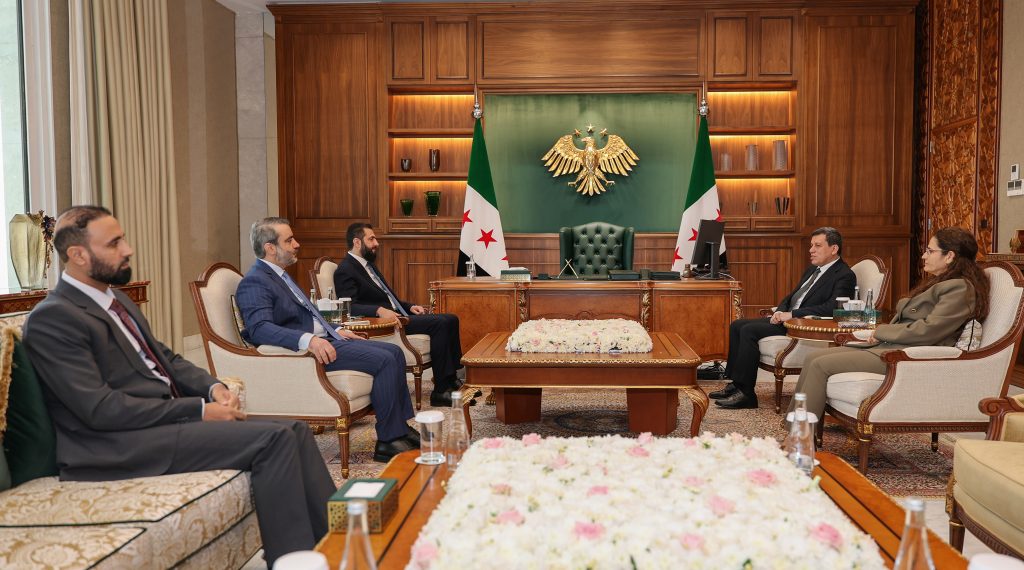
The timing of the repatriation announcement was unmistakably political. Macron’s visit to Damascus featured explicit French support for Syria’s reintegration into the international community, discussions on economic and security cooperation, and a mutual commitment to restore ambassadorial ties. The simultaneous Reuters report on the asset transfer positioned the financial file as a central component of a broader effort to restructure bilateral relations.
French law provides a clear framework for returning confiscated wealth. A landmark 2021 statute established the principle of returning “ill-gotten gains” to the populations of affected foreign states rather than absorbing them into the French treasury. The process is overseen by the Agency for the Management and Recovery of Seized and Confiscated Assets (AGRASC).
Transparency watchdogs have welcomed the policy but warn that repatriated funds risk disappearing into opaque government channels without proper oversight.
For Syria, the significance of asset recovery cannot be measured solely by the arrival of funds in state accounts. It requires a transparent process that identifies the source of the money, the final amounts, the institutions responsible for managing it, the projects it will fund, and the auditing mechanisms in place. If the funds are channelled into transitional justice initiatives, essential infrastructure, or compensation for victims of historic abuses, the political and social impact could far exceed the nominal financial value. Any ambiguity, however, will undermine the legitimacy of the process.
France must navigate this file carefully. While Paris seeks to turn a new page with Damascus, it cannot ignore the sensitivities surrounding looted state wealth and human rights violations. As a result, France may favour a conditional, ring-fenced approach—directing funds through specific development programmes rather than transferring them without restrictions. Such a formula could satisfy both sides, provided it guarantees the Syrian public’s right to know how the money is allocated and what outcomes it produces.
A Precedent with Wider Implications
Although €51 million is modest compared with the enormous cost of Syria’s reconstruction, its value lies in its potential to establish a legal precedent. Significant assets tied to Rifaat al-Assad remain frozen in the United Kingdom and Spain, alongside vast networks of wealth belonging to other former regime figures. Recovering these funds will require sustained legal efforts, intergovernmental cooperation and meticulous documentation based on solid evidence rather than political will alone.
The process will be slow. Illicit assets are often hidden behind shell companies, frontmen, relatives or close associates, and are frequently entangled in probate disputes, appeals or lengthy liquidation procedures. Moreover, European courts act on judicial rulings, not political requests. Syria’s ability to reclaim broader assets will depend on whether it can establish a specialised, transparent legal task force capable of working with international law firms and human rights organisations to present airtight cases.
Domestically, the issue forces a critical debate about priorities. After years of war and economic collapse, Syrians do not want asset recovery to become another empty political slogan. They expect measurable results. Every recovered euro must be publicly accounted for, and every project funded by these assets must be subject to public audit. Transparency is not merely a moral imperative—it is the structural safeguard needed to ensure that the corruption which produced this illicit wealth is not repeated.
France can use this file as part of a broader constructive policy towards Syria, but it will not be the sole arbiter. A comprehensive recovery strategy will require cooperation with the UK, Spain, Switzerland and other countries where former Syrian elites used international financial and real estate markets to shield their wealth.
The Rifaat al-Assad file does not end with the return of €51 million. Its true significance will be determined by whether it becomes a binding legal and political milestone. Syria may succeed in placing asset recovery on its diplomatic agenda with France, but its success will ultimately be judged by how the recovered wealth is managed, whether remaining illicit assets are pursued, and the extent to which civil society and victims of the former regime are included in deciding how these funds serve the public good. Without such safeguards, the breakthrough will remain notable in headlines but negligible in the daily lives of Syrians.
This article was translated and edited by The Syrian Observer. The Syrian Observer has not verified the content of this story. Responsibility for the information and views set out in this article lies entirely with the author.