French President Emmanuel Macron’s landmark visit to Damascus has moved far beyond diplomatic symbolism, emerging as a decisive political, economic, and legal turning point in Franco-Syrian relations after more than a decade of estrangement. As the first French head of state to visit Syria since 2009, Macron’s arrival signals a recalibration of Europe’s posture toward Damascus and a renewed acknowledgement of Syria’s strategic weight in regional stability, energy corridors, trade routes, and logistics networks. It also reflects Europe’s pragmatic need to rebuild functional ties with the Syrian state following the collapse of the former regime.
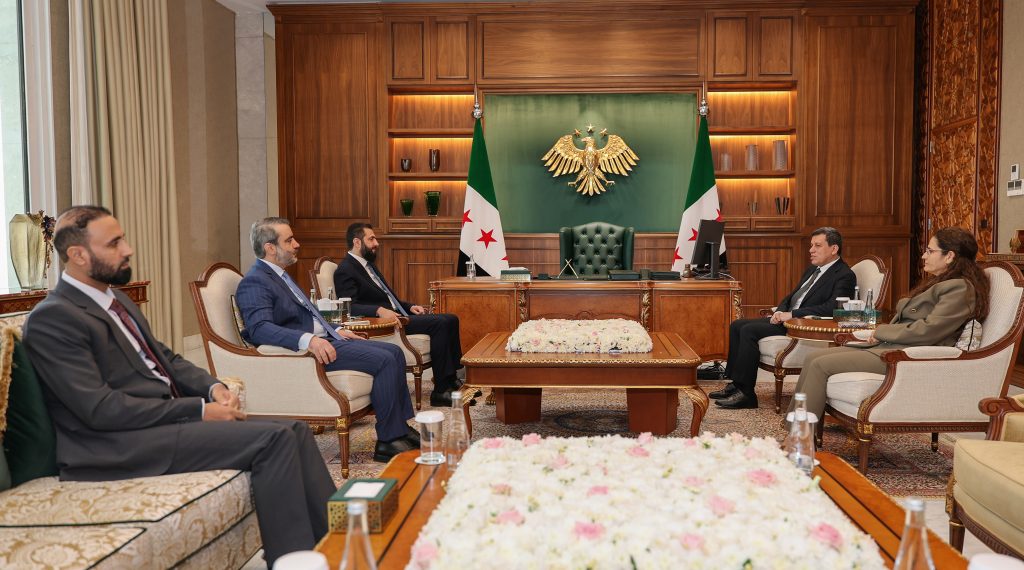
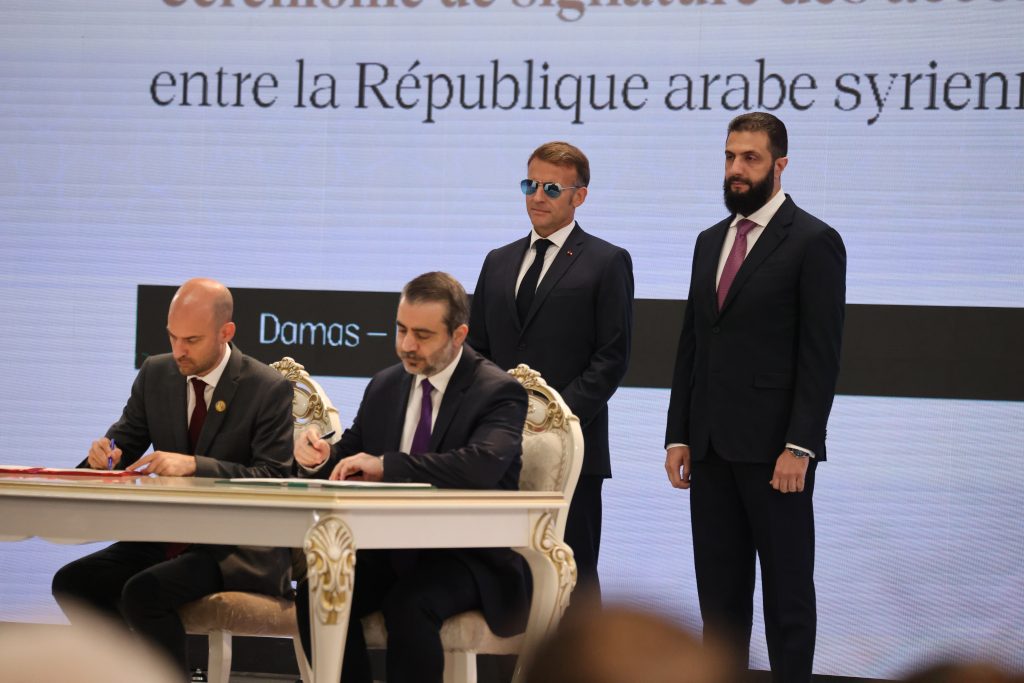
At the close of a joint roundtable chaired by Syrian President Ahmed al-Sharaa and Macron, Syrian Foreign Minister Assad al-Shibani and French Foreign Minister Jean-Noël Barrot signed an expansive cooperation framework covering civil aviation, healthcare, banking, water and road infrastructure, investment, technical support, and institutional development. The breadth of the agreement elevates the visit from diplomatic re-engagement to a structural partnership linking reconstruction to Syria’s reintegration into regional and global economic systems.
A Landmark Financial Restitution
The most consequential outcome of the visit was France’s announcement that it has begun legal procedures to return €51 million (about $58.29 million) to Damascus — assets confiscated from Rifaat al-Assad, uncle of the deposed president Bashar al-Assad. This step injects significant legal and financial weight into the visit, formally opening the file on repatriating looted Syrian public funds and asserting the Syrian state’s right to reclaim wealth siphoned abroad through complex global financial and real-estate networks.
Al-Shibani and Barrot signed a memorandum of intent concerning the seized funds after French courts definitively linked them to embezzlement and organised money laundering. President al-Sharaa described the restitution as the first recovery of confiscated Syrian assets from abroad, pledging that the funds would be directed toward development projects aligned with national priorities — a gesture he framed as mutual respect for Syria’s sovereignty and institutions.
Cultural Restitution in Parallel
Damascus simultaneously announced the return of 23 Syrian antiquities from France, previously held at the Institut du Monde Arabe since 2010. This cultural restitution mirrors the financial recovery effort, intertwining the reclamation of public wealth with the restoration of national heritage. The artifacts carry symbolic weight, returning a piece of Syria’s cultural identity at a moment when the state is rebuilding its institutions and international standing.
Macron’s Economic Commitments
Macron affirmed France’s readiness to return the funds derived from Rifaat al-Assad’s illicit gains and pledged support for Syria within international financial institutions to secure reconstruction financing, revitalise banking services, and strengthen the private sector. He emphasised Syria’s geographic position at the crossroads of Europe, the Gulf, and major trade and energy routes, describing it as a natural arena for shared economic interests. Macron was accompanied by senior executives from CMA CGM — which secured its first Syrian investment contract in 2025 — and Total, which continues to explore opportunities in energy, transport, and renewables.
The Rifaat al-Assad Case: A Precedent with Global Implications
The legal saga surrounding Rifaat al-Assad’s French assets began in 2014, when anti-corruption and human-rights groups filed complaints that triggered a formal investigation. In 2016, French magistrates indicted him on charges of embezzling public funds and aggravated money laundering linked to tax evasion. A Paris court convicted him in 2020, sentencing him to four years in prison and ordering the confiscation of his real-estate holdings — a verdict upheld by the Court of Appeal and the Court of Cassation. Rifaat fled to Syria in 2021 to avoid imprisonment, later leaving the country after the regime’s collapse in December 2024. Reports indicate he died in January 2026.
His French fortune, estimated at €90 million, included two mansions on Avenue Foch, around 40 luxury apartments in Paris, a chateau and stud farm in Val-d’Oise, and 7,400 square metres of commercial space in Lyon — most acquired in the 1980s through offshore shell companies in Panama, Curaçao, Liechtenstein, and Luxembourg. Spanish authorities also seized more than 500 properties linked to his family in 2017.
France’s decision to return the funds sets a powerful precedent, potentially unlocking similar repatriations from other jurisdictions holding frozen or confiscated Syrian assets. As the first restitution of assets seized under European anti-corruption laws, it demonstrates that plundered Syrian public wealth remains recoverable and relevant to national reconstruction.
A Global Map of Frozen Syrian Wealth
The scale of potential recoverable assets is significant. Switzerland holds roughly 99 million Swiss francs (about $112 million) in frozen Syrian funds, while the United Kingdom holds £163.2 million (around $200 million). Reports have surfaced of a frozen British bank account belonging to Bashar al-Assad containing $68.3 million, prompting legal experts to advocate transferring the funds to Syria after the regime’s collapse. Additional frozen assets are believed to exist in Germany, Austria, the United States, Turkey, and several Arab states.
In March 2025, the European Parliament passed a resolution enabling the use of frozen Assad-era assets to support political transition and reconstruction — a measure that passed with 462 votes in favour, 76 against, and 106 abstentions. This legislative shift reflects Europe’s growing willingness to treat frozen Syrian wealth as a tool for national recovery.
Investigations have also traced illicit Syrian wealth to Russia. The Financial Times reported that Assad family members acquired at least 19 luxury apartments in Moscow worth an estimated $40 million, alongside cash transfers totalling around $250 million between 2018 and 2019. The complexity of these networks underscores the long-term international cooperation required for Damascus to build robust legal claims.
To advance these efforts, Damascus is strengthening cooperation with the Asset Recovery Inter-Agency Network for the Middle East and North Africa (MENA ARIN), the Stolen Asset Recovery Initiative (StAR), and European judicial authorities under the UN Convention against Corruption. The success of this strategy depends not only on international legal recognition but on Syria’s ability to manage repatriated funds transparently through auditable, high-impact projects.
Macron’s visit also produced a substantial package of economic and development agreements. The Ministry of Economy and Industry signed an MoU with French industrial firm Sidel for cooperation in the food, beverage, and water sectors. The Ministry of Higher Education and Scientific Research partnered with Ellipse Projects SAS to support university hospitals and modernise healthcare. Additional agreements established the French Development Agency (AFD) in Syria, launched a trilateral cultural-heritage partnership, and outlined cooperation across political affairs, counter-terrorism, defence, institutional reform, and the tracking of missing persons.
A declaration of intent was signed on civil protection and public safety, alongside agreements to strengthen private-sector partnerships and provide technical assistance to the Central Bank of Syria. Notably, a contract was finalised for the development, construction, operation, and transfer (BOT) of Syrian Arab Airlines’ cargo infrastructure at Damascus International Airport — a step toward modernising Syria’s air-transport capabilities.
A Historic Reset
French media have described Macron’s visit as “historic,” highlighting the profound strategic realignment after years of diplomatic freeze. The visit represents more than the resumption of bilateral ties: it signals a structural shift that views Syria as a pivotal state in regional stability, treats reconstruction as a viable political and economic opportunity, and frames asset restitution as a critical test of international law and institutional transparency.
If Damascus succeeds in transforming the French precedent into a broader institutional model, it could mark the beginning of a global campaign to reclaim Syria’s stolen wealth and channel it toward national recovery.
This article was translated and edited by The Syrian Observer. The Syrian Observer has not verified the content of this story. Responsibility for the information and views set out in this article lies entirely with the author.