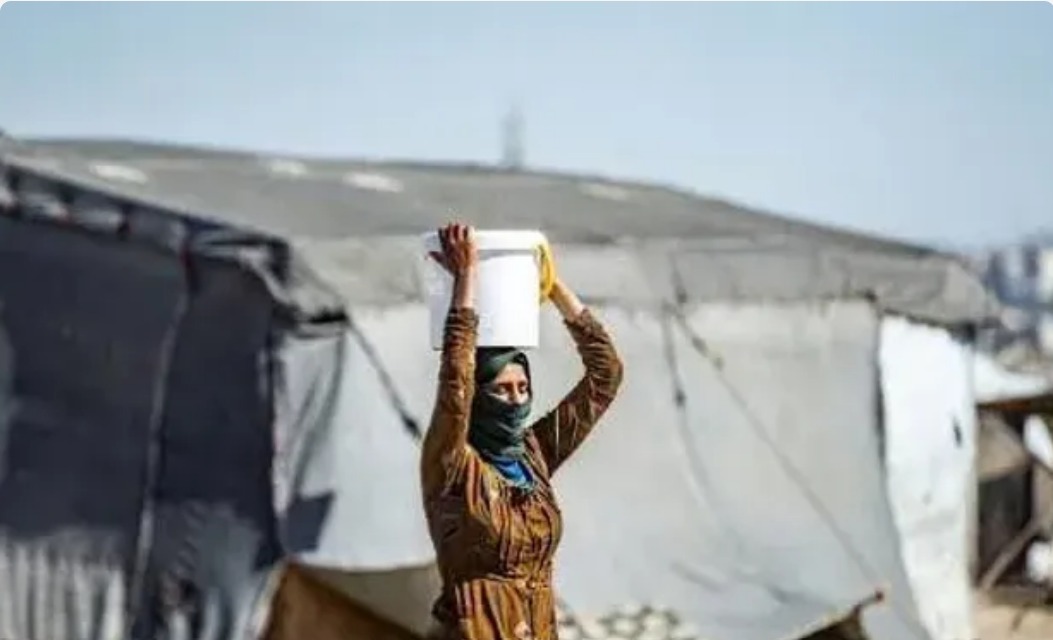
More than eighteen months after the country’s liberation, tens of thousands of Syrian families remain trapped in makeshift camps across the northwest, unable to return to their homes despite the formal end of large-scale hostilities. Daily life in these settlements continues to be defined by severe shortages of basic services, fragile shelter conditions, and deepening economic hardship.
A new report by the Syrian Network for Human Rights (SNHR) estimates that 1,126 camps are still operating in northern Syria, including 786 in Idlib and 340 in rural Aleppo. Together, they house nearly 700,000 internally displaced persons (IDPs). The vulnerability of these communities was laid bare when torrential rains and flash floods swept through the region on February 7 and 8, inundating dozens of camps—particularly in western Idlib—and compounding the suffering of already-struggling families.
Root Causes Hindering Repatriation
Speaking to the Sham News Network, media activist Mohammad al-Subeih identified three primary obstacles preventing displaced families from returning to their towns or transitioning into permanent housing: security concerns, widespread destruction and collapsed public services, and severe economic stagnation.
“Fear of insecurity remains a primary concern for most families,” al-Subeih said, noting that landmines, unexploded ordnance, and other remnants of war continue to pose lethal risks in many liberated areas. Without guarantees of physical and psychological safety, he added, families are reluctant to return.
Extensive damage to homes and infrastructure further complicates repatriation. Many areas still lack electricity, potable water, functioning schools, and medical facilities—conditions that make daily life nearly impossible for returnees.
Economic realities weigh just as heavily. With few job opportunities and no sustainable income sources, many families see no viable path to rebuilding their lives. “Owning a home is not enough,” al-Subeih explained. “Without a livelihood, families cannot meet even their most basic needs.”
Psychological and Social Toll of Prolonged Displacement
Al-Subeih emphasized that the impact of displacement extends far beyond physical hardship. A home, he said, is not merely a structure but a foundation of safety, memory, and social stability. Its loss leaves deep psychological scars.
Constant relocation and unstable shelter conditions foster chronic anxiety and a sense of rootlessness. Children are particularly vulnerable: frequent moves disrupt their development, undermine their sense of security, and fracture their educational continuity.
Social cohesion also erodes. Displacement severs ties with neighbors and extended communities, while children struggle to maintain friendships or attend school consistently. “An individual deprived of a home lives in a permanent state of uncertainty,” al-Subeih said. “They feel like temporary guests, always fearing the loss of their current shelter.”
Daily Hardships and the Fight for Privacy
Life inside the camps remains defined by deprivation. Residents face shortages of clean water, inadequate sanitation, and limited access to heating—conditions that become life-threatening during winter cold spells.
One of the most acute challenges is the near-total absence of privacy. Entire families often share a single tent or makeshift structure, a situation that strains daily routines and disproportionately affects women and children, who lack the personal space needed for dignity and normalcy.
Education is another casualty. Long distances to schools, unsafe commutes, and the psychological stress of camp life undermine children’s ability to learn and maintain academic progress. These cumulative hardships have shaped the social, educational, and economic trajectories of displaced families for years.
What a Sustainable Solution Requires
Al-Subeih stressed that any durable solution must begin with safe, dignified housing capable of protecting families from extreme weather while restoring privacy and stability.
But housing alone is insufficient. He argued that reconstruction must include the rapid restoration of essential services—drinking water networks, electricity, and healthcare facilities—without which communities cannot function.
Equally critical is the creation of sustainable livelihoods. Without reliable income, families cannot rebuild their lives, regardless of the quality of their housing.
Adequate housing, al-Subeih noted, “is fundamentally tied to human dignity, economic self-reliance, and social stability.” Addressing the crisis requires a comprehensive approach that integrates shelter, public services, and economic revitalization.
The ongoing camp crisis in northwestern Syria underscores that displacement remains one of the country’s most entrenched humanitarian challenges. Interlocking deficits in housing, services, and economic opportunity continue to trap hundreds of thousands of Syrians in precarious conditions. Until the root causes are addressed and a minimum standard of dignity is ensured, the displacement file will remain open—and vulnerable to further humanitarian fallout.
This article was translated and edited by The Syrian Observer. The Syrian Observer has not verified the content of this story. Responsibility for the information and views set out in this article lies entirely with the author.