The diplomatic activity surrounding Damascus can no longer be dismissed as protocol visits or courtesy messages in the aftermath of Bashar al-Assad’s fall. From the side conversation that brought together Syrian President Ahmad al-Sharaa and Egyptian President Abdel Fattah el-Sissi in Cyprus, to Syrian Foreign Minister Asaad al-Shaibani’s visit to Cairo, and Lebanese Prime Minister Nawaf Salam’s trip to Damascus, the new Syria appears to be facing a broader attempt to reorganize its Arab relations on different foundations—more formal, more institutional, and more closely tied to questions of security, the economy, energy, borders, and refugees.
This movement is inseparable from a highly fluid regional moment. Damascus, emerging from long isolation and a heavy political and security legacy, is trying to reclaim its place within its Arab environment. Cairo and Beirut—each from its own position and calculations—seem interested in opening a new page with Syria, driven less by nostalgia than by the reality that the Syrian vacuum of recent years allowed regional and international powers to advance in files that directly touch Arab national security.
Cairo and Damascus: Melting the Ice of Lean Years
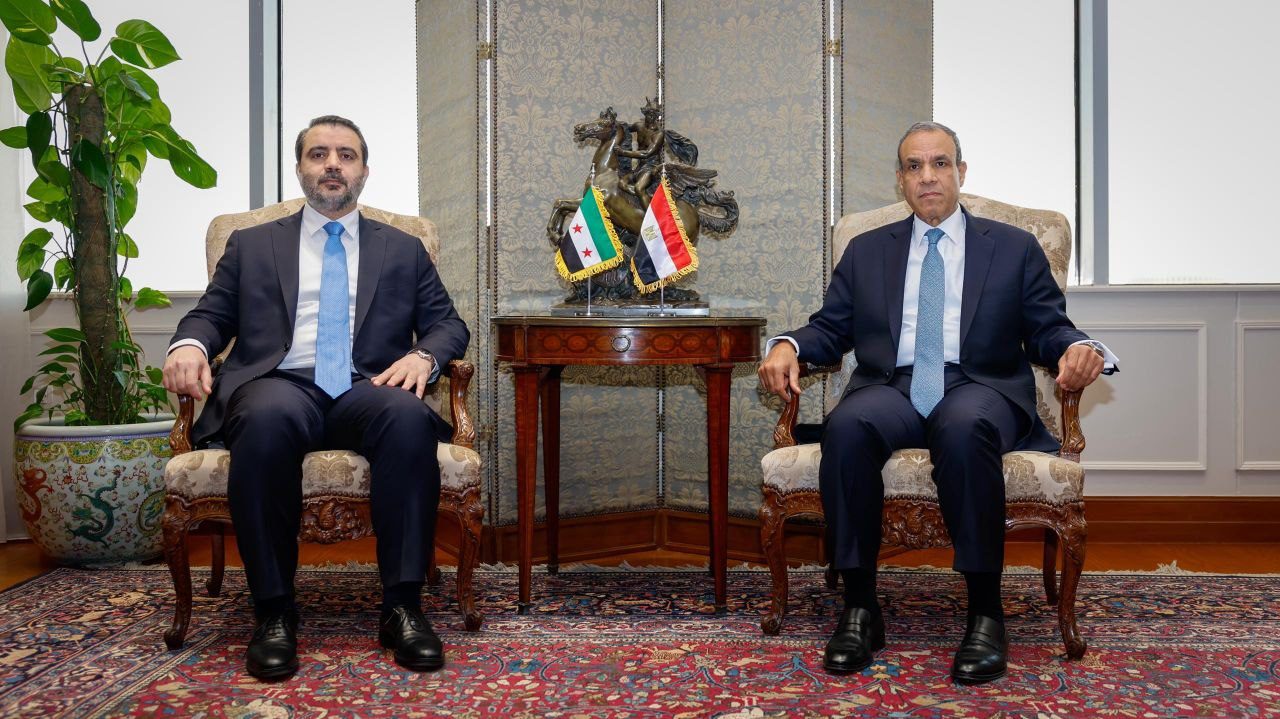
The brief meeting between Sharaa and Sissi on the margins of the Cyprus gathering on April 24 raised questions about the future of Egyptian-Syrian relations. Short as it was, the encounter appeared to signal a desire to test a new political track, especially as al-Shaibani’s visit to Cairo days later gave that signal a clearer practical dimension.
Historically, Syrian-Egyptian relations have carried special weight in Arab political memory. At pivotal moments, the two countries formed one of the centers of Arab decision-making, before their relationship entered years of coolness and stagnation due to diverging approaches to the Syrian crisis, overlapping regional and international pressures, caution over sanctions, and each country’s preoccupation with its internal crises.
Communication never ceased entirely, but it remained confined to narrow security and humanitarian channels, without rising to the level of a declared political partnership or broad strategic coordination. This is why al-Shaibani’s visit carries meaning beyond protocol: it suggests that both sides want to move from political exploration to a track that can be built upon, at a moment when Cairo appears convinced that its earlier absence from the Syrian file weakened the Arab presence and left wide space for interventions that do not align with shared Arab interests.
For Egypt, returning to Damascus is not merely a bilateral step but part of a broader attempt to restore Cairo’s role in the affairs of the Levant. Syria’s stability intersects with questions of security, counterterrorism, energy, refugees, reconstruction, and regional balances. Hence the importance of translating political openness into practical cooperation: activating the Egyptian-Syrian Business Council, opening the door for Egyptian companies in infrastructure, housing, and energy projects, and reviving regional linkage projects—foremost among them the Arab Gas Pipeline.
The political dimension is no less important. Cairo can use its weight in the Arab League and international forums to support Syria’s full return to the Arab fold, help address the effects of sanctions, and consolidate a more coherent Arab approach toward the new Damascus. Yet success depends on the ability of both sides to turn positive signals into clear institutional mechanisms, not merely passing diplomatic images.
Beirut and Damascus: From a Heavy Legacy to an Equal Relationship
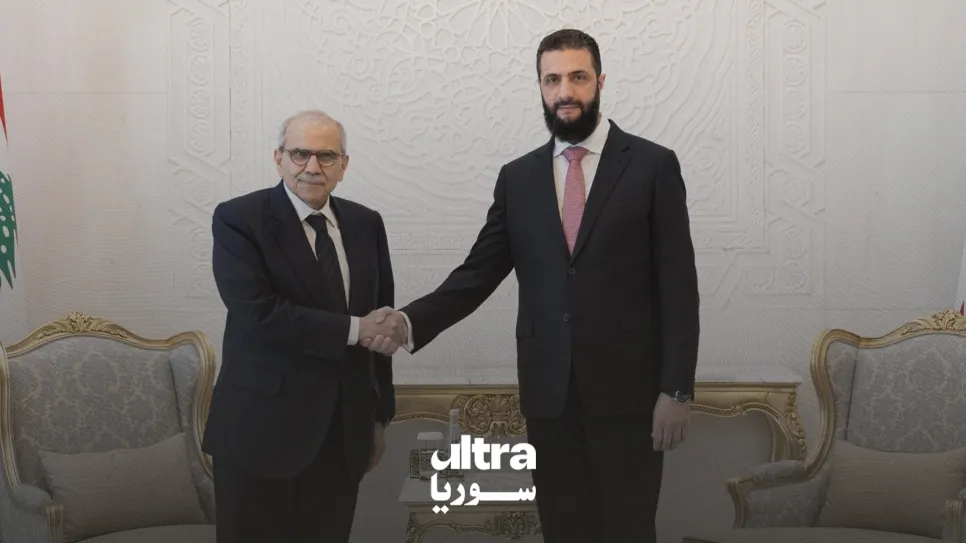
Prime Minister Nawaf Salam’s visit to Damascus placed Syrian-Lebanese relations before an even more complicated test. For decades, this relationship was not a normal one between two independent states. Since the Syrian army entered Lebanon in 1976—and after Syrian influence was consolidated following the Taif Agreement in 1989—Lebanon remained in Syrian calculations as an arena of direct influence rather than simply a neighbor and partner. This legacy reached its peak before the assassination of Rafik Hariri in 2005, followed by the withdrawal of Syrian forces under domestic and international pressure.
After Assad’s fall in December 2024, the door opened to redefining this relationship. The wager now is whether it can move from the logic of hegemony and the “backyard” to an equal relationship based on mutual sovereignty and shared interests. In this context, Salam’s visit does not appear ceremonial; it is a test of the two countries’ ability to dismantle highly sensitive files that have accumulated over decades.
Foremost among these is the file of Syrian prisoners in Lebanon. The two countries signed a judicial agreement in February to transfer convicted Syrians back to their country, and implementation began in March with the handover of a first batch. A second batch remains pending due to Lebanese legal complications related to personal claims and incomplete files. The issue has legal and humanitarian dimensions, but also a political one, as Beirut seeks to ease prison overcrowding and demonstrate its ability to manage the file within an organized institutional framework.
The border file is even more directly tied to the security of both countries. The roughly 330-kilometer Syrian-Lebanese border has long served as a passage for smuggling, irregular movement, weapons networks, and fighters—including networks linked to Hezbollah. With Israel’s war on Lebanon ongoing, and fears that some crossings may be used for military purposes, border control becomes a matter that extends beyond commercial smuggling to the heart of regional stability.
Hezbollah remains present in the background of the new relationship, even when not mentioned explicitly. The Lebanese state seeks to strengthen its sovereignty over its borders, while the new Damascus wants to control the border space and prevent its territory or crossings from being used in conflicts that do not serve its stability. Security and intelligence cooperation between Beirut and Damascus therefore becomes one of the real tests of the seriousness of the shift.
Refugees, Energy, and the Economy: Files That Impose Politics
In Lebanon, the Syrian refugee file remains the most urgent and sensitive issue. It weighs heavily on the economy, public services, and social and political balances, pushing the Lebanese government to search for more orderly mechanisms for voluntary return. Yet any real return requires a minimum level of security, employment opportunities, housing, and guarantees that make return possible and sustainable.
This file, though different in nature in Egypt, is also present in Egyptian-Syrian relations. Cairo hosts a large Syrian community integrated into Egypt’s economic and social life. Organizing this presence, protecting Syrians’ rights, and coordinating any future voluntary return therefore becomes part of a broader Arab agenda inseparable from Syria’s reconstruction and stability.
Economically, Syria is a necessary passage for Lebanon toward Arab markets, while Damascus sees openness to Beirut as an opportunity to revive commercial and investment activity and break economic isolation. The files on the table include facilitating truck movement, regulating transit and export fees, developing technical standards and laboratory testing, and launching a joint Lebanese-Syrian Business Council.
In energy, the interests of the three parties converge more clearly. Lebanon needs electricity and gas. Syria seeks to benefit from its geographic position as an energy corridor. Egypt occupies an important place in the regional gas equation. Reviving gas and electricity projects through Syria is therefore not merely technical cooperation; it may become an entry point for reconnecting the Arab Levant economically and politically after years of rupture.
An Arab Return—or New Alignments?
Cairo and Beirut’s moves toward Damascus raise a broader question: Are we witnessing an organized Arab return to Syria, or separate bilateral understandings driven by each country’s necessities? The answer remains unsettled. Egypt views Syria through the lens of Arab balance, regional security, and its historical role. Lebanon views it through the lens of borders, prisoners, refugees, energy, and the economy. Damascus, meanwhile, needs both: Egypt as an Arab and diplomatic heavyweight, and Lebanon as the neighbor most entangled with it in security, social, and economic terms.
This opening will not be easy. Syrian-Egyptian relations require practical translation beyond symbolism, while Syrian-Lebanese relations require addressing a long legacy of mistrust. Nor will the regional and international powers that filled the Syrian vacuum in recent years withdraw easily. Sanctions, reconstruction, borders, weapons, refugees, and energy will remain successive tests of the seriousness of the shift.
Even so, the present moment appears different. Al-Shaibani’s visit to Cairo and Nawaf Salam’s visit to Damascus indicate that Syria is no longer confined to waiting or isolation. There is an attempt to reinsert it into a wider Arab equation—but on new terms imposed by the post-Assad phase, in which sovereignty can no longer be ignored, mutual interests cannot be bypassed, and old patterns of tutelage cannot simply be restored.
From Cyprus to Cairo, and from Beirut to Damascus, the threads of a new Arab relationship with Syria are beginning to move. This movement may still be in its early stages and may face many obstacles, but it signals that the long phase of stagnation has begun to recede. Cairo is seeking to restore its role in the Syrian file. Beirut is trying to settle a heavy legacy and build an equal relationship. Damascus is searching for an Arab position that can help stabilize the state, reopen the economy, and repair its regional legitimacy.
The real wager now lies in the ability to turn these visits into policies. If Damascus succeeds in building institutional partnerships with Cairo and Beirut, this could become an entry point for reconnecting what was severed in the Arab Levant—and opening a new page defined by mutual interests rather than tutelage, political coordination rather than vacuum, and Arab stability rather than open arenas of influence.