Safwat Raslan, Governor of the Central Bank of Syria, announced that the institution is rolling out a new monetary policy aimed at stabilizing the exchange rate in coordination with the Ministry of Finance. Raslan stressed that the exchange rate should not be viewed as the sole measure of monetary policy performance, describing it instead as one indicator within a broader economic framework.
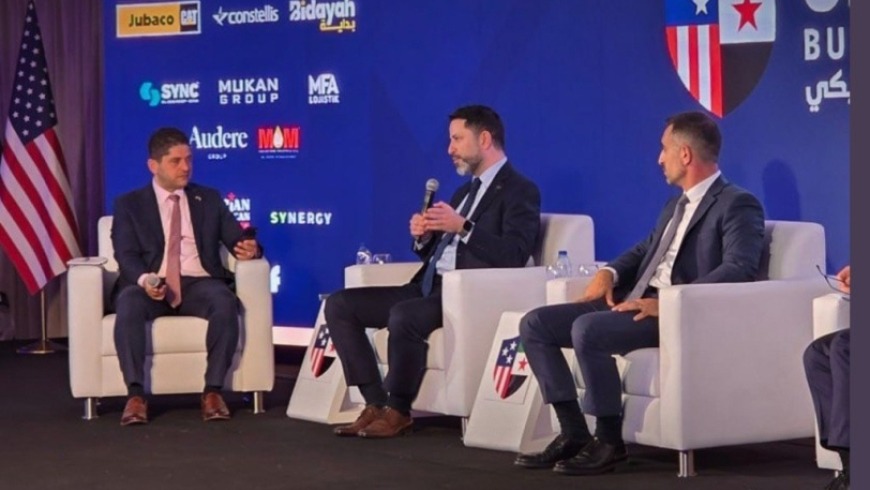
Speaking at the Syrian-American Business Forum at the Dama Rose Hotel in Damascus, Raslan said the Central Bank is updating the laws and regulations governing the banking sector and expanding cooperation with domestic and international financial institutions. These reforms, he noted, are designed to meet the demands of post-war reconstruction and long-term economic development.
According to the state news agency SANA, Raslan explained that while Syria’s banking sector maintains a solid baseline of compliance with international standards, it urgently requires modernized legislation to adapt to the next phase of recovery. He said the Central Bank is currently implementing short-, medium-, and long-term strategies to modernize the sector and establish a sustainable monetary and economic vision.
Raslan also highlighted the success of Syria’s recent currency replacement initiative, reporting that roughly 80 percent of the money supply has been exchanged despite the severe logistical challenges inherited from years of conflict. He added that the lifting of international sanctions and the resulting increase in cash inflows will play a critical role in strengthening economic stability.
The Syrian-American Business Forum brought together ministry officials, commercial representatives, and trade delegations from both Syria and the United States.
The event comes amid a rapid acceleration of economic and diplomatic activity in Syria since the fall of the Assad regime in December 2024. International attention has increasingly shifted from political and security concerns toward investment opportunities and economic revitalization, aligning with Damascus’s intensified efforts to attract foreign and Arab capital.
In recent months, the Syrian government has expanded its engagement with foreign governments, international financial institutions, and chambers of commerce. President Ahmad al-Sharaa has held a series of high-level meetings with Syrian, Arab, and international investors, prioritizing opportunities in energy, manufacturing, infrastructure, and services as pillars of the country’s economic recovery.
This article was translated and edited by The Syrian Observer. The Syrian Observer has not verified the content of this story. Responsibility for the information and views set out in this article lies entirely with the author.