Mogadishu (WDN)- Somalia is reportedly preparing for one of its largest military offensives in years against Al-Shabaab, with Turkey expected to assume a significantly expanded role in supporting government forces. The planned campaign has renewed debate over whether increased Turkish military involvement can achieve what nearly two decades of international assistance—including extensive U.S. military support—have struggled to accomplish.
According to security sources familiar with the preparations, the offensive follows President Hassan Sheikh Mohamud’s directive to launch what officials describe as a decisive campaign aimed at weakening Al-Shabaab’s control over large parts of southern Somalia.
Military planning is reportedly at an advanced stage, with units of the Somali National Army preparing coordinated operations across Galmudug, Hirshabelle, and South West State, where Al-Shabaab continues to maintain a significant presence. The first phase of the campaign is expected to target Galgaduud, Hiiraan, and Middle Shabelle before expanding into Bay, Bakool, Lower Shabelle, and Gedo.
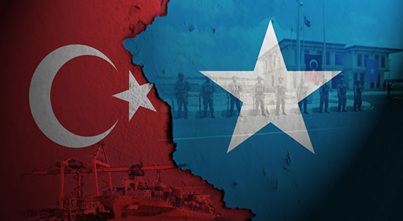
Turkey, which has become one of Somalia’s closest strategic partners through defense cooperation, military training, and infrastructure investment, is expected to provide extensive air support throughout the operation. Turkish assistance has previously included drone operations, military training, and logistical support, but analysts anticipate a broader operational role during the upcoming campaign.
Reports indicate that Turkey’s Bayraktar armed drones could provide persistent intelligence, surveillance, reconnaissance, and precision-strike capabilities in support of advancing Somali forces, improving their ability to target militant positions while coordinating ground operations.
Beyond security cooperation, Turkey has developed significant strategic and economic interests in Somalia, including infrastructure projects, energy exploration agreements, and long-term commercial investments. Analysts note that improving security around areas linked to Turkish investments would also advance Ankara’s broader regional objectives.
The Somali government is also seeking to reduce its long-term dependence on international peacekeeping forces. Under the proposed strategy, specially trained stabilization units would be deployed to secure newly liberated areas, allowing frontline combat units to continue offensive operations deeper into Al-Shabaab-held territory.
Can Turkey Succeed Where Others Have Struggled?
The planned offensive nevertheless raises a broader strategic question: Can a Turkish-backed military campaign succeed where previous international efforts have produced only limited and often temporary gains?
For nearly two decades, Somalia has benefited from extensive military assistance provided by the United States, the African Union, Türkiye, and other international partners. U.S. support alone has included intelligence sharing, military training, special operations, and hundreds of airstrikes targeting Al-Shabaab leaders and infrastructure.
While those operations eliminated numerous senior commanders and disrupted militant networks, Al-Shabaab has repeatedly demonstrated an ability to regroup, recruit new fighters, and re-establish its presence after government forces withdrew from captured areas.
Security experts have long argued that the group’s resilience stems not only from its military capabilities but also from weaknesses in governance, political fragmentation, corruptin, inadequate local security institutions, and the government’s limited ability to hold and administer recaptured territory.
Whether Turkey’s deeper military involvement can fundamentally change that equation remains uncertain. Advanced military technology and expanded airpower may improve battlefield effectiveness, but many analysts contend that a lasting defeat of Al-Shabaab will ultimately depend on effective governance, political reconciliation, functioning local administrations, and sustained security after combat operations conclude.
Questions Over Turkey’s Political Neutrality
Turkey’s anticipated role in the offensive is unfolding against an increasingly complex political backdrop. While Ankara maintains that its military cooperation is intended solely to strengthen Somalia’s internationally recognized Federal Government and combat terrorism, a significant segment of Somalia’s opposition—as well as political leaders in Puntland and Jubaland—argues that Turkey is no longer viewed as a neutral security partner.
Opposition figures contend that Ankara has become closely aligned with President Hassan Sheikh Mohamud’s administration, pointing to Turkish military support during the Federal Government’s operation in Baidoa, which resulted in forces loyal to former South West State President Abdiaziz Hassan Mohamed (Laftagareen) losing control of the city.
For many critics, that operation reinforced the perception that Turkish military assets were used in a campaign with significant domestic political implications, rather than exclusively in counterterrorism operations against Al-Shabaab.
As a result, sections of Somalia’s opposition now argue that Turkey risks being perceived not merely as a strategic ally but as an actor influencing the country’s internal political balance. They contend that such perceptions could undermine Ankara’s credibility as an impartial partner and complicate future efforts to build broad national consensus on security and political reforms.
Turkish officials have consistently rejected such characterizations, maintaining that all military assistance is provided at the request of Somalia’s internationally recognized government and is directed toward strengthening state institutions and combating terrorism.
Nevertheless, perceptions often carry significant weight in counterinsurgency campaigns. Public confidence, political legitimacy, and trust among regional administrations are frequently as important as battlefield victories. If major opposition groups and some Federal Member States continue to view Turkey as a partisan actor rather than a neutral security partner, Ankara’s expanding military role could become a source of political controversy even as it seeks to help weaken Al-Shabaab.
As Somali forces prepare for what could become one of the country’s 2nd most significant military campaigns in recent years, expectations are high. Yet the central question remains unresolved: Will this offensive represent a genuine turning point in the fight against Al-Shabaab, or will it become another chapter in a conflict that has repeatedly demonstrated that military victories alone are insufficient to secure lasting peace?
WardheerNews