By Sir Dr Frank Ofagioro Kabui, first Attorney-General of Solomon Islands
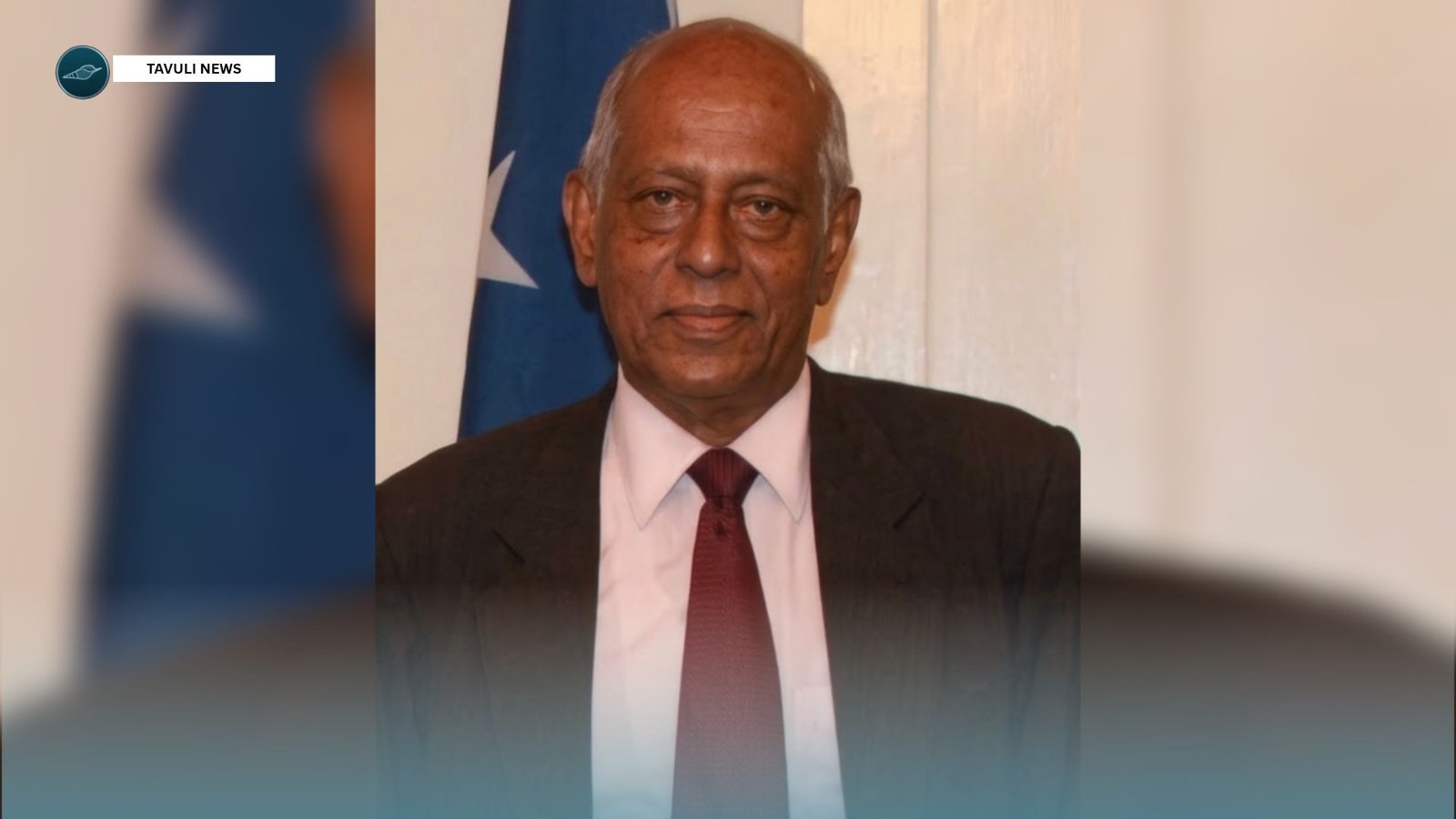
It was with sadness that I learned of the passing of my great friend, Ranjit Hewagama, at his home in Sri Lanka on Friday, 23 October 2026.
I pay this tribute on my own behalf and on behalf of those who worked with him in the Attorney-General’s Chambers from 1985. Some of our former colleagues have already passed on.
Ranjit and I remained in regular contact by email after he returned to Sri Lanka, and I knew that he had not been well. I understood that he had suffered a mild stroke.
I knew Ranjit very well. Our friendship began in 1985 and lasted for more than 40 years. A citizen of Sri Lanka, he served the Government and people of Solomon Islands for over 30 years. In recognition of his service, he was honoured by the Queen with the award of Commander of the Order of the British Empire (CBE).
Before coming to Solomon Islands, Ranjit had served for about nine years in the drafting section of the Government of Jamaica.
His arrival in Solomon Islands
I recruited Ranjit in 1985 through the Commonwealth Secretariat in London, under the Commonwealth Fund for Technical Cooperation (CFTC). The CFTC had advertised the position of Legal Draftsman in Solomon Islands, and Ranjit applied and was appointed.
Before his arrival, Solomon Islands had relied on legal drafting services provided on a short-term basis. By 1985, those services were no longer available, and it was time to establish a more permanent arrangement.
The CFTC agreed to fund Ranjit’s appointment for two years on the condition that Solomon Islands provided a local counterpart. We did not have one at the time, but we promised to provide a counterpart during his contract.
Ranjit arrived in 1985 with his wife and their son, their only child. When his initial contract expired, we sought an extension of one year, followed by a further six months. The CFTC then declined to extend it again.
The Solomon Islands Government decided to take over his contract, offering slightly better terms to encourage him to stay. It was a sacrifice for the Government, but we were in desperate need of a Legal Draftsman.
Under Ranjit’s leadership and guidance, we recruited a local counterpart to work with him. Unfortunately, that officer resigned. Other local officers were recruited in succession, but they too eventually left the Attorney-General’s Chambers.
During the period when RAMSI was in Solomon Islands, legal drafting remained largely a one-person service. The counterpart arrangement had gradually faded, and drafting capacity was declining. RAMSI personnel later came in, and Ranjit eventually retired, continuing to live in Honiara.
A lasting contribution to our laws
Among Ranjit’s major achievements was the Revised Edition of the Laws of Solomon Islands. He was the initiator and driving force behind the project, setting it up from the beginning.
The previous revised edition dated back to 1961, and it was clear that the laws needed to be updated. Law revision was a technical subject about which I knew little, but I gave the project my full support.
Our first challenge was finding finance. We approached friendly countries, including the United Kingdom, but none was willing to fund it. Fortunately, the then Permanent Secretary in the Ministry of Finance agreed that the project could be financed from our own revenue.
We then had to decide whether to publish the revised laws in bound volumes or in loose-leaf form. We chose bound volumes: the green 1996 Revised Edition of the Laws of Solomon Islands that can still be seen today.
The next challenge was finding a commissioner to lead the project. Ranjit identified a Sri Lankan of Tamil origin who had risen to the position of Deputy Legal Draftsman in Sri Lanka and had later migrated to Canada. He had also undertaken a law revision project in the Cayman Islands.
He was an extraordinary person. Although he did not have a law degree, he had become Deputy Legal Draftsman in Sri Lanka. He was retired and over 60 years of age when we brought him to Honiara, provided him with staff and office space, and entrusted him with the work.
The project cost SBD2 million. It was money well spent.
Ranjit also drafted legislation to replace laws that had applied in Solomon Islands under Schedule 3 to the Constitution. Schedule 3 allows certain laws passed by the British Parliament to apply until Solomon Islands passes its own laws. It is a useful provision for filling gaps where local legislation does not yet exist.
After discussions with Ranjit, he drafted a number of laws, including the Limitation Act, the Bankruptcy Act and several others covering matters previously dealt with under Schedule 3.
Another piece of legislation he drafted was the Legal Practitioners Act 1987. At the time, there was debate about whether such a law should be introduced and how soon it should be done. Some thought it should be delayed. We took the opposite view and believed the time had come. Ranjit drafted the Bill, which was taken to Parliament and passed into law.
A trusted friend and colleague
Ranjit was friendly and trustworthy, and he valued respect for others. He was humble, but firm in the face of outside views, always siding with the interests of Solomon Islanders.
He was highly experienced in legal drafting and had a small group of experienced draftsmen in Sri Lanka whom he consulted from time to time. Although I did not practise drafting myself, I learned a great deal from him about the field.
He had many friends within and outside Government, in Honiara and in the provinces. He used to smoke and enjoyed his whisky with water.
I regard him as a pioneer draftsman who worked largely alone in a small, newly independent country. Even after retiring in Honiara, he remained willing to offer advice and guidance.
We have lost a great man in the field of legal drafting. His retirement left a gap that, in my view, the country has not recovered from. Solomon Islands is currently without a Legal Draftsperson, reflecting how difficult it is to find people with these skills.
One thought remains with me, and I believe it was also close to Ranjit’s heart. After more than 40 years, the office of the Legal Draftsman has yet to be localised. Though he was a foreign citizen, I believe he felt deeply about this. I may not live to see it happen, but that is life.
On behalf of his colleagues in the legal profession, I offer our condolences to the surviving members of Ranjit’s family.
May his soul rest in peace.
26 October 2026