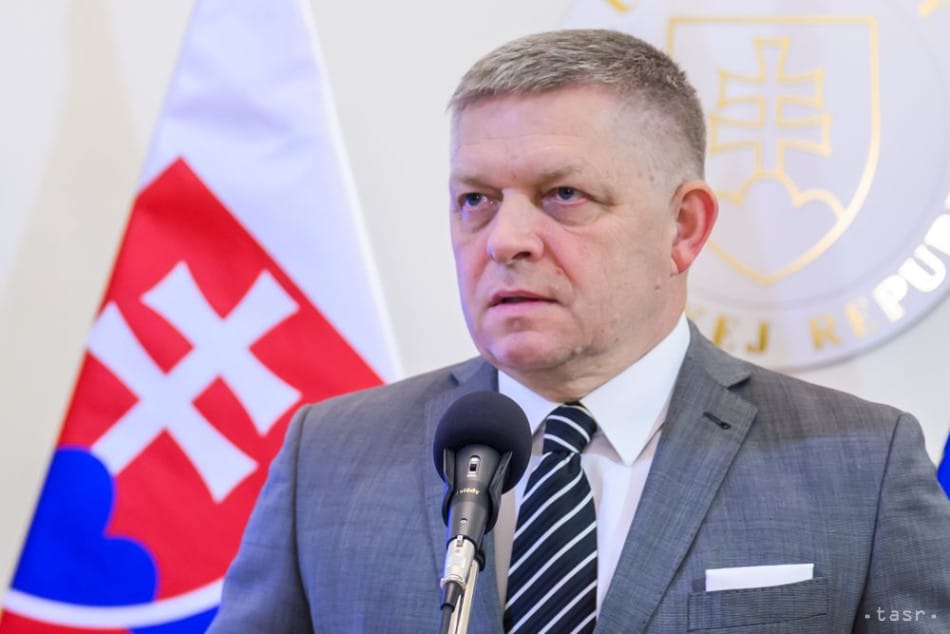
Brussels, 27 November (TASR-correspondent) – Slovakia is among the countries prepared to make compromises, and it supports efforts to conclude negotiations on the EU’s future seven-year budget (2028–2034) by the end of this year, stated Prime Minister Robert Fico (Smer-SD) in Brussels on Friday, referring to Thursday’s (26 November) European Council meeting.
Fico said that Thursday was entirely devoted to discussions on the state of the EU’s budget, and he praised the role played by European Council President Antonio Costa, who listened to all the leaders and the various groups of countries – the ‘frugal’ ones, the net contributors to the EU budget, and the ‘Friends of Cohesion’ group, to which Slovakia belongs.
“No concessions were made yesterday. I didn’t get the impression that anyone said: ‘Right, let’s now take the path of compromise’,” he said, adding that he was among those prepared to compromise, but also among those wishing to highlight certain specific features of his own country, such as large farms and price caps on direct payments.
The premier pointed out that on Thursday the leaders focused on three fundamental questions – what the total size of the EU budget will be, how these resources will be allocated, and what the new own resources should be.
According to him, the negotiations indicated that a group of countries is proposing to increase the budget – which Costa had suggested as a compromise at €1.8 trillion – while another group is proposing to reduce this figure, and the ‘Friends of Cohesion’ group is rejecting any cuts to spending aimed at reducing regional disparities or at agricultural policy.
“Slovakia will continue to be among the countries that receive more from the EU budget than they contribute to it,” stated the prime minister, noting that the long-term budget will bear some resemblance to the recovery plan, as it will include milestones and conditions, and the drawing of funds will be subject to stricter conditions.
“I’ll be discussing these specific Slovak issues,” he said regarding the ongoing negotiations, which will continue until the EU summit in December. “I realise how important it is to reach an agreement by December,” he added, referring in particular to next year’s spring presidential election in France.
“On behalf of the Slovak government, I must say that if we wish to remain net recipients, we must be prepared for our contribution to the EU budget to increase. I don’t want to say exactly how much this will amount to at this stage, as it may vary depending on the total size of the budget,” he stated.