Over the next few years, there should be enough locations along Serbia’s main transport network where drivers can refuel their vehicles.
This will apply even to vehicles powered by hydrogen, natural gas or batteries. Refuelling and charging facilities should also be available for ships, aircraft and trains.
A draft Law on Alternative Fuels Infrastructure is currently being prepared.
230 public charging points in Serbia
The public consultation period runs until 25 June. Comments, proposals and suggestions are being accepted by the Ministry of Construction, Transport and Infrastructure.
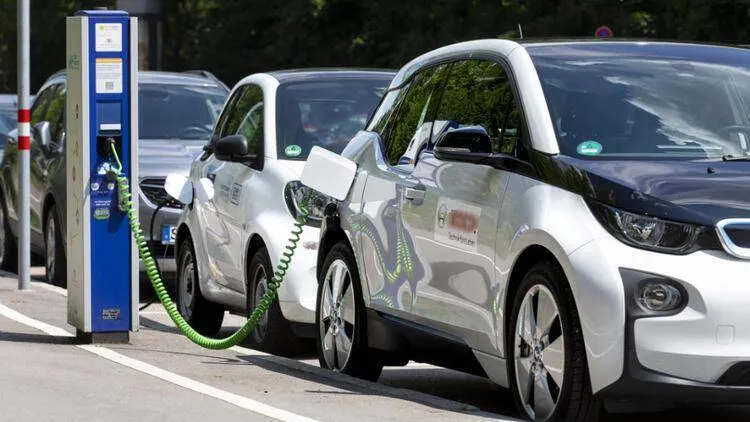
According to the latest data, electric vehicles in Serbia can currently be charged at around 230 public charging points.
Approximately 7,200 electric vehicles are registered in Serbia and rely on this infrastructure.
What the law is intended to address
The harmonisation of Serbian regulations with European legislation has been anticipated for some time. The draft law aims to achieve this, while also addressing several other issues related to the development of alternative fuels infrastructure.
Filip Mitrović, an e-mobility consultant, highlights two key issues: the conditions for installing charging stations and the method of charging users for their use. “We currently face numerous problems. When someone wants to install a charging station, they must submit an application to the local authority. That authority may require a building permit for the charger, which makes little sense,” Mitrović told Forbes Serbia.
He emphasised that European regulations help address these issues in two ways. “Firstly, a charging station should not be treated as a construction structure requiring a building permit. Secondly, and perhaps even more importantly, a fair charging payment system should be introduced,” Mitrović said.
Towards fair pricing
Mitrović added that Serbia is somewhat unique in Europe when it comes to the method of billing charging station users. “We currently have a major problem. In Serbia, charging is billed according to the time spent connected to the charger. Electric vehicle users know this makes no sense. The only fair system is charging based on the number of kilowatt-hours consumed,” Mitrović argued.
The current draft law does not define fair pricing quite so specifically. Instead, it states that prices must be “reasonable, easily and clearly comparable, transparent and non-discriminatory”. “Operators of publicly accessible charging stations may not discriminate through pricing between end users and mobility service providers, nor between different mobility service providers. Price differences may only exist where they are proportionate and objectively justified,” the draft states.
One charging station per 50,000 residents and every 60 kilometres
Under the draft legislation, every municipality with a population of 50,000 or more will be required to provide at least one charging station for light electric vehicles.
Each station must include a minimum of five charging points. The deadline is two years from the law’s entry into force. Municipalities located on international cycling routes will also be required to install at least one charging station for electric bicycles. These stations must provide at least two charging points, with the same two-year implementation deadline.
On state roads that form part of the transport network, publicly accessible charging stations for light vehicles will be located no more than 60 kilometres apart.
Prescribed power capacity targets
The draft sets minimum output capacity requirements that must be met at the end of each year, beginning in 2028. For every registered battery-electric light vehicle, the total available charging capacity must be at least 1.3 kW. For every registered hybrid light vehicle, the total capacity must be at least 0.8 kW.
The draft also specifies distances at which charging facilities for heavy electric vehicles must be installed on state roads. Such facilities must cover at least 15 per cent of the state road network and provide dedicated charging hubs for heavy electric vehicles. Each hub must offer a total output capacity of at least 1,400 kW and include at least one charging point with an individual output of no less than 350 kW.
The deadline is five years from the adoption of the relevant planning document.
Hydrogen refuelling locations
State road operators, as well as future road developers, will be required to designate locations for hydrogen refuelling stations. The maximum distance between stations is set at 200 kilometres. The deadline is seven years from the law’s entry into force.
“Within ten years of the adoption of the planning document referred to in paragraph 1 of this article, publicly accessible hydrogen refuelling stations must be installed on state roads forming part of the core indicative TEN-T network, with a capacity of at least one tonne per day and equipped with a 700-bar pressure dispenser,” the draft law states. As for liquefied natural gas (LNG) refuelling stations, these will be installed in accordance with market demand assessments.
Facilities also planned for ports and airports
“The authority responsible for managing ports and international passenger terminals shall ensure that all inland waterway ports on the indicative core TEN-T network provide at least one shore-side electricity supply installation for inland navigation vessels,” the draft law stipulates.
Within three years, airports will also be required to provide electrical power to stationary aircraft. This obligation applies to all contact stands used for commercial air transport operations involving passenger boarding and disembarkation. Exceptions will apply only in emergency situations where the electricity supply is unavailable.
A national policy framework will determine the development of alternative fuel technologies and propulsion systems for railway sections that cannot be fully electrified. Potential alternatives include hydrogen-powered trains and battery-electric trains.
(eKapija, 10.06.2026)
https://www.ekapija.com/news/5572239/srbija-dobija-mrezu-punjaca-za-elektricna-vozila-vodonik-i-gas-lokacije-ce