The automotive industry was one of the key drivers of Serbia’s economic growth last year. Thanks to a 35.4 per cent increase in motor vehicle production, primarily at Stellantis’s factory in Kragujevac, industrial production received a significant boost, while car exports increased almost sixfold compared with 2024. The total contribution of this sector to gross domestic product (GDP) growth is estimated at around 0.2 percentage points.
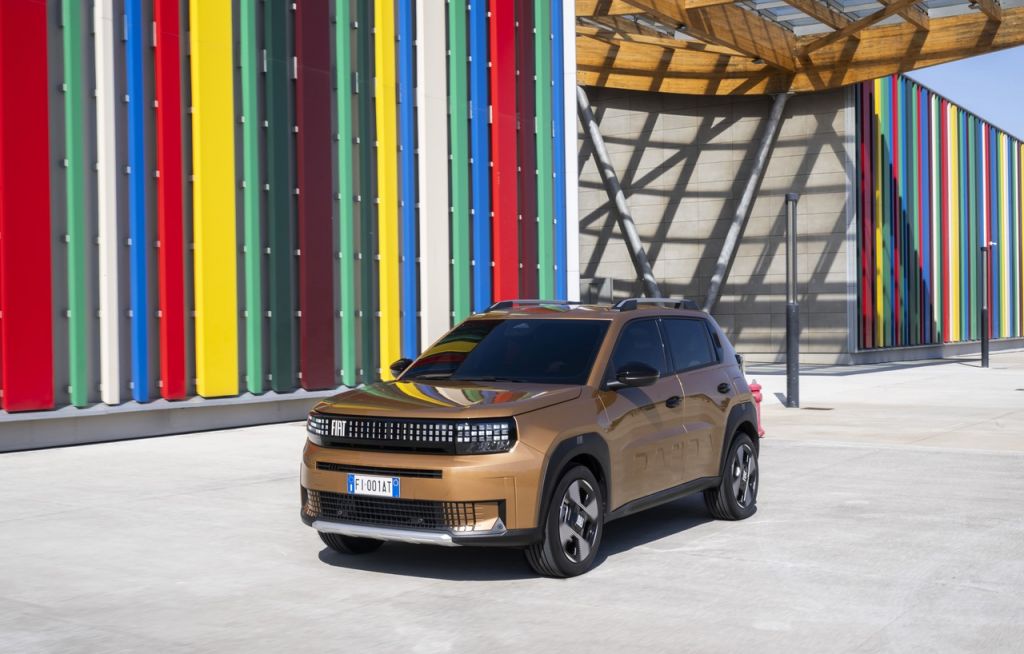
The growth in production within this industrial branch over the past two years has mainly been the result of serial production of two models belonging to the small car segment (the so-called B segment) – the Fiat Grande Panda and the Citroën C3. According to the May Inflation Report of the National Bank of Serbia (NBS), Fiat sold a total of 271,000 vehicles in the EU, EFTA countries, and the United Kingdom in 2025, representing a decline of more than 10 per cent compared with the previous year. An even larger drop in sales occurred in 2024, exceeding 20 per cent.
“The intention to target the small car segment with the Grande Panda model is entirely rational, given that this is one of the largest and most competitive segments of the European market. Of the total 13.3 million newly registered vehicles in Europe in 2025, almost 15 per cent were small cars, with sales volume growth of approximately eight per cent compared with 2024. Together with the A segment (small city cars), the B segment accounts for around one-fifth of the European automotive market,” the report states.
Growing Grande Panda’s export from Serbia – only model with three powertrain variants
A recent announcement by Stellantis further supports a more optimistic outlook for the Grande Panda model. According to the NBS report, the model climbed to third place among the best-selling cars in Italy since the beginning of the year. Such a result is also linked to strong growth in trade between Serbia and Italy, with Serbian exports reaching €790 million in the first three months of the year – almost double the amount recorded during the same period the previous year, when exports totalled €436 million.
Moreover, Bloomberg Adria recently reported that Serbia’s foreign trade increased by 3.3 per cent to more than €19 billion compared with the first quarter of the previous year, while the trade deficit was significantly reduced, primarily due to lower energy imports. During that period, exports rose by 7.1 per cent, and a surplus was achieved in trade with Italy for the first time in a long while, mainly thanks to automobile exports, while trade with Germany, Serbia’s principal external trade partner, also increased.
According to the NBS, one of the key advantages of the Fiat Grande Panda is that it is the only small car model in Europe offered in three powertrain variants:
* fully electric;
* hybrid;
* petrol-powered.
Most competitors on the market offer one or at most two options, while almost no other manufacturer currently provides both hybrid and electric versions simultaneously.
“This offering is particularly relevant in view of two key groups of buyers in this segment: on the one hand, customers with greater purchasing power seeking a second or third household car and increasingly choosing hybrid and electric variants, and on the other hand, those for whom price is the decisive factor and who generally opt for petrol versions as the most affordable solution,” the Inflation Report states.
What are the Grande Panda’s weaknesses?
As noted in the report, the European automotive market is characterised by a large number of competitors. Added to this is the fact that many hybrid and electric models already on the market often feature more powerful engines and faster gearboxes than the Grande Panda. Almost every automotive brand present on the European market has at least one small car model, meaning that more than 20 direct competitors to the Grande Panda can currently be identified.
For two consecutive years, the best-selling small car model in Europe has been the Dacia Sandero, with around 244,000 units sold in 2025, while second place went to the Renault Clio with 230,000 sales.
More than 100,000 units of the Toyota Yaris, Opel Corsa, Citroën C3, Škoda Fabia, and Volkswagen Polo were also sold last year, while the electric Renault 5 has also achieved significant sales, with more than 80,000 units sold in only its second year of production.
“An additional risk is the increasingly strong entry of Chinese manufacturers into the European market.”
The weaker customer loyalty typical of small car buyers, compared with higher market segments, “could represent a significant opportunity for the Grande Panda, particularly with a good pricing policy”.
“An additional opportunity lies in expansion into other markets where Fiat already has a strong presence, above all in Brazil, where it generates almost 50 per cent of its total sales, as well as in Turkey and Algeria,” the NBS states.
One idea highlighted for boosting sales of small vehicle models is the possibility of Fiat developing an entire Panda family of vehicles. This could include, for example, the Giga Panda, according to the NBS report, whose premiere unveiling is expected at the Paris Motor Show this October.
“For Serbia, this could be of particular importance, as expanding the Panda family of models could contribute to greater production volumes in Kragujevac, the creation of new jobs, and the strengthening of the role of the domestic automotive industry.”
Despite the challenges, the NBS emphasises that the Fiat Grande Panda fundamentally has significant potential for successful market positioning, as confirmed by strong sales growth during the first quarter of this year. “The success of this model is of particular importance because it is manufactured in Serbia, thereby contributing to the development of the domestic automotive industry, export growth, and overall economic growth. It is estimated that every 10,000 vehicles produced contributes approximately 0.1 percentage points to GDP growth.”
(Bloomberg Adria, 15.05.2026)
https://rs.bloombergadria.com/biznis/kompanije/104286/kako-grande-panda-jaca-srpsku-auto-industriju-i-gde-su-njene-slabosti/news