Serbia is turning to sun, wind, and water to reduce its dependency on Russia, diversify its energy sources, and gradually phase out coal. In this energy transition, an increasing number of companies from China are coming to the fore.
They are entering the country as investors, project owners, contractors, and equipment suppliers.
Alongside infrastructure, industry, and technology, this has opened another chapter of cooperation between Belgrade and Beijing, whilst raising the question: is Serbia replacing one form of energy dependency with another?
“This field is still in its infancy, but a very strong starting position for it already exists,” Stefan Vladisavljev from the non-governmental BFPE Foundation tells Radio Free Europe (RFE).
At the relevant Ministry, officials dismiss the possibility of an over-reliance on China, stating that renewable energy projects are being developed with partners from a wide range of countries. “A specific situation exists in the solar industry, where Chinese manufacturers hold a dominant position in global supply chains. In other parts of the energy sector, there is significantly greater diversity among suppliers, investors, technologies, and funding sources,” the Ministry of Mining and Energy told RFE.
China is a key actor in the global energy transition, playing a dominant role in the development of technologies and renewable capacity.
Experience with Russia has demonstrated why this question matters. Serbia still covers around 80 per cent of its gas needs through imports from Russia, and energy dependency came sharply into focus after the US imposed sanctions on the Petroleum Industry of Serbia (NIS) due to majority Russian ownership. While Belgrade awaits the outcome of talks between NIS and Hungary’s MOL regarding a potential takeover, the European Union is striving to draw lessons from the crisis that followed the Russian invasion of Ukraine.
“Removing Russian gas from the energy system is a priority, and renewable technologies are among the best ways to achieve this,” says Caspar Hobhouse, an analyst at the EU Institute for Security Studies, speaking to RFE. He warns, however, of the risks associated with dependency on China, which include the potential for large-scale data collection on the energy grid, remote access, and sabotage.
The European Union therefore views the green transition not merely as a climate issue, but also as a matter of security, implementing measures to reduce reliance on Chinese and other suppliers it deems high-risk. “The Western Balkans are integrated into the European energy grid and will become increasingly so. Consequently, the risks built in today will be shared by everyone,” Hobhouse says.
Washington is encouraging Belgrade to safeguard its national security by diversifying its energy sources and suppliers, and by choosing reliable partners such as the US.
“Serbia’s future economic opportunities will largely depend on the investments, public policy decisions, and choices of partners it makes today,” the State Department told RFE.
They added that they remain committed to working with the Serbian government on energy security and diversification projects that advance US national interests.
With whom is Serbia producing green megawatts?
Coal-fired power plants dominate electricity generation in Serbia. As an EU candidate country, Serbia has committed to phasing out coal by 2050 to combat pollution. In 2025, around 30 per cent of electricity was produced from renewable sources, with hydroelectric plants accounting for the largest share.
The Ministry of Mining and Energy states that it is committed to green transition goals and that both the state and private sectors are collaborating in this field with companies and financial institutions from Europe, the US, Japan, China, the United Arab Emirates, Israel, and other nations. They cite examples of major state projects, including the Đerdap 2 hydroelectric plant in eastern Serbia. It is set to be constructed by American companies under a Strategic Cooperation Agreement in Energy signed between Belgrade and Washington.
Japan’s state agency is involved in plans to build the Bistrica hydroelectric plant in the south-west of the country, while German firms participated in constructing the Kostolac wind farm in the east, backed by EU financial support.
Chinese companies, according to the Ministry, are engaged in several projects at various stages of development. “The Chinese presence should not be viewed solely through project ownership. A significant portion of their involvement relates to EPC (Engineering, Procurement, and Construction) works, technology, and equipment procurement,” the Ministry noted.
Over the past decade, China was also involved in constructing a new unit at the Kostolac thermal power plant, a project criticized by international organizations for prolonging reliance on coal-fired power. “Those were primarily loan agreements where the state borrowed funds and worked with Chinese companies to modernize or build new capacity, but ownership remained in Serbian hands,” says Stefan Vladisavljev.
In an analysis published on the China in the Western Balkans portal, which tracks Chinese influence in the region, Vladisavljev notes that Chinese involvement in Serbia’s renewable energy sector now extends beyond the model that characterized the first decade of the Belt and Road Initiative.
“Chinese capital – whether independently or in partnership with companies from other states – is now entering our market directly. The primary profits, revenues, and the assets themselves remain under Chinese ownership.”
Where does China stand in Serbia’s green energy?
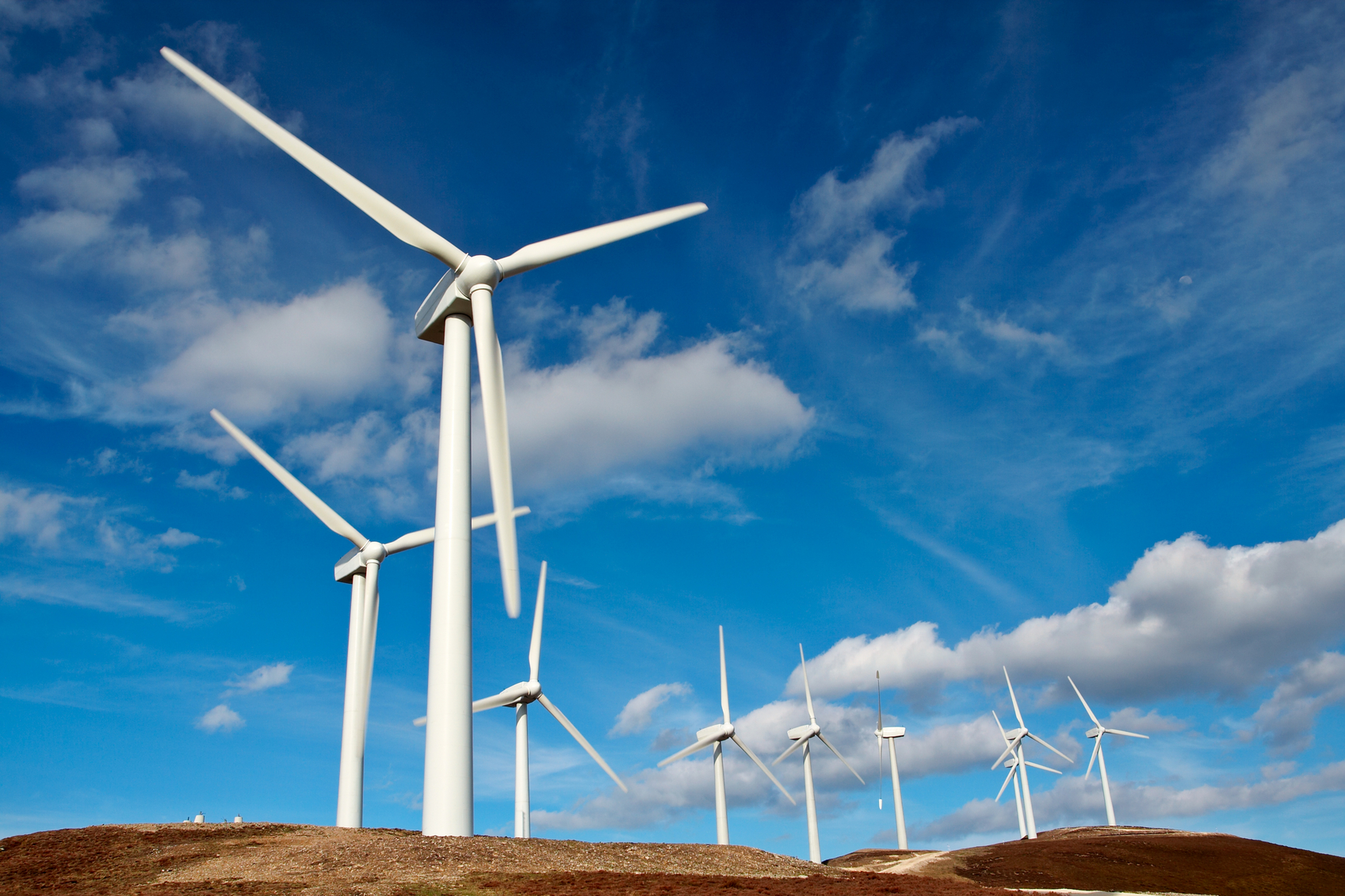
When completed in 2027 in Pančevo near Belgrade, Vetrozelena will become the largest wind farm in Serbia, with a capacity of 300 megawatts (MW).
That is how investors and the Ministry of Mining and Energy announced the Vetrozelena project. It was initiated by the international company CWP Europe. In April 2023, the firm announced a strategic partnership with Chinese state-owned enterprise PowerChina Resources, which acquired a 51 per cent majority stake in Vetrozelena. A 39 per cent stake is held by Hong Kong-registered Carren Holdings, which is also linked to Chinese state capital, while CWP Europe retains a 10 per cent share, according to public business registry records in Serbia.
PowerChina states on its website that this represents its first controlling investment in renewables in Serbia, with construction entrusted to its subsidiary, Sinohydro Bureau 5.
Caspar Hobhouse of the EU Institute for Security Studies told RFE that the primary risk in such projects lies within the wind turbines themselves – specifically their operation via connected devices and the potential for remote control over the energy system. “In this scenario, control over a valuable asset is conceded to China, which gains the capability to manipulate it,” Hobhouse says.
While the Ministry states that wind generators for power plants in Serbia are mostly sourced from Europe, PowerChina did not respond to RFE’s query regarding media reports that turbines for Vetrozelena will be supplied by the Chinese manufacturer Dongfang Wind Power.
The commissioning of the Crni Vrh wind farm is also scheduled for 2027. Located across two municipalities in eastern Serbia – Majdanpek and Žagubica – it has a planned capacity of roughly 150 MW.
The project is managed by Crni Vrh Power, a company registered in Serbia jointly owned by two Chinese firms: state-owned Shanghai Electric Power (51 per cent) and private firm CMC Capital (49 per cent), which maintains ties to the state sector.
According to business registry records, Crni Vrh Power was 100 per cent privately owned by Serbian investors until 2023, when it was acquired by its Chinese owners. A 50 per cent stake was previously held by Nikola Petrović, godfather to Serbian President Aleksandar Vučić; the transaction value was not disclosed.The primary technology and equipment supplier for the wind farm is the Chinese firm Mingyang Smart Energy.
“Fully integrated solutions across the entire chain – from equipment to engineering to maintenance – all come from China,” the company’s chairman, Zhang Chuanwei, stated in Belgrade on 18 June, adding that the cooperation exemplifies the “steelclad friendship” between Serbia and China.
In March 2026, the UK government banned the use of turbines manufactured by Mingyang Smart Energy in offshore wind farms on national security grounds.
In 2026, Hong Kong-registered Heavy Energy International took over the construction of wind farms in Alibunar, Vojvodina, from the Norwegian company Emergy. This subsidiary of Chinese wind turbine manufacturer SANY Renewable Energy purchased a 90 per cent stake in the project previously developed by Emergy and its Dutch-Belgian partner, WV International.
The remaining 10 per cent remains under the ownership of WV International, while Emergy has exited the venture.
Construction is slated for completion in 2028, with the Chinese investor expected to invest around €200 million, according to announcements by the Serbian Ministry.
Wind and sun for Zijin
The largest green energy project in Serbia was announced by officials in January 2024, when the state signed a memorandum of understanding with Chinese firm Shanghai Fengling Renewable. A combined renewable energy complex with a capacity of 2 gigawatts (GW) from wind and solar power, alongside a green hydrogen production plant, is set to be constructed near Bor in eastern Serbia.
The investor is Shanghai Fengling, with total investments estimated by the Energy Minister at approximately €2 billion.
The power generated will be utilized by Serbia Zijin Copper, owner of the mining complex in Bor. In this company, China’s Zijin Mining holds a 63 per cent stake, while Serbia owns 37 per cent.
In February 2024, the state signed a memorandum with the Chinese firm Hunan Rich Photovoltaic Science & Technology to build a solar panel factory and power plant in Paraćin, central Serbia. In September of the same year, a memorandum on strategic cooperation was signed with China Energy to expand renewable capacity and explore potential investments in energy storage construction.
“The new wind and solar power plants will deliver greater energy security, as investors across all projects have offered to sell the generated power to supply domestic consumers over the next 15 years. In other words, green energy stays in Serbia and will not be exported to other markets,” the Ministry told RFE.
Regarding hydroelectric power, China holds no significant presence in Serbia.
The situation differs in neighbouring Bosnia and Herzegovina – specifically in its entity, Republika Srpska (RS) – where the RS government contracted Chinese firms to build hydroelectric plants funded through loans from Chinese banks.
Chinese dominance and security risks
In several other Western Balkan countries where green energy is backed by European financing, projects still involve Chinese companies as contractors or suppliers, Stefan Vladisavljev notes in his analysis. “An investment coming from any country, including China, is not inherently negative, but it is essential to establish a clear system of oversight to define how investments are deployed, in which sectors, and whether certain sectors hold greater strategic importance than others.”
Strategic and security concerns surrounding the dominance of Chinese technology extend to the Western Balkans, says Caspar Hobhouse of the EU Institute for Security Studies. “Beyond supply chain issues, the geopolitical risk is whether an external actor can cripple the energy system. Should that occur, it would spill over into the entire EU, regardless of where it originated.”
China holds a particularly dominant position in the solar industry.
According to a 2026 analysis by the International Energy Agency (IEA), the country accounts for over 80 per cent of global manufacturing capacity across all key stages of solar panel production.
China is not only a manufacturer but also the world’s largest market. The IEA reports that during 2025, China installed nearly 500 GW of new renewable capacity – representing more than 60 per cent of global green energy growth. “At this stage, avoiding China is virtually impossible, primarily due to its manufacturing capacity, but also owing to the leadership position it has established in driving the global green agenda as other actors have stepped back,” Vladisavljev says.
Caspar Hobhouse notes that, wherever feasible, alternative supply chains utilizing local suppliers should be encouraged, particularly in large-scale projects and those involving public funding. “The European energy system is a strategic asset, meaning an over-reliance on China is likely to create complications down the line. It will prove more costly in the long run,” he states.
How are Western nations responding?
In May, the EU resolved to prohibit the funding of solar inverter procurement from countries it designates as “high-risk”. These include China, which previously supplied around 70 per cent of the components used in EU member states to convert electricity generated by solar panels into grid-compatible power. Because these devices can be accessed online, security experts warn they are vulnerable to hacking and targeted remote power shutdowns.
Warnings have also emerged from the United States.
In December 2025, The Washington Post published an investigation by the US strategic intelligence firm Strider Technologies, revealing that 85 per cent of companies in the US utilize inverter equipment produced by entities “linked to the Chinese government and military”.
From the perspective of renewable energy companies, such bans create operational hurdles.
In July, nearly 40 EU firms petitioned Brussels to repeal the restriction, according to Reuters.
As a security guarantee, they proposed introducing rules to restrict foreign access to their inverters once installed within the European grid.
Why did Britain ban Chinese turbines?
British officials warned that wind turbines contain sophisticated electronics, software, and sensors capable of harvesting vast volumes of data on the power grid.
Following the ban, Mingyang’s plans to invest £1.5 billion in constructing a major wind turbine manufacturing facility at the Scottish port of Ardersier collapsed. The company described the decision as a “missed opportunity” for the United Kingdom, adding that its systems fully comply with stringent security standards. Official Beijing also criticized London’s decision, asserting that national security concerns were being used as a pretext to disrupt free-market competition.
The ruling triggered internal political friction as well. The Scottish Government accused the central government in London of “sabotaging Scotland’s industrial future” and risking thousands of jobs.
Following the UK ban, Mingyang shifted its focus toward securing a manufacturing site within the European Union, entering negotiations with Spain and Baltic nations.
(Radio Free Europe, 31.08.2026)
https://www.slobodnaevropa.org/a/srbija-kina-zelena-energija-vetropark-solarna-energija-eu-sad/33840621.html