1
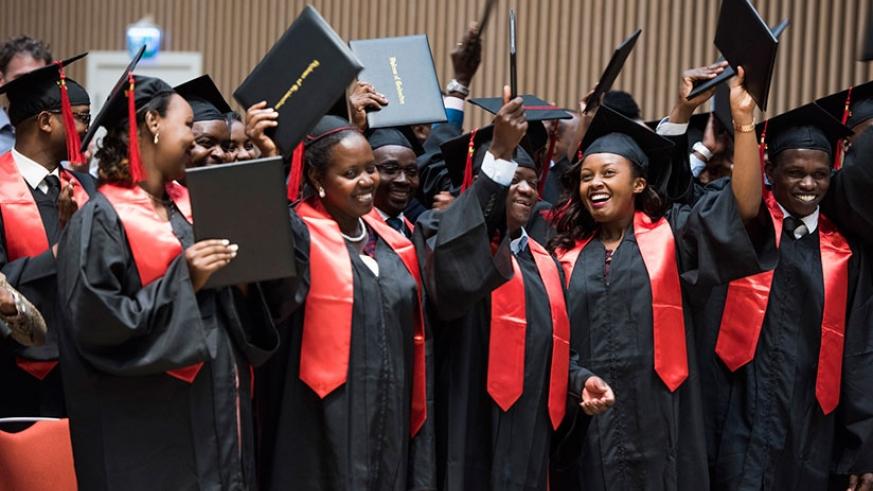
An earlier graduation at the University of Global Health Equity (UGHE), one of the international entities in Rwanda
KIGALI – Women now make up the majority of students enrolled in Rwanda’s tertiary education institutions, overtaking men in a reversal of the situation recorded seven years earlier, according to latest data by the National Institute of Statistics of Rwanda (NISR).
In Rwanda, tertiary education refers to learning after secondary school. It covers universities, polytechnics, colleges and other higher learning institutions offering qualifications ranging from diplomas and advanced diplomas to Bachelor’s, Master’s and doctoral degrees.
The finding therefore goes beyond university enrolment alone.
The Measuring Gender-in-Trade Statistics – Country Report: Rwanda, released last week shows that women accounted for 51.8 per cent of tertiary-level students in 2024, compared with 48.2 per cent for men.
The shift comes as Rwanda’s higher education system continues to expand.
The Ministry of Education’s 2024/25 Education Statistical Yearbook records 153,318 students enrolled in higher education institutions in the academic year ending July 2025, up from 130,474 the previous year.
The gender figures mark a reversal from 2017, when men accounted for 53.4 per cent of tertiary students, while women made up 46.6 per cent.
Earlier enrolment figures also show that men had a clear numerical lead at the beginning of the decade.
Academic year
Male students
Female students
Female share
2020/21
48,757
39,691
44.9%
2021/22
53,771
42,092
43.9%
By 2024, however, women had moved ahead, accounting for more than half of all students in tertiary-level institutions, according to the NISR report.
The report also points to a similar pattern at secondary level, where women accounted for 55.2 per cent of students in 2024, compared with 44.8 per cent for men.
The change in enrolment comes alongside improvements in women’s literacy. Their literacy rate rose from 60.1 per cent in 2006 to 73.6 per cent in 2024. Men still recorded a higher literacy rate of 78.4 per cent, up from 71.5 per cent over the same period.
The report says women’s growing presence in tertiary education could put them in a stronger position to enter higher-value services and formal trade, including technical and managerial roles.
It projects that the shift could contribute to gender parity in high-skilled trade sectors within five to ten years. But that outcome will depend on whether barriers such as occupational segregation, hiring discrimination and unpaid care responsibilities limit women’s transition from education into employment.
The report recommends tracking the transition of male and female graduates into trade-related jobs, encouraging gender-responsive recruitment and expanding mentorship and leadership opportunities for women.
Visited 1 times, 1 visit(s) today