1
ADDIS ABABA – Rwanda has presented its community-based health insurance scheme and its response to the 2024 Marburg outbreak as lessons for African countries seeking to reduce dependence on foreign health assistance.
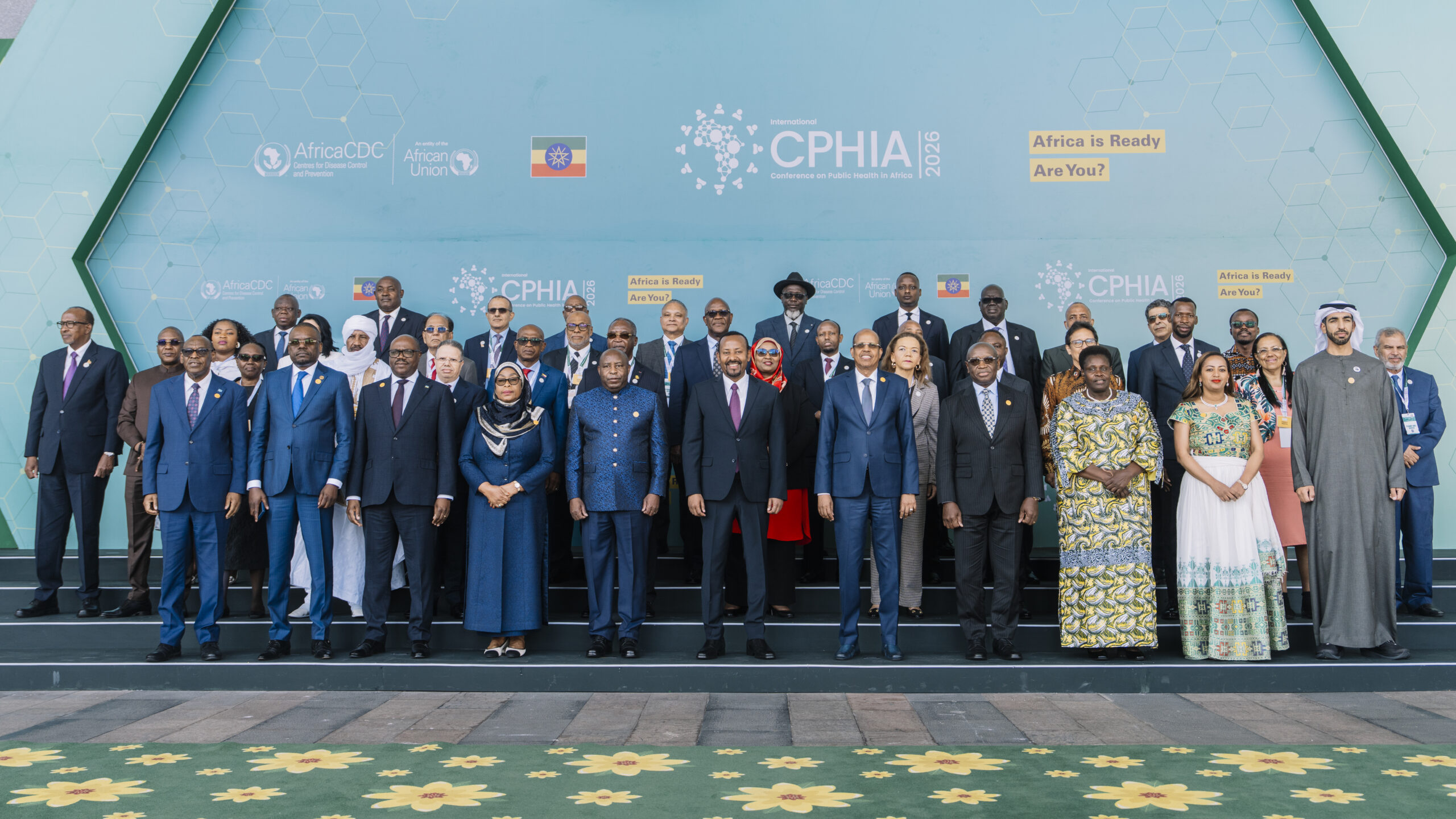
As the continent faces growing pressure to finance its own healthcare systems, Prime Minister Dr Justin Nsengiyumva addressed the Fifth International Conference on Public Health in Africa (CPHIA 2026) in Addis Ababa and offered Rwanda’s lessons.
Speaking on behalf of President Paul Kagame, who is the African Union Champion for Domestic Health Financing, Nsengiyumva demonstrated how Rwanda’s experience could help other African countries protect their populations when external support becomes less predictable.
“Reducing dependence on foreign assistance does not mean abandoning international partnerships, but ensuring African countries set their own priorities and lead implementation. We can no longer rely on others to meet our most fundamental health needs.” he told delegates.
Nsengiyumva explained that domestic financing, community-level healthcare and investment in preparedness is not about turning away from partnership.
It is about new partnership, he said, where Africa sets the priorities and leads implementation, with external financing aligned behind those priorities.
Mutuelle De Santé and The Question of Who Pays
Nsengiyumva cited Mutuelle de Santé, Rwanda’s community-based health insurance scheme, as an example of how domestic solutions can widen access to healthcare.
Over 25 years, the scheme has extended coverage to about 89 per cent of Rwandans, improving access to essential medicines and specialized treatment. He linked this progress to improvements in the country’s health indicators.
Since 2000, infant deaths have fallen from 107 to 27 per 1,000 live births, while maternal deaths have declined from 1,071 to 149 per 100,000 live births. Life expectancy has increased from about 50 to 70.5 years.
He attributed these gains to investments in health workers, digitalization and infrastructure, alongside the insurance scheme, which has helped families access care they might otherwise struggle to afford.
However, expanding coverage has also created pressure to sustain the scheme financially. Nsengiyumva acknowledged that its original structure became increasingly difficult to maintain as the burden fell disproportionately on Government.
Rwanda introduced an income-based contribution framework in 2026, requiring people with greater financial means to contribute more while the poorest receive full Government subsidies.
The Prime Minister said members now account for 37 per cent of the scheme’s financing, with Government and the private sector sharing the remaining 63 per cent.
The reforms also provide more flexible payment arrangements and extend coverage to cancer care, kidney transplantation and cardiac surgery.
For other African countries, he said, the lesson is that health financing should involve governments, households and businesses rather than depend on a single source.
“Government, households, and the private sector each have a part to play, and a financing base built on that partnership is broader and more resilient than any one of them alone,” he said.
How Marburg Tested Rwanda’s Preparedness
Rwanda’s second lesson concerns the importance of investing in outbreak preparedness before emergencies occur.
Citing the 2024 Marburg outbreak, Nsengiyumva said Rwanda did not have to build an emergency response from scratch because it already had community health workers, surveillance networks, laboratories and hospitals serving the population.
These systems were mobilized within days to support the response. Community health workers screened more than 9.5 million people in a country of approximately 14 million, he said.
Rwanda brought the third-largest Marburg outbreak ever recorded under control within three months, with a case fatality rate of 22 per cent. Nsengiyumva described this as the lowest recorded rate for a disease that has historically killed up to nine in ten people infected.
He said the experience demonstrated why preparedness cannot depend on funding mobilized only after an outbreak begins. Countries need functioning health systems and trained personnel capable of responding quickly when threats emerge.
From Financing Commitments to Lives Saved
In his remarks, Sierra Leone President Julius Maada Bio argued that health sovereignty must be judged by whether governments can turn financial commitments into better services and fewer preventable deaths.
Bio reported that maternal deaths had declined by approximately 34 per cent and child deaths by 12 per cent compared with the corresponding period last year. The country had also reached 10,764 children who had never received routine vaccinations, exceeding its campaign target of 9,006.
He attributed the progress to a national campaign launched in March, with targets to reach zero preventable maternal deaths, zero preventable child deaths and zero children missing routine vaccination.
A central feature of the campaign is a weekly accountability system in which the Ministry of Health reviews maternal and child deaths with hospital and district teams every Friday. Officials examine what went wrong, identify delays and assign corrective actions to individuals with deadlines.
Sierra Leone has also trained health workers to manage obstetric emergencies, more than doubled referrals through its national emergency medical services and rebuilt and equipped blood banks in every regional hospital, Bio said.
Under a five-year national health compact requiring an estimated US$1.2 billion, Sierra Leone intends to finance 30 per cent through domestic resources and mobilize the remainder with development partners.
Preparedness Beyond the Next Outbreak
Africa CDC Director-General Dr Jean Kaseya echoed the call for greater African ownership, urging countries to strengthen their capacity to finance healthcare, manufacture medical products, lead outbreak responses and accelerate digital transformation.
Kaseya said the conference had attracted 46,217 registrations from 135 countries, making it the largest public health conference in the world.
African Union Commission Chairperson Mahmoud Ali Youssouf warned that African health systems remained too dependent on external resources, with recent reductions in international funding exposing their vulnerability.
“The health of our populations cannot continue to depend on the budgetary priorities of others,” Youssouf said.
Visited 1 times, 1 visit(s) today