1
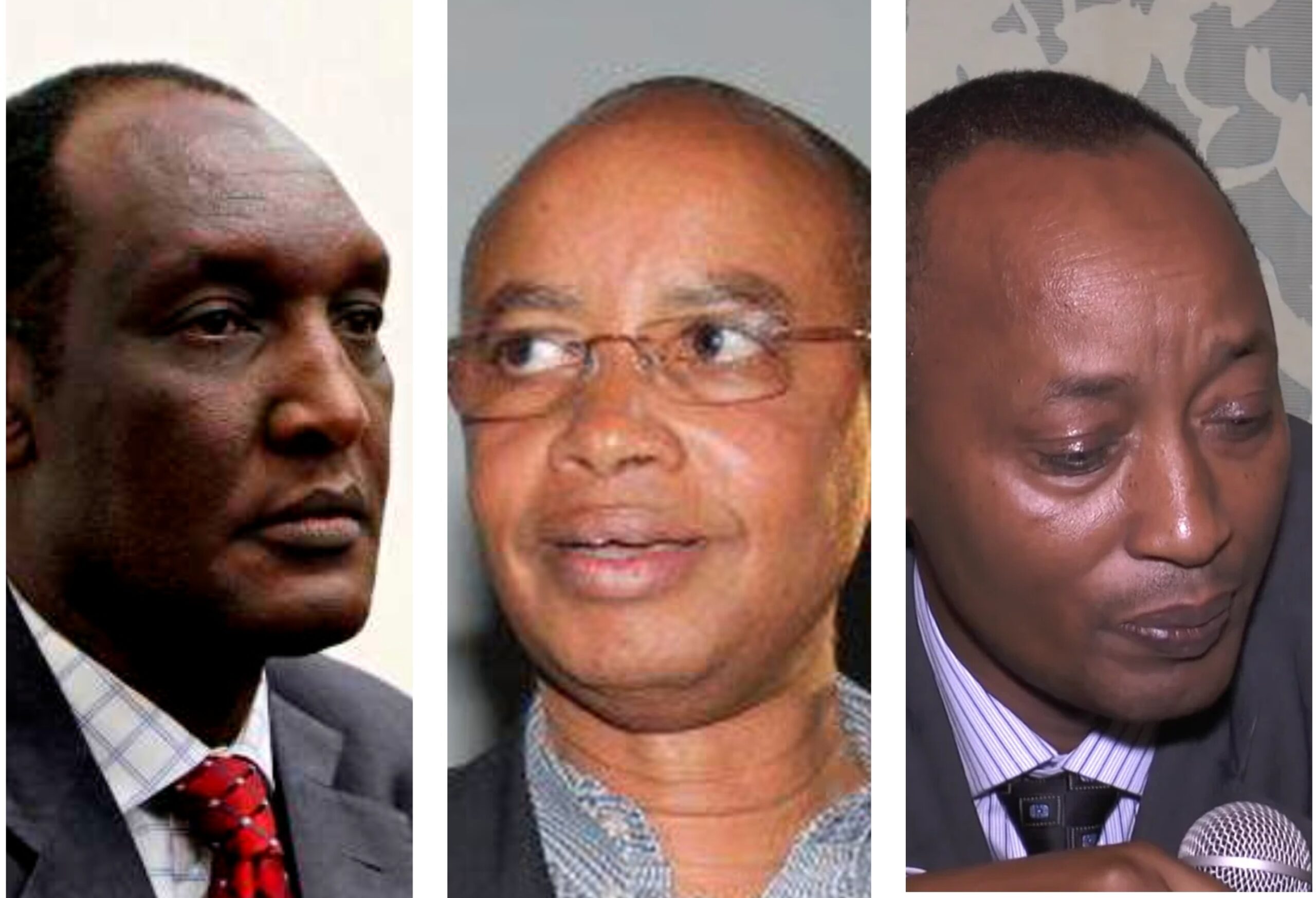
Kayumba Nyamwasa, Patrick Karegeya and Dr Theogene Rudasingwa
KIGALI, Rwanda — President Paul Kagame on Saturday accused foreign actors of repeatedly attempting to shape Rwanda’s political future by encouraging former senior officials and other prominent Rwandans to believe they could one day replace the country’s leadership, describing the efforts as a long-running campaign built on illusion rather than political reality.
Speaking during a national dialogue on the legacy of the 1994 Genocide against the Tutsi at the Intare Conference Arena, Kagame named former senior government and military figures Kayumba Nyamwasa, Patrick Karegeya and Theogene Rudasingwa as examples of individuals whom he said were persuaded by external forces that they could become Rwanda’s president.
“The same forces convinced six or eight people that they would be president,” Kagame said, drawing laughter from the audience. “How can you all be presidents at the same time?”
Kayumba Nyamwasa, a former Chief of Staff of the Rwanda Defence Forces, has lived in exile in South Africa since 2010. Patrick Karegeya, Rwanda’s former head of external intelligence, also lived in exile in South Africa until his death in Johannesburg in 2014. Dr. Theogene Rudasingwa, a former ambassador to the United States and one-time Secretary General of the RPF, is based in exile in the United States.
The three were among the founders of the Rwanda National Congress (RNC), a political outfit established in 2010 after falling out with the Rwandan government. The group has been linked to an armed coalition known as P5, whose fighters have operated mainly from South Kivu in the eastern Democratic Republic of the Congo.
Over time, however, divisions emerged within the group. Rudasingwa later broke away from the RNC to establish his own political organization, joining dozens of other Rwandan groups operating in exile across North America and Europe.
In his address Saturday, President Kagame suggested that the contradiction itself exposed what he portrayed as a deliberate strategy by foreign interests to cultivate multiple competing figures capable of challenging Rwanda’s leadership.
“They accepted that illusion,” Kagame said of the former officials.
His remarks formed part of a broader warning that external attempts to influence Rwanda’s domestic politics have continued long after the genocide, even as the country rebuilt its institutions and pursued reconciliation.
Kagame said the campaign was not limited to former political and military insiders.
He revealed that several prominent Rwandan business leaders had also been approached by outsiders and encouraged to believe they could assume the country’s highest office.
“There are business leaders who were also approached and told they could be presidents, which is not bad in itself,” Kagame said. “The problem is that they were even told they could be above the president.”
Without naming those business figures or the countries involved, Kagame argued that such approaches reflected a persistent belief among some external actors that Rwanda’s political direction could be engineered from outside.
For Kagame, the issue was not ambition itself, which he acknowledged is legitimate in a democracy, but what he described as foreign manipulation designed to manufacture political alternatives and destabilize the country.
The president’s comments came during a wide-ranging discussion on Rwanda’s history, the liberation struggle that ended the genocide, and the challenges the country has faced over the past three decades.
Throughout the dialogue, Kagame argued that Rwanda’s future must be determined by its own citizens rather than external interests. He said the country had learned painful lessons from its history and would not allow outsiders to dictate its political trajectory.
The event, organized by Unity Club Intwararumuri, brought together current and former government leaders, their spouses, senior public officials and hundreds of young Rwandans for a national reflection on the causes of the genocide, the country’s recovery and the responsibility of future generations to safeguard Rwanda’s unity and stability.
Visited 1 times, 1 visit(s) today