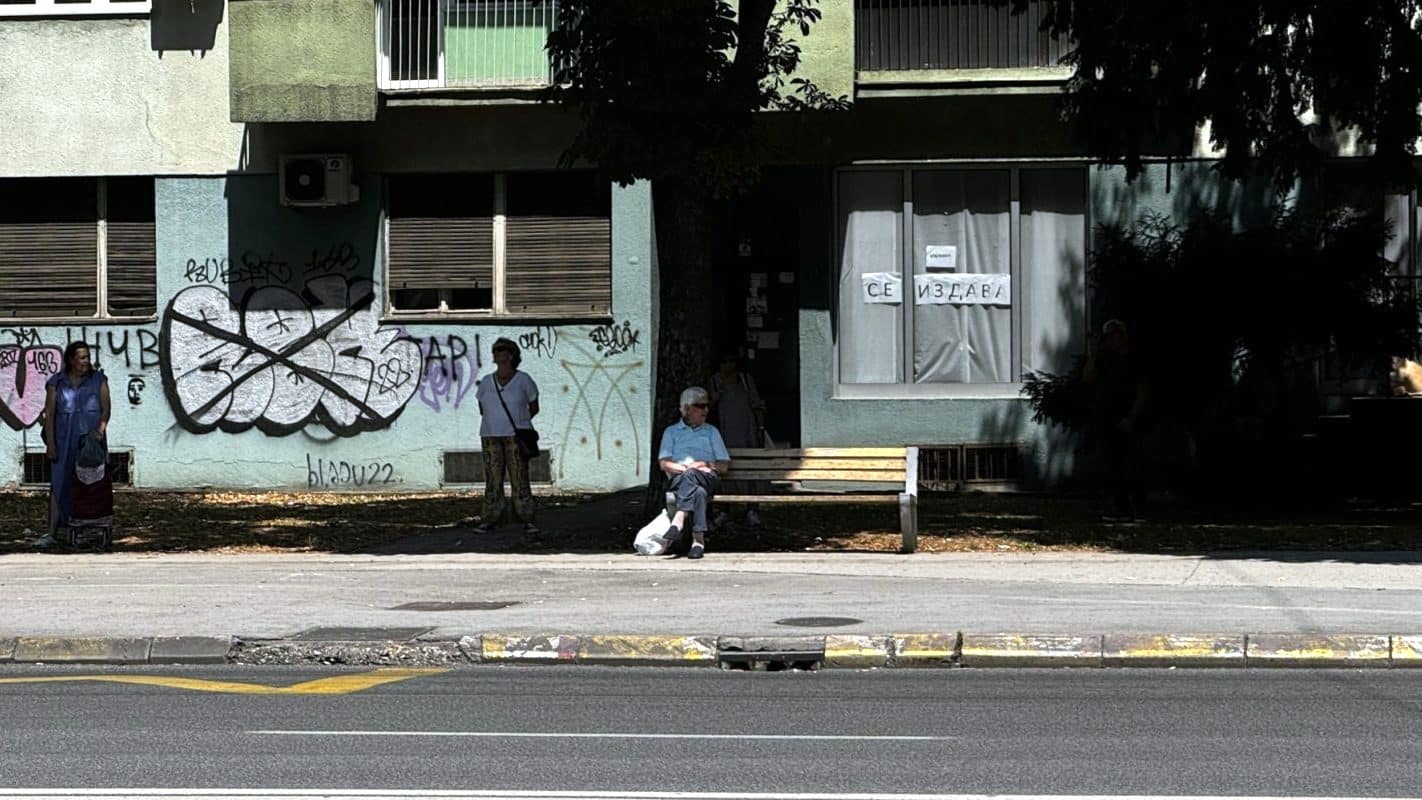
As another intense heatwave sweeps across the region, millions of people have discovered that if they live in a heavily-urbanised part of a city, it can have a major impact on temperature levels.
Concrete, asphalt and densely-packed buildings trap heat long after the sunset, creating so-called “urban heat islands” that make temperatures several degrees higher than in nearby greener areas.
Skopje, the capital of North Macedonia, offers a striking example. BIRN compared temperatures in sunny and shaded locations across the city. While not a scientific experiment, the readings highlight how trees and parks can reduce the heat.
A measurement taken at noon on one of the busiest boulevards in the city, Partizanski Odredi, showed 33 degrees celsius in the tree shade and 40 degrees in direct sunlight. The results were similar on St. Clement of Ohrid Boulevard in the city centre. Around noon, the thermometer read 34 degrees in the shade and 44 degrees in the sun.
Subscribe to Balkan Insight Premium to read the full article.
Please login to your account below if you are already a Premium Subscriber.
Buy Premium Subscription
Our Premium Service gives you full access to all content published on BalkanInsight.com, including analyses, investigations, comments, interviews and more. Choose your subscription today and get unparalleled in-depth coverage of the Southern and Eastern Europe.
Buy Premium Subscription
If you have trouble logging in or any other questions regarding you account, please contact us