Malawians received a slight boost in June after the country’s inflation rate dropped again, raising hopes of easing pressure on the cost of living despite prices remaining high.
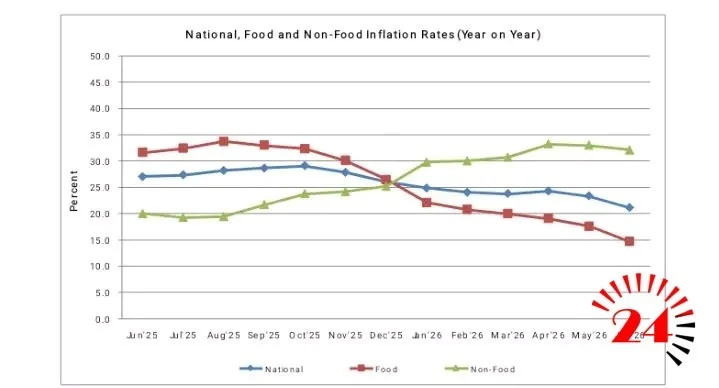
Annual inflation fell to 21.1 percent in June 2026 from 23.4 percent in May, according to the National Statistical Office’s latest Consumer Price Index report, extending the downward trend recorded in recent months.
The latest figures show that lower food prices were the main driver behind the decline in inflation, offering some relief to households that have been struggling with the rising cost of living.
According to the NSO report, food inflation dropped significantly to 14.7 percent in June from 17.6 percent in May. This indicates that the pace at which food prices are increasing has slowed, contributing to the overall decline in the country’s inflation rate.
The report also shows that non-food inflation declined slightly, easing from 33.0 percent in May to 32.1 percent in June.
Although the decrease was modest, it also contributed to the overall reduction in inflation during the month.
The continued decline in inflation is viewed as a positive sign for Malawi’s economy, as lower inflation can improve consumers’ purchasing power and ease pressure on household budgets.
However, with the overall inflation rate still above 20 percent, many households continue to face high prices for essential goods and services.
Economists say maintaining the downward trend will depend on continued stability in food production and supply, exchange rates, fuel prices, and the broader economic environment.
The National Statistical Office compiles the Consumer Price Index every month to measure changes in the prices of goods and services purchased by households. The index is widely used to monitor inflation and assess changes in the cost of living.
The June 2026 figures mark another month of easing inflation, signalling gradual progress in reducing price pressures, although inflation remains high by historical standards.