Two Indigenous women who do not speak Portuguese were denied assistance from their interpreter while voting in Brazil’s Oct. 4 election. The translator who accompanied them to the polls, community leader Mitore Tiriyó Kaxuyana, is a relative of the women and spoke to Mongabay about what happened.
Racela Tiriyó, 23, and Mirami Tiriyó, 33, are from the Tumucumaque Park Indigenous Territory in the northeastern Brazilian Amazon. They were both voting for the first time in Macapá, the capital of Amapá state.
“They wanted to vote, since they had gotten their voting card, and they asked me for help,” Kaxuyana said. “If we cannot vote in our own language, we need translation … just because we are Indigenous and speak another language we can’t be impeded from voting and exercising our rights.”
According to Kaxuyana, poll workers informed her that only voters with disabilities were authorized to receive help from a translator. A supervisor confirmed this to her, she said.
The women then voted alone with poll workers unable to provide assistance in Tiriyó, the pair’s native language. Kaxuyana was not allowed to explain the process to them and they left unsure whether their votes had gone through as intended, Kaxuyana said.
“They don’t speak Portuguese, only our language,” Kaxuyana said. “For me, it was like prejudice.”
The Tumucumaque Park Indigenous Territory is home to about 2,800 people. Kaxuyana said her territory, which she represents as the coordinator of the Articulation of Indigenous Women of the Tiriyó, Kaxuyana and Txikiyana Peoples (AMITIKATXI), is not served with voting booths, and only people who are able to independently travel to Macapá by plane are able to vote.
Under a resolution issued by Brazil’s Superior Electoral Court (TSE), Indigenous voters have the right to electoral services that respect their languages, customs and traditions.
Mongabay reached out to the Amapá regional electoral court for comment. It confirmed receipt of the inquiry but did not reply by publication.
The case comes amid several other reports of irregularities involving Indigenous voting rights in Brazil. In northwestern Amazonas state, a regional electoral judge denied a request to provide river transport for more than 40 Indigenous villages in Vale do Javari, Brazil’s second-largest Indigenous territory, home to roughly 6,300 people.
Kaxuyana brought her case to Sônia Guajajara, the former minister of Indigenous peoples and current member of Brazil’s Congress. Guajajara compiled complaints from Indigenous voters across the country in a letter sent to TSE on Oct. 8 and another letter to the regional electoral court of Amapá on Oct. 13.
Guajajara’s press office told Mongabay that she has not received a response to either complaint.
“When someone is unable to vote because there is no boat, fuel, ground transportation or assistance in their language, we are facing the denial of a fundamental right,” Guajajara wrote in a statement.
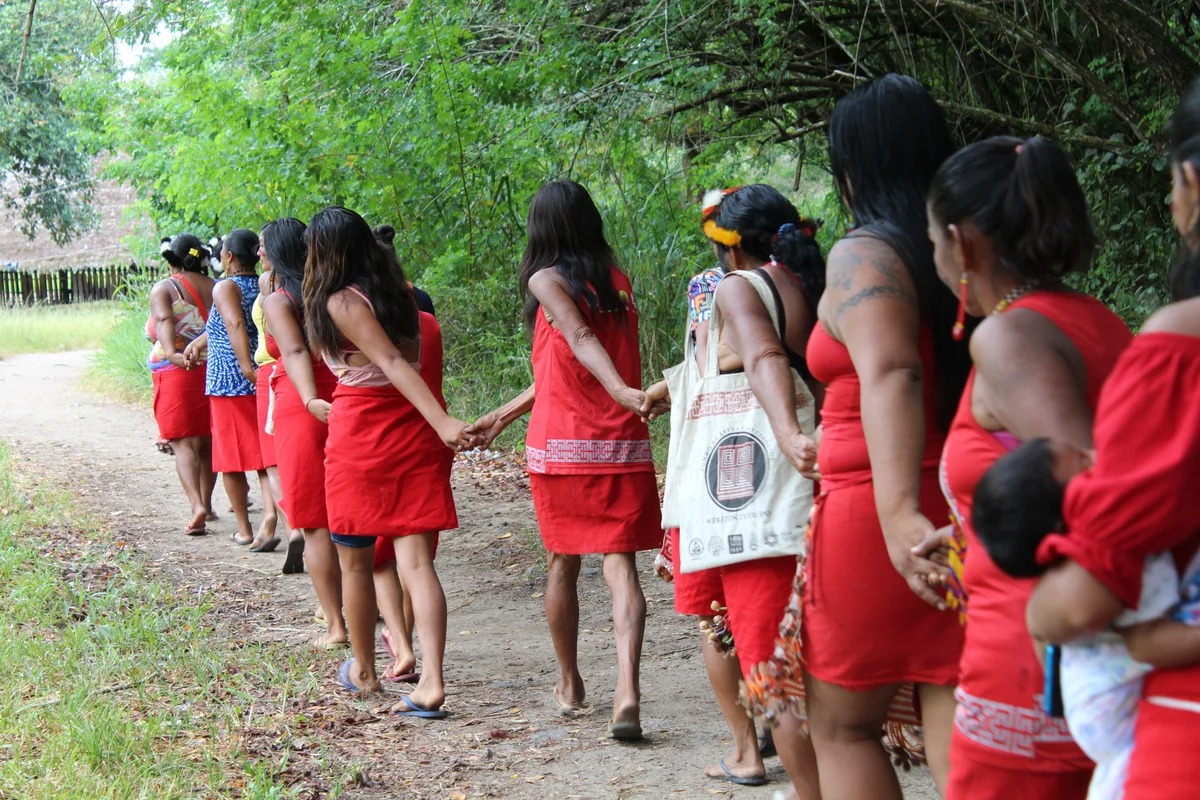
Banner image: Women from the Missão Tiriyó village in the Tumucumaque Park Indigenous Territory. Image courtesy of the Iepé Institute archive.