Want to bookmark your favourite articles and stories to read or reference later? Start your Independent Membership today.
Join today
Already a member?
Log in
Christmas houseplants are now in all the shops – but if you haven’t had much luck looking after poinsettias in the past, you may want to swap them for things which are perhaps a little easier to grow and will give you plenty of festive colour.
Claire Bishop, senior plant buyer at Dobbies Garden Centres, shares some festive alternatives to traditional yuletide plants.
Claire Bishop, senior plant buyer at Dobbies Garden Centres, offers the following ideas.
Aglaonema (Chinese evergreen)
(Alamy/PA) (Alamy/PA)
If you still want the festive red of the traditional poinsettia, you might go for the aglaonema, Bishop suggests.
“It’s very different but it gives you that beautiful red, rich, velvety leaves. It doesn’t flower but it will last. The ‘Red Star’ and ‘Red Emerald’ varieties are good.”
Top tip: Best grown in indirect sunlight in a humid spot, it can be watered sparingly in winter – just allow the compost to totally dry out before rewatering. As it’s slow-growing, it won’t need repotting more than once every two or three years.
Anthurium
This can make a good alternative to an orchid, especially if you want the red theme to continue, Bishop suggests.
Orchids look tropical but they are more about the flower than the foliage, while anthuriums – available in red and white – also have striking foliage. It may also flower for longer than an orchid, unless you are really good at getting orchids to reflower, she says.
Top tip: This houseplant likes a warm environment in bright but indirect light, in a well-drained peat-free acidic compost mix. If you can, use rainwater to water it and let the water heat up to room temperature because it doesn’t appreciate cold water.
Kalanchoe
These are among the easiest and most budget-friendly houseplants and you can get double-headed varieties which will give you really deep green foliage below a sea of red flowers, although they come in many colours, Bishop recommends.
“They are really easy to look after and if you deadhead them, you can get them to flower 365 days a year in the right light,” she says.
Top tip: Kalanchoes are succulents, so need hardly any watering. Just do it when the compost has dried out. Once they have flowered, deadhead the fading blooms and they should come back again in a bright spot out of direct sun.
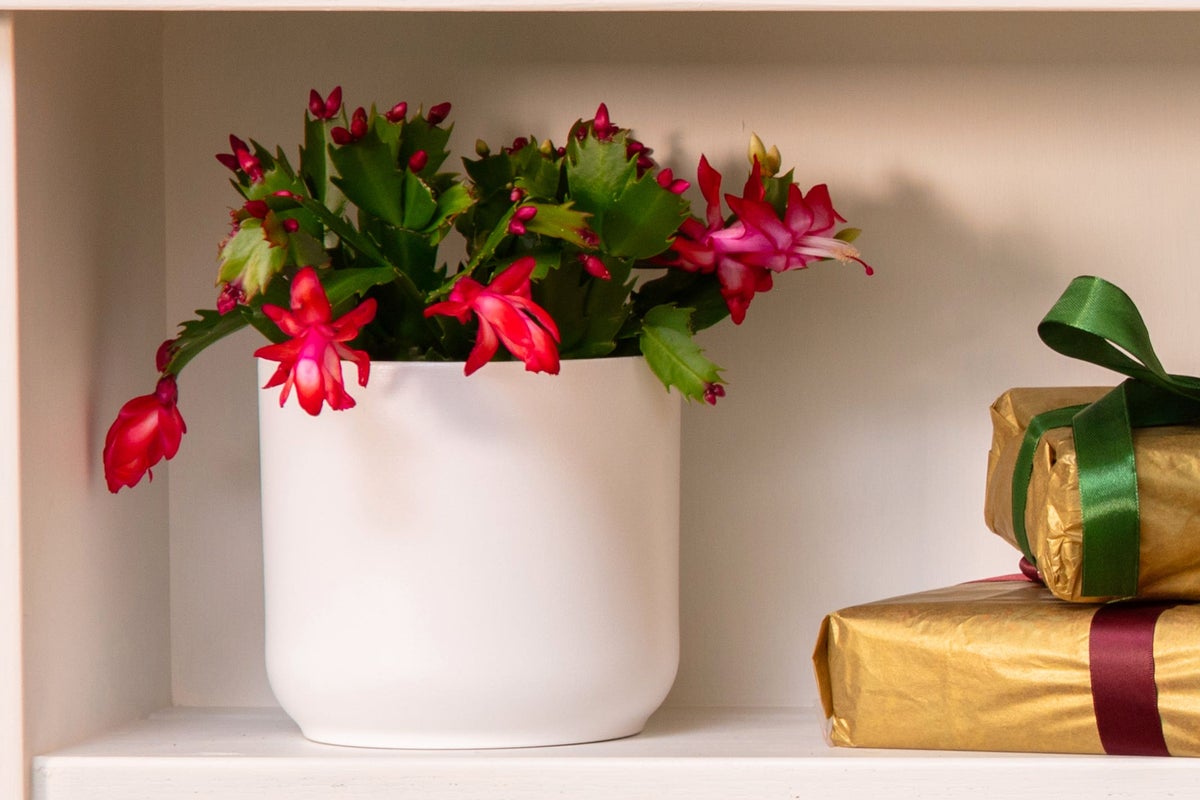
Schlumbergera (Christmas cactus)
(Alamy/PA) (Alamy/PA)
“We have seen a huge resurgence in these – they were our number one bestselling plant last year at Christmas,” says Bishop.
“It’s quite a retro plant, but also gives you nostalgic Christmas feels, and is very easy to grow because it’s a succulent. I think it could replace a cyclamen because it could take the same lighting conditions.
“Obviously the cyclamen has textured leaves with the little flower spikes, but the schlumbergera is much easier to look after and if you’re not good with plants it’s a good alternative,” she says.
Top tip: They need a warm environment in bright indirect sun. They are rainforest plants so prefer a humid room, regular watering and a cooler, drier period in autumn to encourage them to flower. Avoid overwatering as the roots can rot in wet compost.
Stephanotis floribunda
Also known as the Madagascar jasmine and often trained around a simple decorative hoop, this white-flowering plant with tubular-shaped blooms and glossy green leaves might replace your paperwhite narcissi, which although lovely don’t last very long indoors. It has a lovely perfume and white waxy flowers.
“Jasmine is also a great Christmas into January plant, giving you this lovely perfume and little white flowers, whereas stephanotis has much bigger flowers.”
Top tip: This plant prefers bright, indirect light in a warm, humid environment. Keep it out of draughts, especially when young. It may flower again next year if you keep it in a warm location and feed with a potassium-heavy liquid fertiliser.
Cymbidium orchid
(Alamy/PA) (Alamy/PA)
If you just think an amaryllis is too much, with its huge flowering spike, you might swap if for a cymbidium orchid in shades of dark red, which is less in your face but also produces tall flowering spikes and is good for winter windowsills, she suggests.
“Cymbidium orchids are great in the winter. You would get the tall spike and some foliage, but then an abundance of flowers on the stalk. So, although it’s not one single flower it still gives you that striking impact.”
Top tip: Water just once a week, if necessary, and let all the water drain out of the bottom of the plant pot before putting it back in its permanent container. Orchids hate being waterlogged.
Pothos
Instead of classic ivy, you could opt for pothos, known as devil’s ivy, which has broad, glossy, heart-shaped leaves which are often variegated, trail readily and can be used in tablescapes and other Christmas displays. It thrives in bright indirect light, but will easily tolerate more shady indoor corners.
Top tip: For best effect and depending on the size of your space, let it drape from shelves or a table (but not near a radiator). Take care if you have pets because it is toxic to them.
Other alternatives
If you have limited space, you could even use existing houseplants to create a festive feel rather than buying a Christmas tree, says Morag Hill, co-founder of houseplant retailer The Little Botanical .
“We’ve seen people decorate the things they already have, like a monstera or a yucca, with established foliage that’s not going to collapse under the weight of a little string of lights or pom-poms,” she says.