Hybrid work, artificial intelligence, talent dynamics and outsourcing trends are reshaping how office space is designed and used, but not necessarily reducing overall demand, according to Michael Taelman, country leader at CBRE Luxembourg.
The Luxembourg Times spoke with Taelman about the future of office demand, changing workplace design, AI’s impact on office and employment structures, and whether Luxembourg remains attractive for international business services.
How do you see Luxembourg’s position and office take-up evolving, with rising outsourcing of financial activities?
I have to say that Luxembourg has a great reputation on the market. And with regard to outsourcing financial flows, we at CBRE firmly believe that Luxembourg still has a very strong role to play and is in a very strong position.
If you are looking for low costs, Luxembourg is certainly not the place to be. However, financial and regulatory stability – more than the level of taxes – is something that is quite attractive for the outsourcing of financial flows and for setting up operations here.
So that’s the first part. The second part is reputation. Not only in terms of stability, but also because the country has a very strong reputation for respect and integrity. I firmly believe this plays a significant role. Not as a low-cost location, but for companies looking for stability, high-skilled profiles and a strong reputational base, Luxembourg is ideal.
We do not see a significant drop in the take-up of new office space. What we do see as a trend is that companies are hiring fewer young people and are more selective in the talent they hire.
Staff warn junior jobs disappearing as finance firms send work offshore
Hybrid work is flipping office layouts from desks to meeting spaces © Photo credit: Shutterstock
Did hybrid work change office needs, and is AI having an impact as well?
Space reduction is not that significant. But the way square metres are used today is completely different from before Covid. Before, we had roughly 80% workstations and 20% meeting rooms. Today, it is almost balanced: around 50% meeting areas and 50% desks.
With hybrid working and tools like Zoom and Teams, people come to the office to meet, prepare meetings, and then interact with clients. Personal contact and in-person meetings remain, from our perspective, much more efficient than anything else. In my experience, it always goes better when you sit around the table in front of people rather than behind a screen.
The technology embedded in office spaces will become much more important
There are still many questions regarding AI. What will happen if, tomorrow, data becomes even less available on the internet? We need powerful minds and powerful tools, and we will continue to use office spaces, from our perspective.
However, I believe you will constantly have a colleague near you, and that colleague will be AI. I do not consider that a threat, quite the opposite, as long as we keep in mind that the person who takes the decision is not the computer.
As from the moment we are doing this meeting together, you could have a third party around the table that we can remotely, verbally interrogate on a specific subject, and then we can debate it together. That is something that can always be a value-add.
For office buildings, I see this trend continuing: workstation space will reduce and meeting areas will increase, along with brainstorming spaces and more technology integration.
But I do not expect a significant reduction in overall square metres. What I do expect is that the technology embedded in office spaces will become much more important.
About CBRE
CBRE Group is the world’s largest commercial real estate services and investment company, providing advisory and transactional services across leasing, capital markets, property and facilities management, valuation and real estate investment management.
Headquartered in Dallas, Texas the group operates in more than 100 countries and employs more than 155,000 people worldwide.
In Luxembourg, CBRE is one of the leading advisors in the commercial real estate market, active across office, retail and capital markets transactions. The firm advises institutional investors, developers and corporate occupiers on leasing mandates, acquisitions and disposals, and cross border transactions.
In 2025, it closed with more than €9 million in revenue, marking its second best performance on record.
© Photo credit: Shutterstock
In 2025, it closed with more than €9 million in revenue, marking its second best performance on record.
The Luxembourg branch operates in a market that showed a clear recovery in 2025, according to its own research. Both occupier and investment activity strengthened during last year, both with deal volumes and transaction levels rising by more than 40% compared with the previous year. Office investment alone approached half a billion euros.
Caution and outsourcing among reasons for fall in Luxembourg IT vacancies
Does office space help retain talent?
The office building and the way it is fitted out are key elements to retain and attract talent. If you can give employees infrastructure that is more powerful than what they have at home, including video conferencing and collaboration tools, then you have the recipe for success.
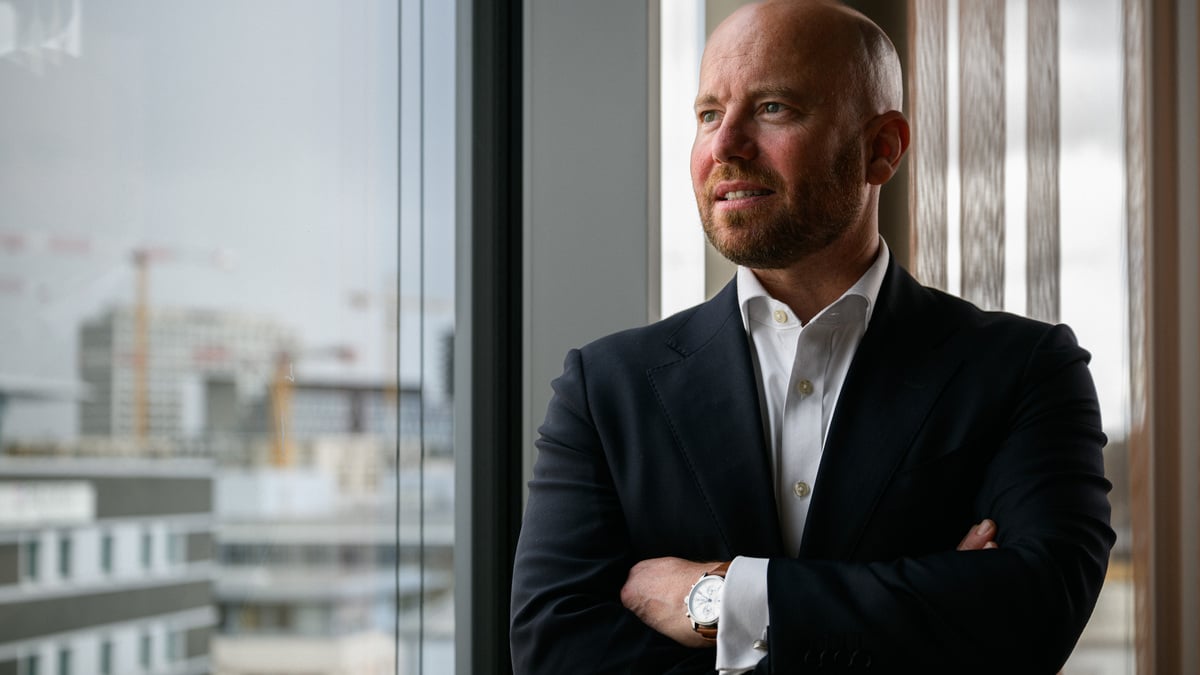
An office space can help a company retain talent, says CBRE’s country leader Michael Taelman © Photo credit: Gilles Kayser
Does office space help retain talent?
The office building and the way it is fitted out are key elements to retain and attract talent. If you can give employees infrastructure that is more powerful than what they have at home, including video conferencing and collaboration tools, then you have the recipe for success.
What is the most underrated space in an office?
The most underestimated area is the coffee machine, which is actually one of the most important parts of a company. Around the coffee machine you have a bar, a table… and I am always surprised by the amount of information people exchange there about their work, clients and projects.
How has Luxembourg job market changed in the past year?
What will shape the future of work in Luxembourg?
Mobility, in my view, is already one of the key issues and will become even more important in the future. The gratuity of public transport in Luxembourg is something the country has done quite well and continues to do. The development of the tram system is very interesting, but it is only the first step.
I am very curious to see the impact once the tram reaches Belval. That will be a game changer for people commuting from France.
I firmly believe that people will start leaving their cars at the border, take the tram, and arrive here in around half an hour. That would be much faster than driving in traffic.