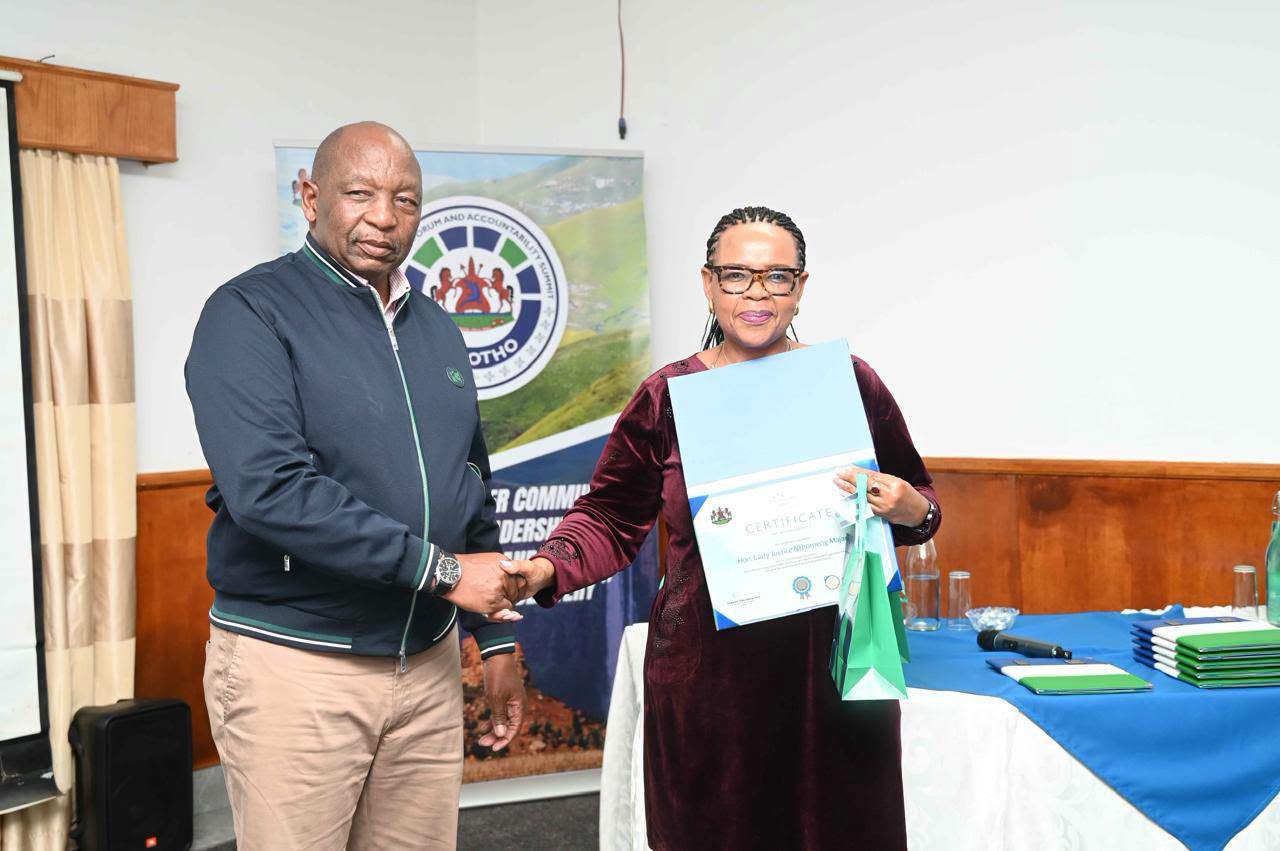
On 12 June 2026, Lesotho’s government intensified its community development efforts as Prime Minister Ntsokoane Matekane visited Helehehle in the Thabana-Morena region to engage directly with residents and assess local living conditions. The visit included a hands-on interaction with traders as the Prime Minister toured retail stalls and engaged with small business owners operating in the area. During the outreach, he also handed over wheat grains and national identity documents to residents, a move aimed at improving food security support and strengthening access to essential government services. The engagement formed part of a broader national strategy focused on improving service delivery in rural communities. It also highlighted the government’s push to maintain direct contact with citizens while addressing immediate socioeconomic needs.
The visit to Thabana-Morena also showcased significant infrastructure progress driven by government investment in rural electrification. An estimated M42 million project was used to extend electricity access to several villages, including Helehehle, Ha Raliemere, Limapong, Liphiring, Ha Leboto and Maisane. The electrification initiative is designed to improve quality of life for households that have historically lacked reliable access to power. It also supports small businesses that depend on electricity for operations such as refrigeration, communication and light manufacturing. Residents in these areas now have improved opportunities to expand economic activity beyond traditional subsistence practices.
The electrification project carries wider implications for development in the Thabana-Morena region, where limited infrastructure has long constrained growth. With new electricity connections in place, schools can improve learning conditions through better lighting and access to digital tools. Clinics and healthcare facilities can also operate more efficiently, particularly in storing medicines and powering essential medical equipment. Households benefit from safer and more comfortable living conditions, especially during evening hours when lighting is essential. The investment also creates a foundation for future development projects, including digital connectivity and expanded public services.
Local economic activity is expected to gain momentum as electrification opens opportunities for entrepreneurship and small-scale industrial activity. Traders and farmers in the region can now explore value addition, including food processing and storage, which was previously difficult without stable power supply. The government’s decision to combine infrastructure development with direct community engagement reflects a coordinated approach to improving rural livelihoods. By distributing essential resources such as wheat grains alongside identity documents, the outreach addressed both immediate household needs and administrative challenges faced by citizens. This integrated approach aims to strengthen trust between communities and government institutions.
The developments in Thabana-Morena signal a broader national focus on inclusive growth and infrastructure expansion across Lesotho. Continued investment in rural electrification is expected to reduce inequality between urban and rural areas while supporting long-term economic transformation. The government’s engagement strategy also emphasizes accountability and responsiveness to community needs through direct visits and service delivery initiatives. As infrastructure improves, regions like Thabana-Morena are positioned to play a stronger role in the national economy. The combination of leadership engagement and targeted development spending reflects a clear effort to accelerate progress and improve living standards across rural Lesotho.
Lesotho News WhatsApp Channel | Lesotho News
Join ‘Lesotho News’ WhatsApp Channel
Get breaking Lesotho news — delivered directly to your WhatsApp.
CLICK HERE TO JOIN