Mafeteng , June 19 – Parents and guardians have been urged to openly discuss biological body changes with their children, particularly daughters, to help them understand puberty and avoid challenges that may arise from a lack of information.
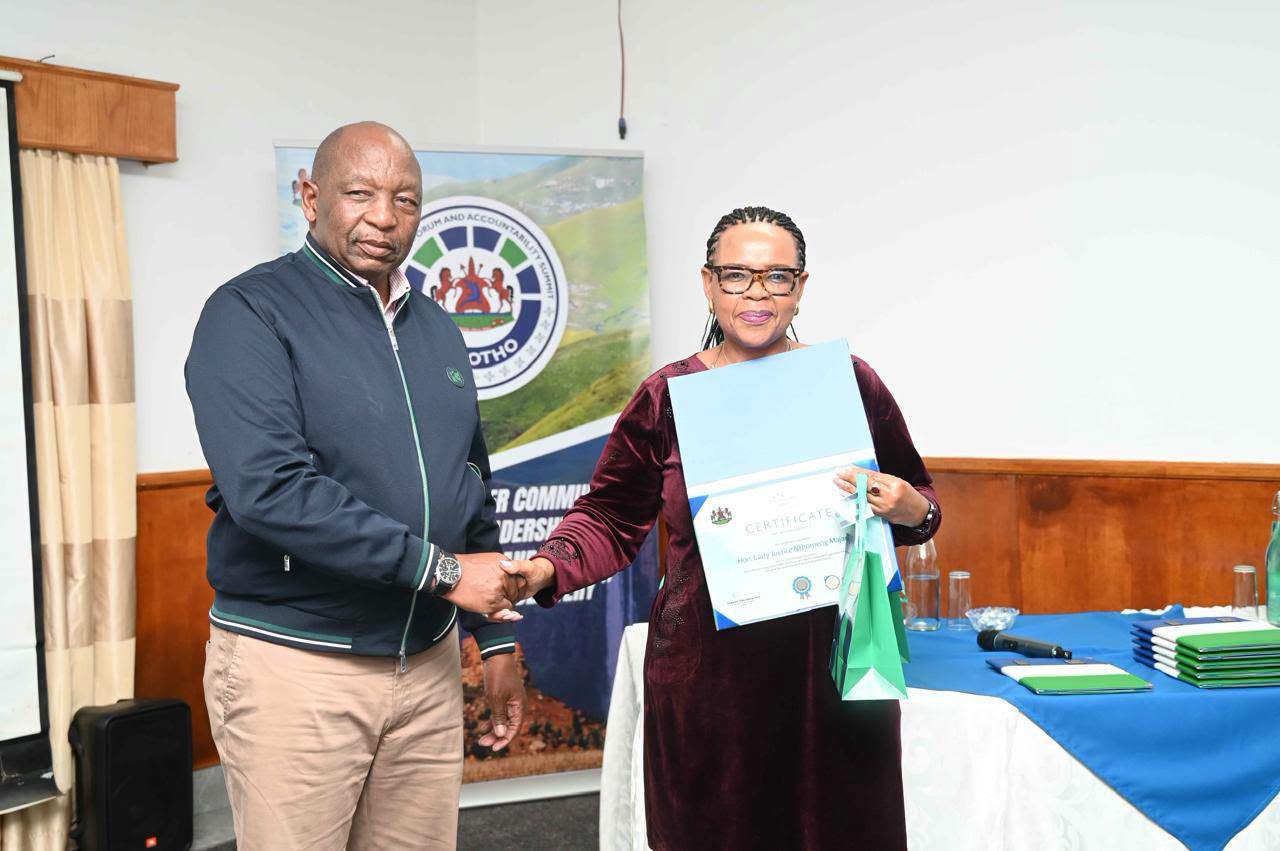
This was said by Deputy Prime Minister Justice Nthomeng Majara during the launch of the Menstrual Health and Hygiene Project held at Ha Ralints’i on Friday.
Justice Majara said educating girls about menstruation and other biological changes helps them understand their bodies and appreciate that menstruation is a natural sign of healthy growth.
She noted that many girls experience fear and confusion when they begin menstruating without prior knowledge, adding that such situations can negatively affect their development and wellbeing. She also called on men and boys to protect and support young girls instead of taking advantage of their vulnerability.
The Deputy Prime Minister encouraged beneficiaries to use the donated sanitary products responsibly and maintain proper hygiene by changing sanitary pads regularly. She further urged boys to support girls during their menstrual periods.
Speaking at the same event, Minister of Youth, Gender and Social Development Mr. Pitso Lesaoana expressed gratitude to all stakeholders who contributed to the project’s success.
He said the initiative was first proposed by Prime Minister Mr. Ntsokoane Matekane and his colleagues, who later approached the United Nations Population Fund (UNFPA) for support.
Mr. Lesaoana indicated that about 10 percent of girls living in rural areas face significant challenges in managing their menstrual health due to their vulnerable circumstances, while approximately seven percent of girls in urban areas experience similar difficulties.
Minister of Finance and Development Planning Dr. Retšelisitsoe Matlanyane said many girls continue to miss school as they cannot afford sanitary products.
She stressed that menstruation is a natural part of life and that girls should not be deprived of education due to their monthly cycles. She further emphasized the need to support girls and ensure they enjoy their right to education in a safe and supportive environment.
UNFPA Representative Mr. John Mosoti said the Prime Minister’s vision was to ensure that adolescent girls no longer miss school due to menstruation.
He explained that discussions between the Government of Lesotho and UNFPA led to the establishment of the pilot project, which is being implemented in the districts of Mokhotlong, Maseru and Mafeteng.
Inspector Mamosa Maile of the Child and Gender Protection Unit (CGPU) attributed negative perceptions surrounding menstruation to inadequate communication between parents and their daughters.
Sexual and Reproductive Health Mentor at Mafeteng Regional Hospital, Sister Lerato Challa, said menstruation is a stage of puberty during which a young girl’s body undergoes significant changes, including breast development.
She stressed the importance of health education in helping girls understand these changes and make informed decisions. Without proper guidance, she said, many young girls become vulnerable to exploitation and harmful influences.
Speaking on behalf of beneficiaries, Ts’ekelo Primary School learner Mr. Kamohelo Mosola thanked the Government of Lesotho and UNFPA for supporting girls through the provision of sanitary products.
He said the project had come at an appropriate time as learners at the school already receive reproductive health education from their teachers.
The Menstrual Health and Hygiene Project is being piloted in Mokhotlong, Maseru and Mafeteng districts and is expected to benefit 68 primary and secondary schools, as well as vulnerable out-of-school girls and women with disabilities.
Ends/MO/BM