Lesotho is taking steps to strengthen the contribution of the Basotho diaspora to national development through a new Remittance-Investment National Framework. The Ministry of Finance and Development Planning, in collaboration with the United Nations Economic Commission for Africa (UNECA), is hosting a workshop focused on developing a practical approach to connecting diaspora resources and remittances with economic growth. The initiative recognises that Basotho living and working outside the country represent an important national resource with the potential to support investment, employment and sustainable development. Remittances already provide financial support to many families and communities, but a stronger national framework could help expand their impact beyond household consumption. By creating clearer systems for diaspora engagement and investment, Lesotho aims to turn diaspora participation into a more structured contributor to national development priorities.
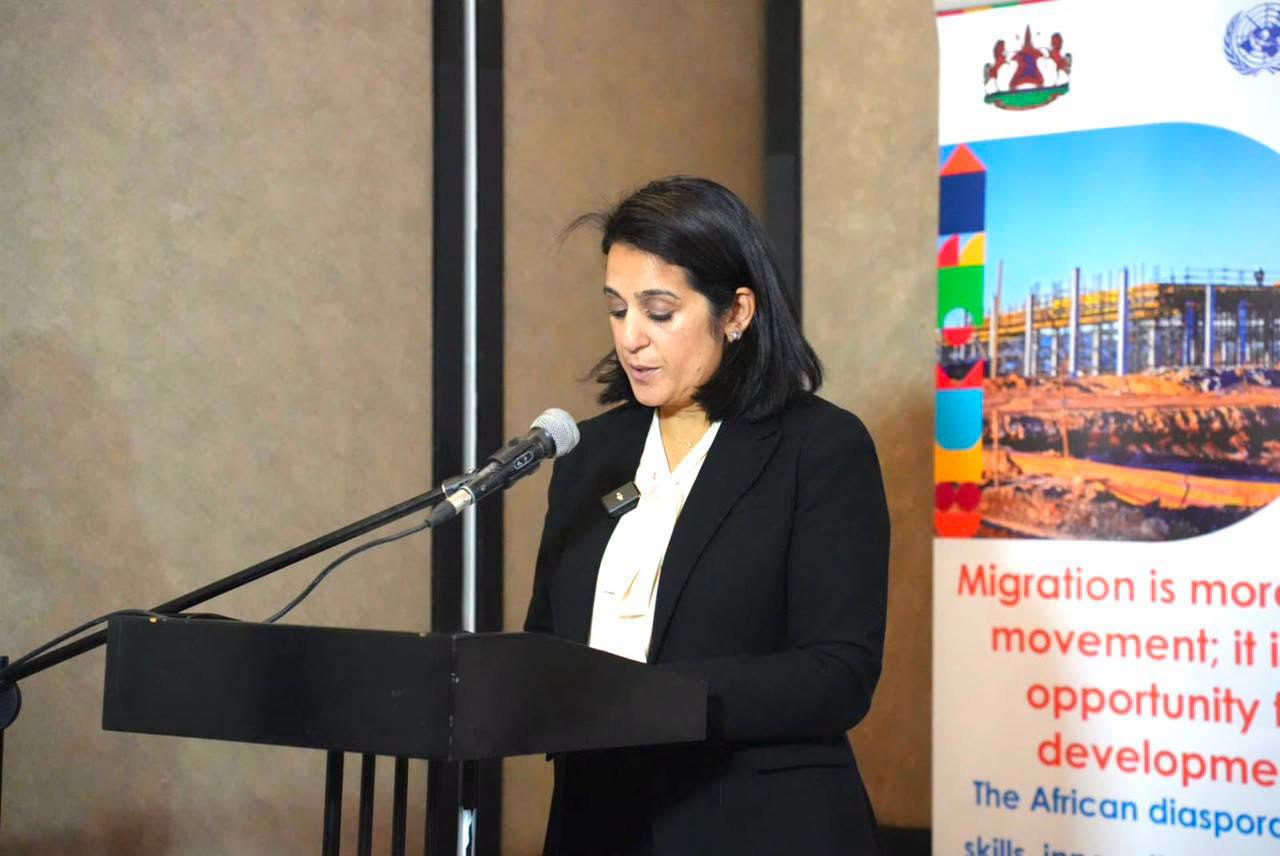
Speaking on behalf of the Principal Secretary in the Ministry of Finance, Ms. Maseeiso Lekholoane said the workshop comes at the right time because the Basotho diaspora represents an important national resource and a key partner in investment and sustainable development. Her remarks highlight the need to view the diaspora not only as a source of remittance income, but also as a potential source of investment, skills, expertise and international connections. Basotho living abroad can contribute knowledge gained through professional experience in different economies while also creating links between Lesotho and international markets. A coordinated national approach could make it easier for members of the diaspora to identify credible investment opportunities and participate in projects aligned with national priorities. This could strengthen the relationship between the diaspora and Lesotho’s economic development efforts while creating opportunities for mutually beneficial investment.
The proposed Remittance-Investment National Framework seeks to establish a practical structure that connects diaspora resources and remittances with national development and economic growth. Such a framework can provide clearer guidance on how financial resources from abroad can be channelled towards productive activities while protecting the interests of investors and recipients. It can also help government institutions understand the scale, nature and development impact of diaspora contributions. Clear policies and institutional arrangements are important because potential investors need confidence that investment processes are transparent, accessible and properly regulated. By addressing these areas, Lesotho can create an environment that encourages more Basotho abroad to consider investing in productive activities within the country.
A major focus of the workshop is strengthening the regulatory, institutional and financial framework for diaspora engagement and investment. Effective regulations can help create confidence among potential investors while ensuring that diaspora investment takes place within appropriate legal and financial structures. Strong institutions can also provide better coordination between government departments, financial institutions, businesses and diaspora organisations. Financial mechanisms may further help create suitable channels through which diaspora funds can reach productive sectors of the economy. These measures could make diaspora investment more accessible while reducing some of the uncertainty that can discourage people living abroad from investing in their home country.
The framework also aims to link diaspora resources and remittances more closely to Lesotho’s national development priorities. Remittances often provide essential support for household expenses, education, healthcare and other immediate needs, but the workshop is exploring ways to increase their wider economic contribution. This does not mean reducing the importance of household remittances, which remain vital to many families, but rather creating additional opportunities for voluntary investment in productive activities. A stronger connection between diaspora resources and national priorities could support businesses, infrastructure, skills development and employment. It could also give Basotho abroad greater visibility into how their financial resources and expertise can contribute to long-term economic opportunities.
Agriculture has been identified as one of the sectors where diaspora investment could support productive economic activity. Investment in agriculture can contribute to food production, value addition, agro-processing and employment while helping strengthen domestic supply chains. Basotho living abroad may also bring knowledge of modern farming methods, technology, management practices and international markets that can complement local expertise. Creating suitable investment opportunities could encourage partnerships between diaspora investors and local farmers, entrepreneurs and agricultural businesses. If supported by appropriate infrastructure, finance and market access, greater investment in agriculture could contribute to both economic diversification and improved food security.
Tourism represents another potential area for diaspora investment and development. Lesotho has distinctive landscapes, cultural heritage and outdoor tourism opportunities that can attract visitors while creating income for local communities. Diaspora investors can potentially contribute capital, business expertise and international networks to tourism ventures such as accommodation, cultural experiences, travel services and recreational activities. Increased investment could support the development of tourism infrastructure while creating employment across hospitality, transport, retail and related services. Stronger diaspora participation in tourism could also help promote Lesotho internationally through personal and professional networks established by Basotho living abroad.
Renewable energy is also an important sector identified through the initiative, particularly as countries across Africa seek to expand reliable and sustainable energy supplies. Investment in renewable energy can support economic activity while helping address energy access and sustainability challenges. Lesotho’s natural resources and geographic characteristics create opportunities for developing renewable energy projects, subject to appropriate investment conditions and technical feasibility. Diaspora professionals with experience in engineering, finance, technology and project management could potentially contribute valuable skills alongside financial investment. Developing credible opportunities in this sector could therefore combine diaspora capital and expertise with national development objectives.
Another important element of the proposed framework is the strengthening of mechanisms for monitoring and evaluating diaspora contributions to development. Reliable data can help government understand how remittances and other forms of diaspora participation contribute to the economy. Monitoring can also help identify successful investment models, challenges faced by diaspora investors and areas where policy improvements are needed. Effective evaluation would allow policymakers to measure whether programmes are producing meaningful outcomes in areas such as employment, business development, investment and community advancement. Better information can ultimately support more evidence-based decisions and ensure that future diaspora initiatives respond to actual needs and opportunities.
The proposed establishment of a National Diaspora Forum could further strengthen coordination and engagement between government and Basotho living abroad. A dedicated platform could provide an organised space for dialogue, information sharing and consultation on investment and development priorities. It could also help government communicate available investment opportunities while allowing diaspora representatives to raise concerns and propose new initiatives. Stronger coordination could reduce fragmentation and make it easier for different institutions to work towards common objectives. A National Diaspora Forum could therefore become an important mechanism for maintaining an ongoing relationship between Lesotho and its diaspora rather than relying only on occasional consultations or workshops.
Ms. Lekholoane’s emphasis on reviewing and strengthening the final report is particularly important because the success of the initiative will depend on implementation. A framework can only have a meaningful impact if its recommendations are practical, clearly defined and supported by institutions capable of putting them into operation. The final report therefore needs to address the realities faced by both government and members of the diaspora while identifying clear responsibilities, processes and measurable outcomes. Practical implementation could help build confidence among Basotho abroad and demonstrate that diaspora engagement is being treated as a long-term national development priority. Continued consultation will also be important to ensure that the final framework reflects the experiences and expectations of the people it seeks to engage.
The initiative forms part of broader efforts to strengthen the migration-development nexus in Africa and recognise the role that migration can play in supporting economic development. Across the continent, governments are increasingly looking at ways to engage citizens abroad through investment, skills transfer, knowledge sharing and stronger institutional partnerships. For Lesotho, developing a national framework dedicated to diaspora resources could provide a more coordinated approach to unlocking these opportunities. The focus on investment, productive sectors, monitoring and institutional coordination shows an intention to move beyond viewing migration primarily through the lens of remittances. It creates an opportunity to build a broader partnership in which the Basotho diaspora can contribute financial resources, skills, networks and ideas to national development.
The Remittance-Investment National Framework workshop marks an important step in Lesotho’s efforts to strengthen the role of the Basotho diaspora in sustainable economic development. Through collaboration between the Ministry of Finance and Development Planning and UNECA, the country is exploring ways to create stronger systems for investment, engagement and accountability. Agriculture, tourism, renewable energy and other productive sectors could benefit from greater access to diaspora capital and expertise if the right regulatory and financial mechanisms are put in place. The proposed National Diaspora Forum and stronger monitoring systems could further improve coordination and ensure that diaspora contributions are properly understood and supported. If the final framework is practical, well coordinated and effectively implemented, Lesotho could unlock greater development value from its global Basotho community while strengthening the connection between migration, investment and sustainable national economic growth.
Lesotho News WhatsApp Channel | Lesotho News
Join ‘Lesotho News’ WhatsApp Channel
Get breaking Lesotho news — delivered directly to your WhatsApp.
CLICK HERE TO JOIN