- No Visa Needed for Many Kuwaitis Traveling to Mexico for World Cup Events; Ancient Ball Games Show Sport Can Resolve Conflicts Without Violence, says Anbassador of Mexico
- Brazil’s iconic yellow jersey reflects worldwide popularity, global love for the Seleção, Brazil envoy to Kuwait
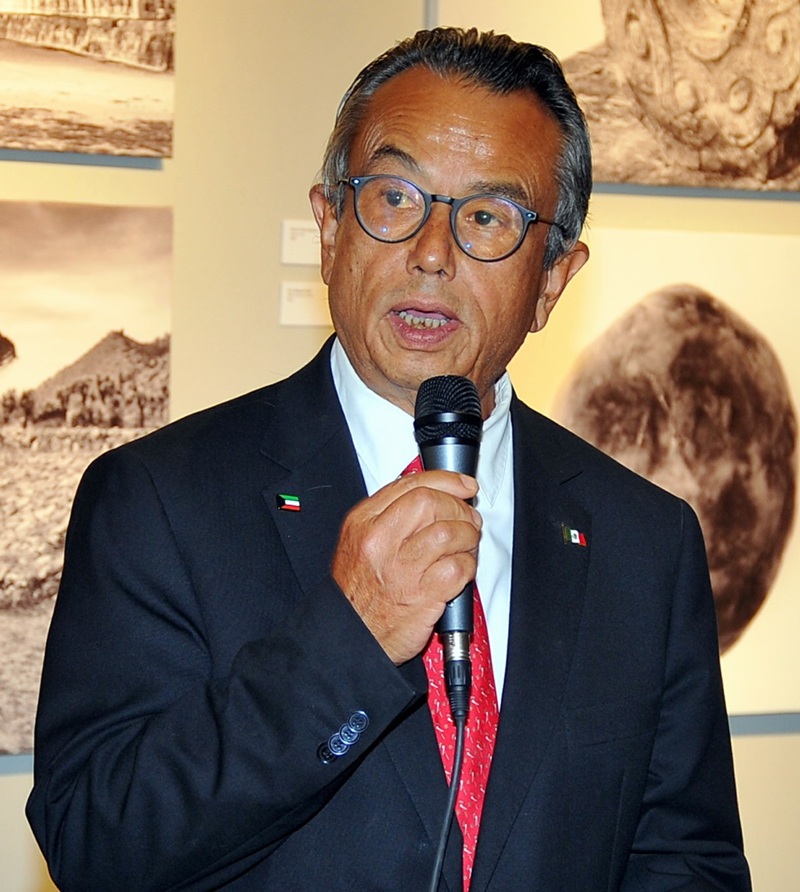
Mexican Ambassador to Kuwait, H.E. Eduardo Patricio Pena Haller, said that sport and culture are effective tools for promoting mutual understanding between nations and resolving disputes without violence. He noted that ancient Central American civilizations once used a traditional ball game as a way to settle conflicts between different communities.
The ambassador added, the 2026 FIFA World Cup, which begins on June 11, will be the largest edition in history, bringing together 48 national teams across 16 host cities in Mexico, Canada and the United States. Mexico is proud to mark this occasion through a cultural exhibition that highlights an important part of Mexico’s heritage.
Through the photographs of Xavier Hinojosa, visitors can explore the legacy of ancient civilizations such as the Olmecs, Maya and Aztecs, and discover a tradition that remains an enduring symbol of Mexico’s cultural identity.
Ambassador Haller highlighted that Mexico has more than 250,000 archaeological sites, noting that the exhibition documents an important part of regional history through the ball game, which dates back 2,600 to 3,600 years.
The Mesoamerican Ballgame was far more than a sporting contest. It carried sacred, political and social significance and was often used to resolve disputes and ease tensions between communities without resorting to war. It stands as an early example of how sport can serve as a tool for dialogue, coexistence and peaceful conflict resolution, the ambassador added.
His remarks came during the opening of an exhibition by Mexican photographer Javier Enjosa at Kuwait’s Contemporary Art Platform. The exhibition highlights the sacred ball game practiced by pre-Hispanic civilizations in Mexico and Central America.
Haller explained that the exhibition carries two main messages: first, to highlight Mexico’s role in hosting part of the 2026 FIFA World Cup; and second, to emphasize that sport and culture can build bridges of dialogue and understanding between peoples.
Regarding the 2026 World Cup, the ambassador said Kuwaiti citizens holding valid visas for the United States, Canada, the United Kingdom, or Japan do not need a separate Mexican visa to enter Mexico. He expressed hope to welcome large numbers of Kuwaiti fans during the tournament.
He also said discussions are ongoing with the head of the Kuwait Football Association about strengthening sports cooperation, including the possibility of signing a memorandum of understanding with the Mexican Football Federation to develop the game and exchange expertise.
He added that success in national teams requires long-term professional work, expressing hope that Kuwait will one day participate in major tournaments hosted by Mexico and the region.
He noted that travel from Kuwait to Mexico is available through several routes, including transit flights via Istanbul and several European capitals to Mexico City.
He explained that the game used a rubber ball weighing between one and four kilograms. Players were not allowed to use their hands or feet, relying instead on their hips, shoulders, and elbows to keep the ball in play, with the goal of passing it through a stone ring mounted on the sides of the court.
Meanwhile, the Brazilian Ambassador to Kuwait, H.E. Rodrigo d’Araujo Gabsch, said football is an essential part of Brazil’s national identity, adding that support from Kuwaiti fans is a source of pride.
He said that the FIFA World Cup becomes a national event in Brazil, with citizens experiencing it with great passion and excitement. During major tournaments, the country turns yellow and green in support of the national team.
He noted that the iconic yellow jersey of the Brazilian national team has become a global symbol of football passion. He expressed surprise and pride at seeing many people in Kuwait wearing Brazil’s shirt, despite the small Brazilian community in the country, reflecting the strong popularity of “Seleção” in Kuwait.
He added that Brazil aims to win its sixth World Cup title, stressing that hopes remain high for the team to continue making history.
The ambassador said Brazilian football enjoys worldwide admiration due to its skillful, creative, and entertaining style of play, making the national team one of the most popular in the world.
He stressed that this global popularity is a source of pride for Brazil and that sport plays a powerful role in building bridges between cultures and promoting mutual understanding between peoples.
He concluded by thanking Arab and Kuwaiti fans for supporting Brazil, expressing hope that “Seleção” will achieve its ambitions and secure a sixth World Cup star.