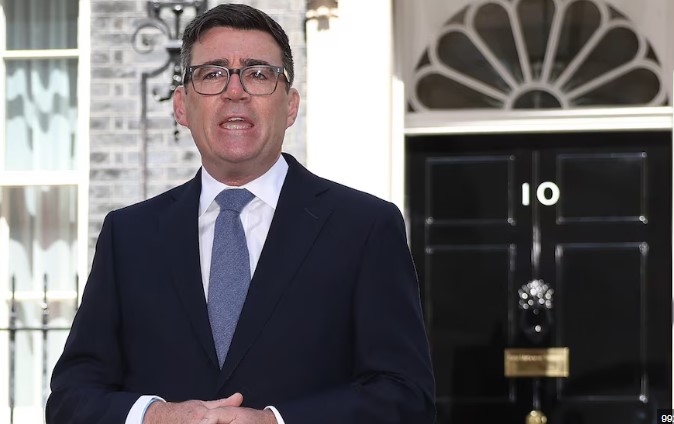
Andy Burnham was officially sworn in as the United Kingdom’s new Prime Minister on Monday after being appointed by King Charles III at Buckingham Palace, becoming Britain’s seventh prime minister in just 10 years.
Burnham succeeds Keir Starmer, who stepped down as Labour Party leader and prime minister last month. The 56-year-old secured overwhelming support from more than 90 percent of Labour Members of Parliament and was elected party leader without opposition before being invited by the King to form a new government.
A veteran politician with more than two decades of public service, Burnham faces the immediate challenge of addressing mounting public concern over the rising cost of living, restoring confidence in government, and maintaining political stability at a time of economic uncertainty.
Speaking after his recent by-election victory in the Makerfield constituency, Burnham pledged to rebuild public optimism, saying the country needed renewed hope and meaningful change.
His return to Westminster followed seven years as Mayor of Greater Manchester, where he earned a reputation as one of Britain’s most popular and influential regional leaders.
Burnham first entered Parliament in 2001 and served in several senior government positions under former Labour prime ministers Tony Blair and Gordon Brown, including roles in the Home Office, Treasury, Department for Culture, and as Health Secretary.
He also contested the Labour leadership in 2010 and 2015 before leaving Parliament in 2017 to become Mayor of Greater Manchester.
During his tenure as mayor, Burnham gained national recognition for championing regional development, public transport reforms, healthcare integration, and greater devolution of powers to local authorities.
His strong electoral performances in Greater Manchester helped cement his standing within the Labour Party and paved the way for his return to national politics.
As prime minister, Burnham is expected to prioritise tackling inflation and the cost-of-living crisis, strengthening public services, boosting economic growth, and rebuilding public trust in government.
His appointment marks a new chapter for the Labour government as it seeks to address domestic challenges while navigating an increasingly uncertain international environment. With broad backing from his party and considerable public recognition, Burnham now assumes leadership at a pivotal moment for the United Kingdom.