Your support helps us to tell the story
From reproductive rights to climate change to Big Tech, The Independent is on the ground when the story is developing. Whether it’s investigating the financials of Elon Musk’s pro-Trump PAC or producing our latest documentary, ‘The A Word’, which shines a light on the American women fighting for reproductive rights, we know how important it is to parse out the facts from the messaging.
At such a critical moment in US history, we need reporters on the ground. Your donation allows us to keep sending journalists to speak to both sides of the story.
The Independent is trusted by Americans across the entire political spectrum. And unlike many other quality news outlets, we choose not to lock Americans out of our reporting and analysis with paywalls. We believe quality journalism should be available to everyone, paid for by those who can afford it.
Your support makes all the difference.Read more
A legal environmental group sued the U.S. government on Tuesday, a month after the Trump administration announced plans to auction off massive sections of water surrounding American Samoa for potential deep-sea mining.
Earthjustice filed the federal lawsuit against the U.S. National Marine Fisheries Service and U.S. Commerce Secretary Howard Lutnick on behalf of two groups: Fa‘asao Amerika Samoa and Conservation Council for Hawai‘i.
The legal nonprofit is requesting that a judge order the National Marine Fisheries Service to stop moving forward with its plans and to comply with the Endangered Species Act and other federal laws.
“The United States has never opened its waters to deep-sea mining. Until now,” the lawsuit stated.
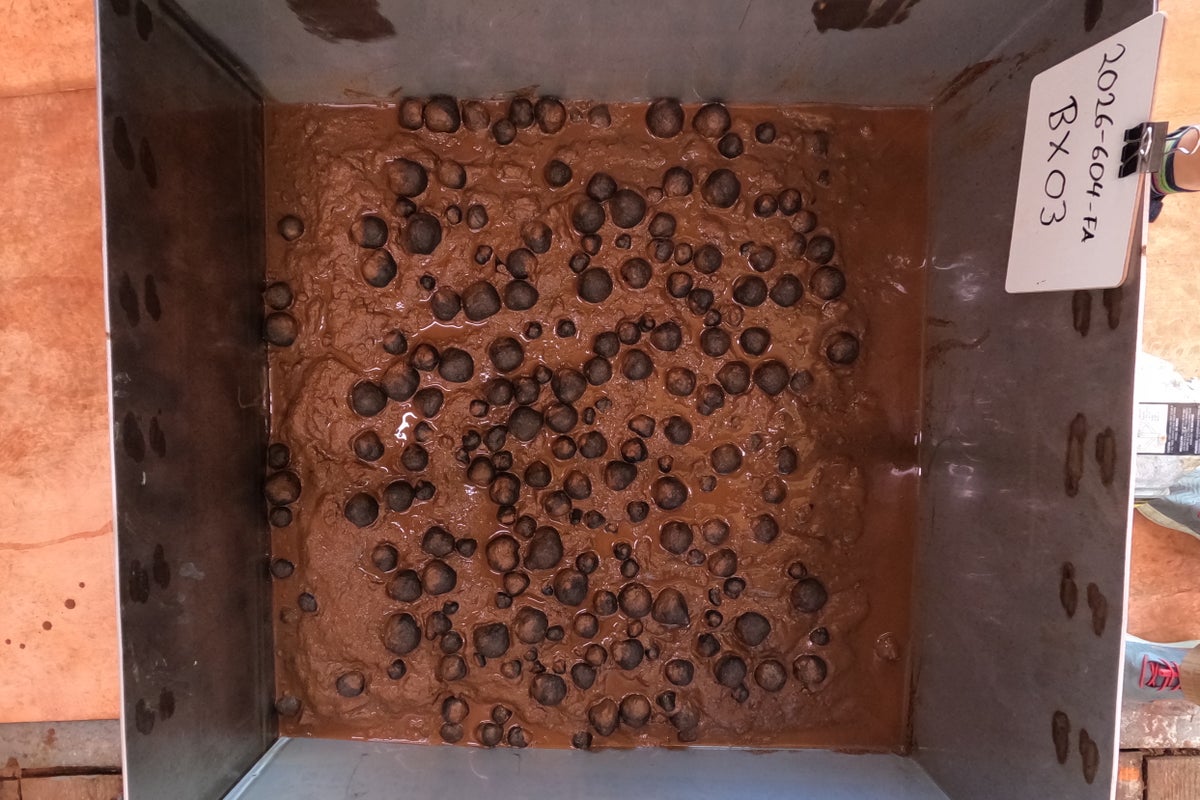
It noted that the U.S. plans to sell leases with the intention of allowing mining across some 33 million acres (about 51,560 square miles) of seabed off American Samoa that is rich in minerals including nickel, cobalt and manganese that are used to build batteries, electronics and other products.
The lawsuit stated that the U.S. first must ensure that such activity will not destroy critical habitats or push species closer to extinction.
The environmental group called a recent decision by the National Marine Fisheries Service that leases would not affect critical habitat or endangered or threatened species “a wholly arbitrary and capricious determination.”
“The Samoan people rely upon a healthy ocean ecosystem,” the lawsuit reads. “This ecosystem feeds Samoan households, protects shorelines, and has formed the basis of many cultural practices that have existed for over a millennium.”
It noted that many animals around American Samoa also migrate to Hawaiian waters, including sea turtles known as “i‘a sa,” which means “sacred fish.”
American Samoa views whales, sharks, giant manta rays and other animals as sacred, and there’s a ban on catching or harming such species.
The environmental group asserted that failure to comply with U.S. acts is harming “professional, scientific, educational, aesthetic, spiritual, and cultural interests” in American Samoan and Hawaiian waters.
It said that waters surrounding American Samoa support “rare and diverse marine species” including shallow and mesophotic coral reefs, sponges, crabs, deep-sea cucumbers, sea turtles and hundreds of coral and fish species.
The organization noted that the waters serve as habitat to five sea turtle populations and four types of whales that are all endangered, as well as five coral species and four animals including the giant manta ray that are threatened.
The area that the U.S. envisions leasing is located 57 miles (92 kilometers) from the Rose Atoll National Wildlife Refuge.
The administration of U.S. President Donald Trump is seeking to expedite mining permits even as dozens of countries have called for a moratorium or ban on deep sea mining because of environmental concerns including noise, light and suffocating dust storms.
“To date, there has not been a commercial seabed mining operation established anywhere in the world,” Earthjustice said in its lawsuit.
The International Seabed Authority, a Jamaica-based U.N. body that oversees deep international waters, has authorized exploration licenses for nearly two dozen contractors, but it has not allowed any commercial mining.
Much of the ongoing exploration is centered in the Clarion-Clipperton Fracture Zone, which covers 1.7 million square miles (4.5 million square kilometers) between Hawaii and Mexico.
The U.S. has not ratified the U.N. Convention on the Law of the Sea, so the National Oceanic and Atmospheric Administration regulates U.S. exploration and commercial recovery of minerals.
A spokesperson with the National Oceanic and Atmospheric Administration’s fisheries service told The Associated Press on Tuesday that it was unable to comment on litigation matters.
The U.S. Department of Commerce did not immediately respond to a request for comment.
___
Follow AP’s coverage of Latin America and the Caribbean at https://apnews.com/hub/latin-america