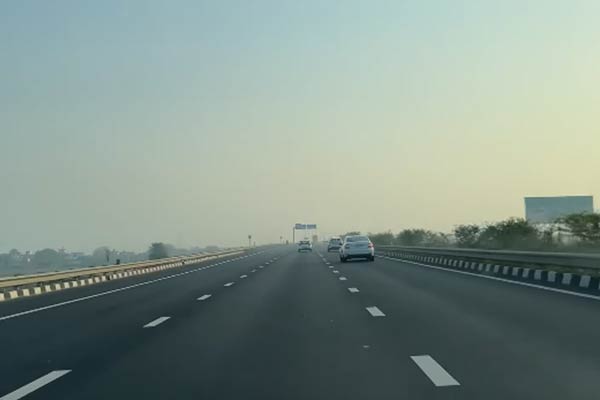
Prime Minister Narendra Modi inaugurated the Delhi-Dehradun Expressway today. This expressway makes it possible to reach Dehradun from the capital Delhi in just around 3 hours. The Prime Minister described it as the best expressway in Asia. New expressways and highways are constantly being built in the country. People often use the terms “highway” and “expressway” interchangeably, but technically, they are very different. Many people wonder what the difference is between a highway and an expressway. Let’s explore the key differences between the two.
Highways are typically major roads connecting cities, towns, and villages. They have entry and exit points at various locations. Traffic signals, U-turns, pedestrian crossings, and local traffic are also common. National Highways developed by the National Highway Authority of India in India are a prime example of this. Highways have speed limits, but traffic and obstructions make driving difficult. Expressways are an advanced version of highways, specifically designed for fast and seamless travel. Expressways have limited entry and exit points, no traffic signals or crossings, and slow-moving vehicles are not permitted.
The biggest difference between expressways and highways is access control. Expressways are fully controlled roads, where entry and exit are not permitted from anywhere. They have dedicated ramps for entry and exit. The Yamuna Expressway, Delhi Mumbai Expressway, and Agra Lucknow Expressway are good examples. Local roads converge on highways at various points, and these may often have intersections or signals. In terms of structure, expressways typically have six to eight lanes and are protected by safety fencing on both sides to prevent animals or pedestrians from crossing the road. Such strict fencing is rarely seen on highways.
Expressways are a preferred choice for speed enthusiasts, as they have a higher maximum speed limits. In India, the maximum speed limit for cars on expressways is 100 to 120 km/h, while on highways it generally ranges from 80 to 100 km/h. Slow-moving vehicles such as two-wheelers, tractors, and auto-rickshaws are prohibited on expressways, helping cars maintain a consistent speed. On highways, you may encounter traffic jams of all types and sometimes even in the middle of the road.
Expressways are more organized in terms of amenities. Wayside amenities are located at regular intervals, concentrating on facilities like petrol pumps, food courts, and restrooms. On highways, amenities are more dispersed. You can easily find local restaurants, shops, and mechanics along the way. While expressways offer a modern and corporate feel, highways offer an insight into the local culture and cuisine of the area. If you enjoy driving long distances without stopping with cruise control, expressways will be the most enjoyable. On the other hand, if you are fond of road trips and want to enjoy the views along with driving, then highways can be more exciting.