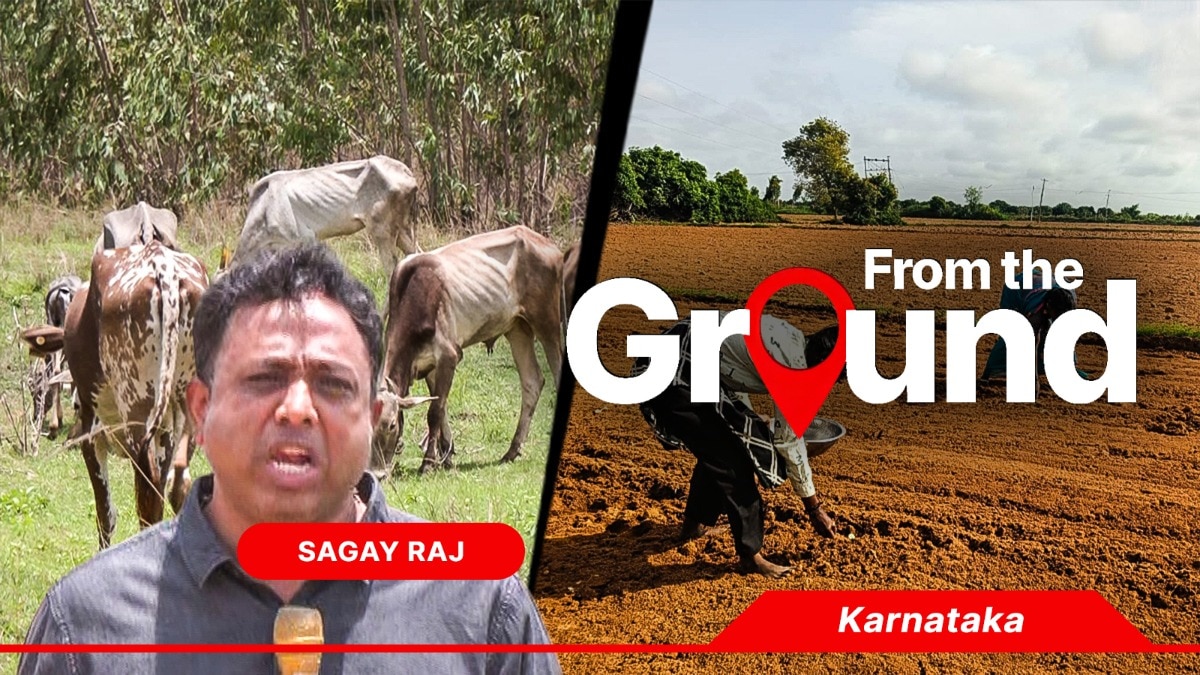
Karnataka is grappling with the spectre of drought after a weak Southwest Monsoon left large parts of the state parched, delaying sowing operations, reducing reservoir levels and pushing farmers into distress. The state recorded a 30 per cent to 42 per cent rainfall deficit during the first half of the monsoon season, prompting Chief Minister DK Shivakumar to seek a central government team to assess the emerging drought situation.
According to the state government, 21 of Karnataka’s 31 districts have recorded severe rainfall deficiency, severely impacting agriculture and water resources. June alone witnessed a 42 per cent rainfall deficit, with the state receiving just 116 mm of rainfall against the normal 199 mm, making it the fourth-driest June in the last 50 years.
The rainfall shortfall has been most severe in Malnad and Coastal Karnataka, with Kodagu, the Cauvery catchment district, initially recording a 63 per cent deficit. The South Interior Karnataka region has reported a 40 per cent shortfall, while North Interior Karnataka has recorded deficits ranging between 13 and 28 per cent.
Though the government has not officially declared a statewide drought, farmer organisations have demanded immediate relief, including Rs 40,000 compensation per affected farmer, as standing crops begin to wither and reservoirs, including the Tungabhadra Dam, receive critically low inflows.
KOLAR WAITING FOR RAIN
The impact of the failed monsoon is clearly visible in Thotli village of Kolar district, where farmers say the sowing season has virtually come to a standstill.
The Southwest Monsoon was expected to arrive in June, but even pre-monsoon showers remained inadequate. Kolar, which has a normal annual rainfall of around 170 mm, has received only 140 mm of rain since January, leaving the district with a 15 per cent rainfall deficit.
Out of the district’s 85,801 hectares of cultivable land, only about 2,200 hectares have been sown so far. While initial showers encouraged farmers to prepare their fields, the prolonged dry spell has stalled sowing of crops such as red gram and groundnut. Farmers are now waiting for rains to begin sowing ragi, maize, cowpea and field beans.
With more than half of July already over, farmers fear delayed sowing could significantly reduce yields during the crop’s critical growth stage.
Of Kolar’s cultivable land, 78,286 hectares depend entirely on rainfall, making the district particularly vulnerable to a weak monsoon.
“We expected the Southwest Monsoon to arrive, but both May and June failed us. Nearly 70 per cent of farmers depend entirely on rainfall. By August, our main crop, ragi, requires adequate rain, but there is none,” said Ramesh, a farmer from Thotli village.
He said the crisis extends beyond crop cultivation.
“Dairy farmers are already facing shortages of fodder and water. Horticultural farmers are suffering too. Tomato prices have crashed, and mangoes are selling for as little as Rs 3 a kilogram. We urge the government to immediately arrange fodder, drinking water and release drought relief funds,” he said.
Another farmer, Nagaveni, said even livestock are bearing the brunt of the prolonged dry spell.
“We are grazing our cattle in scorching heat, but there is no rain. There is no water even for the animals. We wanted to cultivate ragi, but without rainfall it has become impossible. The government must help us with fodder and water,” she said.
GOVERNMENT BEGINS DROUGHT PREPARATIONS
Reviewing the situation with Deputy Commissioners and senior officials, CM Shivakumar directed the district administration to prepare for a possible drought and warned against negligence.
“No farmer should suffer because of your apathy. Any slacking or negligence will not be tolerated,” he said.
He said as many as 178 taluks are facing deficient rainfall, while reservoir storage across Karnataka has fallen to around 40 per cent of capacity, making drinking water the government’s immediate priority.
Officials have been instructed to verify field conditions personally rather than rely on paperwork. The CM also directed them to prioritise drinking water supply, cattle fodder, crop insurance, groundwater management and drought mitigation works.
The government has released Rs 329 crore to Deputy Commissioners to undertake drought relief measures and has asked district administrations to utilise up to Rs 1 crore for immediate works wherever required.
CM Shivakumar also cautioned against indiscriminate irrigation, stating that water release decisions would be based strictly on available storage.
“I will personally inspect the field. I will not accept reports submitted only on paper,” he said, directing officials to complete ground assessments within 15 days before submitting a comprehensive drought report to the Centre.
The Chief Minister has also instructed officials to make adequate arrangements for cattle fodder and explore alternative water sources as groundwater levels continue to decline.
With rainfall yet to revive and farmers anxiously watching the skies, the coming weeks are expected to determine whether Karnataka can salvage the kharif season or slide into another severe drought year.
– Ends
Published On:
Jul 20, 2026 15:17 IST