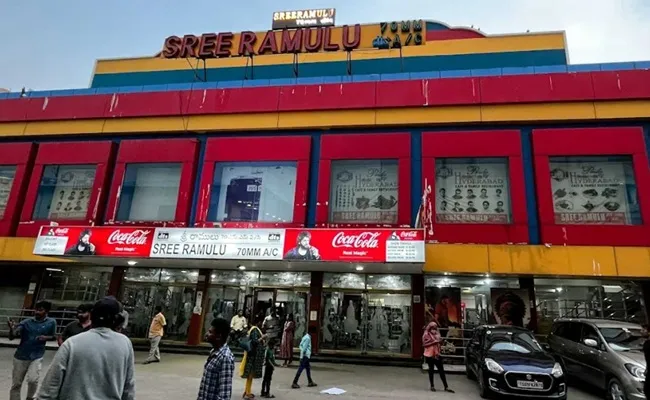
Many exhibitors today gathered for a meeting and later addressed the press with a demand for a 40% share in ticket sales. However, producers argue that such a demand cannot be implemented outright under the current system and industry practices.
Producers say that every film is made with massive investments and budgets. Giving away 40% of ticket revenue to single screen exhibitors, is seen as unreasonable considering the poor facilities maintained in several theatres.
They point out that multiplex chains at least provide quality infrastructure, better seating, sound systems, hygiene, and a family-friendly atmosphere, making revenue sharing more meaningful there. In contrast, many single-screen theatres still have poorly maintained toilets, low-quality snacks, outdated seats, weak sound systems, and are merely air-cooled instead of air-conditioned.
The first question producers raise is why exhibitors are not upgrading theatres before demanding a percentage-based sharing model instead of rental agreements. Exhibitors, however, argue that they would invest in upgrades only if a percentage system is introduced.
A producer commented, “The exhibitors are not providing any facilities to the audience. When asked them to upgrade the theatres like multiplexes, they say ‘give us the percentage first’. How can that be? First, they have to upgrade the theatres and then ask for a percentage to prove their seriousness. What if they don’t upgrade after getting the percentage?”
Even then, when we asked, some producers insist that a flat 40% share for all films is impractical. They cite the Tamil Nadu model, where revenue sharing is flexible.
For example, films starring big stars that pull huge crowds often follow a 90:10 ratio between producers and exhibitors, since even 10% generates substantial income for theatres. Smaller films follow different arrangements. Producers believe a similar flexible model is more sensible than demanding a uniform 40% share for every release.
Another argument raised by producers concerns canteen revenue. Exhibitors demand a share in ticket collections, but producers ask why snack and canteen collections are not shared as well, since audiences visit theatres primarily to watch films, but also buy snaks in interval.
Ad: The Royal Way to Healthy Living – A touch of luxury every day
A producer asked, “Theatres earn ad revenue by screening ads on screen 10-20 minutes before the film. They also sell snacks and collect money for parking. When the exhibitors ask for a share in ticket collections, why can’t they share the revenue from these sources as well?”
To this, when asked to comment, an exhibitor said, “Can these producers dare to ask for a share in canteen business, ad revenue and all from multiplexes? They cannot, because they don’t go head-on with national chains. They only point fingers at us.”
When asked this, the exhibitors are saying they can’t run the theatres.
To this a producer commented, “When asked, a producer commenting on this issue said, “When the owners can’t run theatres, why can’t they convert them into wedding halls, which is a lucrative business? Moreover, all these theatres are in prime locations with huge space, making them a perfect fit for wedding halls.”
A big producer, when asked about this issue, said, “How can we give 40% all of a sudden? We hardly see any profits, and that too very rarely. If we lose 40% on top of that, how can we survive? The entire ecosystem will collapse. They can come and negotiate for 5-10% and try their luck. This is not going to happen.”
Apart from this, he also recalled the truth, “Where are the actual owners of the theatres here? All of them are people who have taken theatres on lease and are now making these demands.”
Well, criticism is growing that despite the Chief Minister clearly stating in the Assembly that there would be no increase in ticket prices, it was Sirish, the producer-cum-exhibitor, who reportedly approached the government and pushed for ticket price hikes when his films were ready for release. However, now he himself is saying that ticket prices will not be increased from the exhibitors’ side even if the government permits a hike.
When the issue was probed further, a producer shared that there is a hidden secret behind all this. It seems some upcoming big films were not given for distribution to certain people and left with no films in hand to make money. Industry circles now believe that this ongoing controversy and pressure tactics are linked to those distribution disagreements and the politics surrounding them.