Vijayawada, April 19: Building on the success of flagship Government of India programmes such as UJALA, the Street Lighting National Programme (SLNP), distributed solar, and smart metering, Energy Efficiency Services Limited (EESL) under the Ministry of Power is set to unveil a comprehensive national roadmap to accelerate the adoption of advanced, energy-efficient technologies among Micro, Small and Medium Enterprises (MSMEs).
The proposed roadmap aims to transform MSMEs—long seen as energy- and carbon-intensive—into engines of sustainable industrial growth through scalable solutions, innovative financing models, and global technology integration.
At the heart of this national push, Andhra Pradesh is positioning itself as a frontrunner to take stringent steps for adopting advanced technologies.
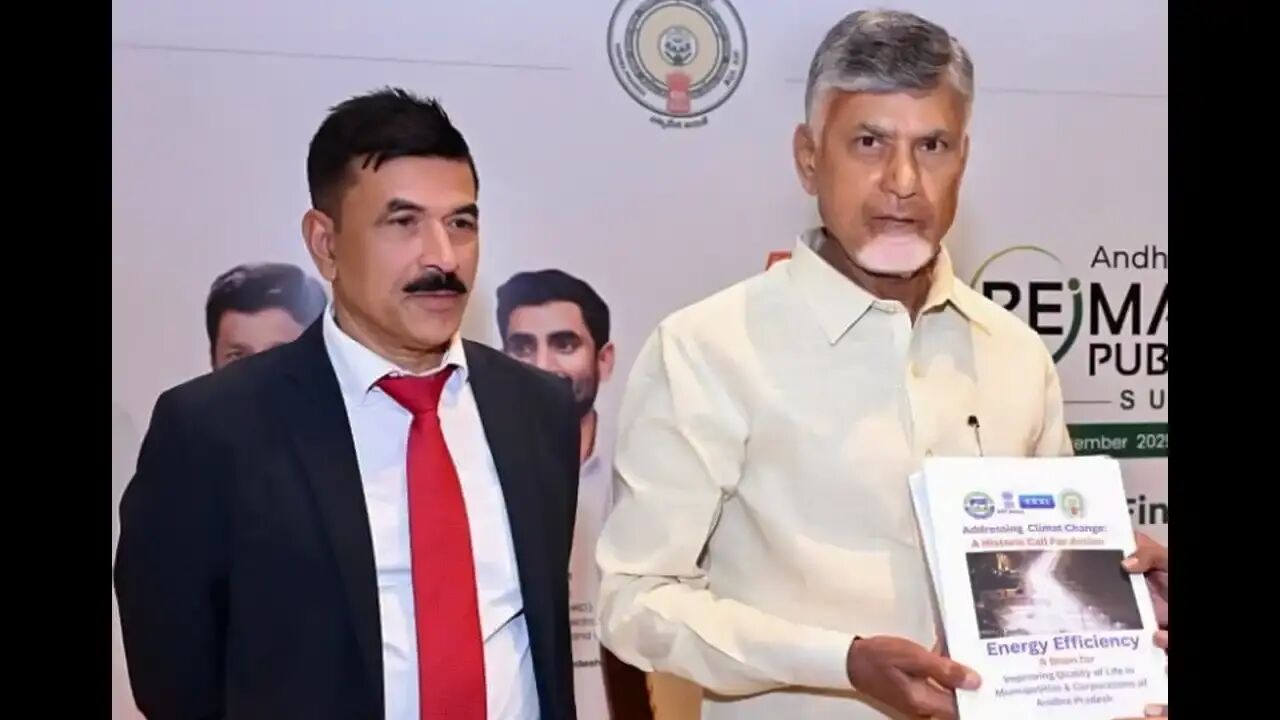
EESL has prepared a dedicated blueprint for the State envisioning it as a key driver in India’s industrial decarbonisation journey while significantly enhancing MSME competitiveness.
MSMEs remain central to India’s economic growth but account for a substantial share of industrial energy consumption. Recognising this, EESL has evolved into a key national implementation agency, enabling MSMEs to transition towards low-carbon, energy-efficient operations through a blend of domestic programmes, international collaborations, and market-based mechanisms.
Aligned with India’s Climate Commitments
EESL’s MSME initiatives are closely aligned with India’s global climate obligations, including its Nationally Determined Contributions (NDCs) under the Paris Agreement, the target of reducing emissions intensity of GDP by 45% by 2030, and the long-term Net Zero goal by 2070.
Through its interventions, EESL is driving:
• Reduction in industrial energy consumption
• Lower carbon emissions across MSME clusters
• Demand-side energy management
• Integration of cleaner and advanced technologies.
Given the scale of MSMEs, these interventions offer one of the most cost-effective pathways to achieve large-scale emissions reduction.
Integrated Programme Architecture
EESL’s strategy combines multiple national and international initiatives into a cohesive implementation framework:
• UNIDO–GEF–EESL Programme: Demonstrates low-carbon technologies and facilitates technology transfer and climate finance
• BEE–EESL MSME Initiatives: Strengthen institutional capacity and build a sustainable energy-efficiency ecosystem
• ADEETIE Scheme.
Bureau of Energy Efficiency Under Ministry of Power Provides financial incentives to accelerate adoption of energy efficient technologies
• ESCO-Based Deployment Model: Enables market-driven implementation without long-term subsidy dependence
• State Partnerships: Ensure alignment with local industrial policies.
EESL’s implementation model hinges on strong collaboration with state governments, which play a crucial role in identifying MSME clusters, mobilising stakeholders, and aligning initiatives with regional industrial strategies.
The programme has already seen success across key industrial states including Gujarat, Maharashtra, Punjab, Rajasthan, Uttar Pradesh, and Karnataka—each demonstrating measurable gains in energy efficiency and emissions reduction.
Measurable Impact
Across clusters, EESL-led interventions have delivered:
• Energy savings: 20–30%
• Significant CO₂ emission reductions
• Improved grid stability through peak demand reduction
Beyond environmental gains, MSMEs have reported reduced operational costs, enhanced productivity, improved export competitiveness, and better working conditions—translating into broader socio-economic benefits.
Andhra Pradesh Sets the Benchmark
In a significant development, Andhra Pradesh has emerged as a model state in this transition. A landmark Memorandum of Understanding (MoU) signed between the State and EESL during the CII Global Summit in Visakhapatnam, in the presence of Industries Minister Kondapally Srinivas, is being seen as a structured and replicable framework for nationwide adoption.
“This initiative marks a paradigm shift—from isolated interventions to a comprehensive MSME enablement model,” said Akhilesh Kumar Dixit, CEO, EESL.
The blueprint, soon to be submitted to the State Industries Department, aligns with Chief Minister N. Chandrababu Naidu’s vision of leveraging advanced technologies to drive economic growth, generate employment, and promote environmental sustainability.
Dr. Yuva Raj Principal secretary,Industries department welcomed the initiative, reiterating the government’s commitment to positioning Andhra Pradesh as a preferred global destination for investment and technology-led industrial development.
He also acknowledged the efforts of M.Viswa CEO of MSME Development Corporation in facilitating Central Government support through the Ministry of MSME for implementing energy-efficiency programmes across key industrial clusters in the State.