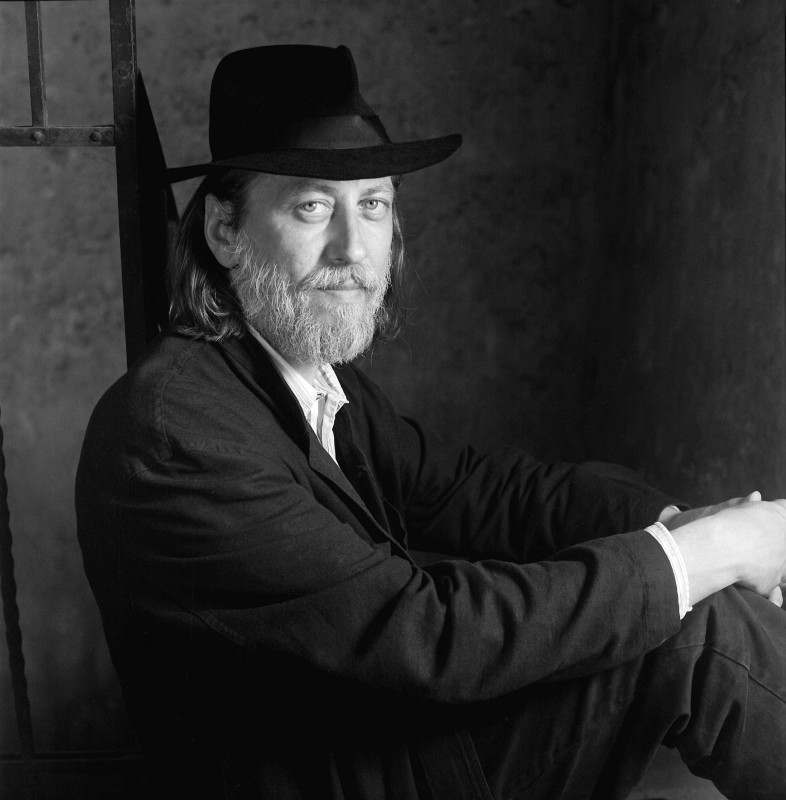
Walking down Üllői út a while back, I saw a big banner mentioning Hungarian author László Krasznahorkai. I thought for a minute that he lived in Ferencváros, Budapest’s IX kerület, but no. When he is in Hungary, Krasznahorkai apparently prefers the more bucolic Pilisszentlászló.
I came across him again more recently and this time, not by accident. I went looking for him, or for some Hungarian author who had dealt with that very real emotion: fear.
Krasznahorkai won the Nobel Prize for Literature last year “for his compelling and visionary oeuvre that, in the midst of apocalyptic terror, reaffirms the power of art”.
For some, what’s going on in the world right now might seem like something approaching apocalyptic terror. Congo. Iran. Israel. Lebanon. Myanmar. Syria. Ukraine. It’s a mess.
Closer to home, Hungary is readying itself for a national election, the results of which are being watched carefully around the world. What happens on April 12 will have profound ramifications, not just here, but in Europe and elsewhere.
In Baron Wenckheim’s Homecoming, Krasznahorkai notes that “every human culture is created by fear.”
Conversations I’ve been having over the past few months, and others I’ve overheard, seem laden with fear.
I’m afraid that things will change; the country will be overrun by migrants, or we’ll go to war.
I’m afraid that things won’t change; if they don’t, I’m afraid that my adult kids will leave or my school-going kids won’t get a good education or that if I’ll not longer be able to afford to live as I do now.
I’m afraid that Hungary will leave the EU; then I’ll have to go too or our democracy will die.
I’m afraid Hungary will be dragged into a war with Russia. In Chad. In Ukraine.
So much fear. And sadly, that fear that is being fomented and leveraged.
In Chasing Homer, Krasznahorkai writes: “Sheltered spots tend to increase your fear, the fear of the unknown perils of outside, a fear that simply regenerates and reinforces itself until it becomes overwhelming, making you incapable of drawing conclusions about what’s really taking place outside.”
No one knows what will happen. The polls swing back and forth between a win for the opposition and a win for the incumbents. Different polls. Different predictions. The wait is nerve-racking.
The media is playing a huge role in all this. How many of us read both sides of the story? How many of us actively look for sources that contradict all we believe? How many of us are really informed?
I suspect most of us live in our sheltered spots, in our social media bubbles, where our friends, those who think like us, echo our beliefs.
I’ve had conversations with both sides. Those who actively support the current government and those who think they are a világ szemetei (the scum of the world). Several conversations recently have ended with people stating clearly that while they’re not fans of the opposition, change is needed. It really is a case of most vagy soha – now or never.
I had a letter from the Kormányzati Tájékoztatási Központ, the government information centre, this morning telling me:
The European Commission has called on the Hungarian government to suspend the application of protected fuel prices. At the same time, Brussels is urging the marketization of gas and electricity prices, and is demanding the elimination of the reduced gas price and the reduced electricity price.
And, it went on:
You should also know that the elimination of the protected gasoline and diesel prices would result in an additional cost of 48 thousand forints per month for an average Hungarian motorist. The elimination of the reduced utility gas price would increase the gas bill of an average Hungarian family by 31 thousand forints per month. And the marketization of electricity prices would cost a Hungarian family 16 thousand forints more per month. That’s a total of 95 thousand forints per month!
I don’t know where they’re getting their figures from. And that isn’t the point. What is the point is that only days before the election, this is what people will read.
And many, faced with this ‘truth’ will anchor even more firmly in their sheltered spots, cocooned in fear.
Yet, as Krasznahorkai writes in The Melancholy of Resistance,: “You have every cause for anxiety. We are on the threshold of a more searching, more honest, more open society.”
What would such an honest, open society look like? What would be exposed? What about ourselves and what we do would need to change? And more importantly, do we have the courage to embrace that change in the hope that life will be better?
Time will tell.
To all Hungarian readers going to the polls on Sunday, thank you. Thank you for voting. Even if you’re not voting for change, you’re voting.
I would. If I could. But I can’t.
And to those who are not voting because you don’t like any of the options, remember a spoiled vote is better than no vote at all.
- Spoiling = participating but rejecting options
- Not voting = not participating at all
Mary Murphy helps people find both their written and their spoken voice. Read more at www.irjjol.com | www.unpackingmybottomdrawer.com | www.anyexcusetotravel.com | www.dyingtogetin.com