A new fee schedule at Liszt Ferenc International Airport in Budapest is causing discontent among taxi drivers in the Hungarian capital. Despite widespread protests and traffic jams in front of the terminals, the airport operator has so far remained unyielding, Világgazdaság reported.
About two thousand taxi drivers have sent a clear message of protest in recent days, but the management of the Budapest airport remains firm. The subject of the dispute is the new regulation on access and parking fees on the airport grounds, which took effect on August 3, 2026. This has a particularly negative impact on drivers who are not direct contractual partners of the airport.
Until now, a five-minute free transit period applied in the parking lots on the premises—including the premium parking lot directly at the terminal entrances and exits. These privileges have now been eliminated without replacement.
Even for a brief stop to let passengers in or out, non-contracted taxis must now pay.
The pricing structure under the new fee schedule:
Up to 5 minutes: 800 forint (2.19 euros)
5 to 30 minutes: 4,400 forint (12.03 euros)
30 minutes or more: 6,600 forint (18.04 euros)
It was only after the official adoption of the capital city’s new taxi ordinance that it became known that the set airport transfer fee of 2,100 forint (5.74 euros) was supposed to already include the 800 forint (2.19 euros) access fee. Nándor Ullmann, co-chair of the Capital City Taxi Association, sharply criticized this move, calling it unfair treatment and a misrepresentation of the facts for all parties involved.
To protest the new regulations, the association called for a broad solidarity action on Monday. Drivers working for major ride-hailing companies, such as Uber and Főtaxi, were also asked to suspend operations at Budapest Airport. According to Nándor Ullmann,
several hundred drivers joined this initiative, bringing the total number of demonstrators to about two thousand; however, no breakthrough was achieved.
The co-chair admitted to Világgazdaság that the level of participation ultimately was not enough to persuade airport management to change its stance. The association views the discussions held so far as one-sided announcements by the operator rather than genuine negotiations. Although a meeting took place at the end of July and another is scheduled for September, management has so far remained firm in its position. Nándor Ullmann did not yet want to disclose what further steps the drivers might take if this intransigent stance persists, so as not to give the impression of making a threat. He emphasized that the goal remains a constructive agreement.
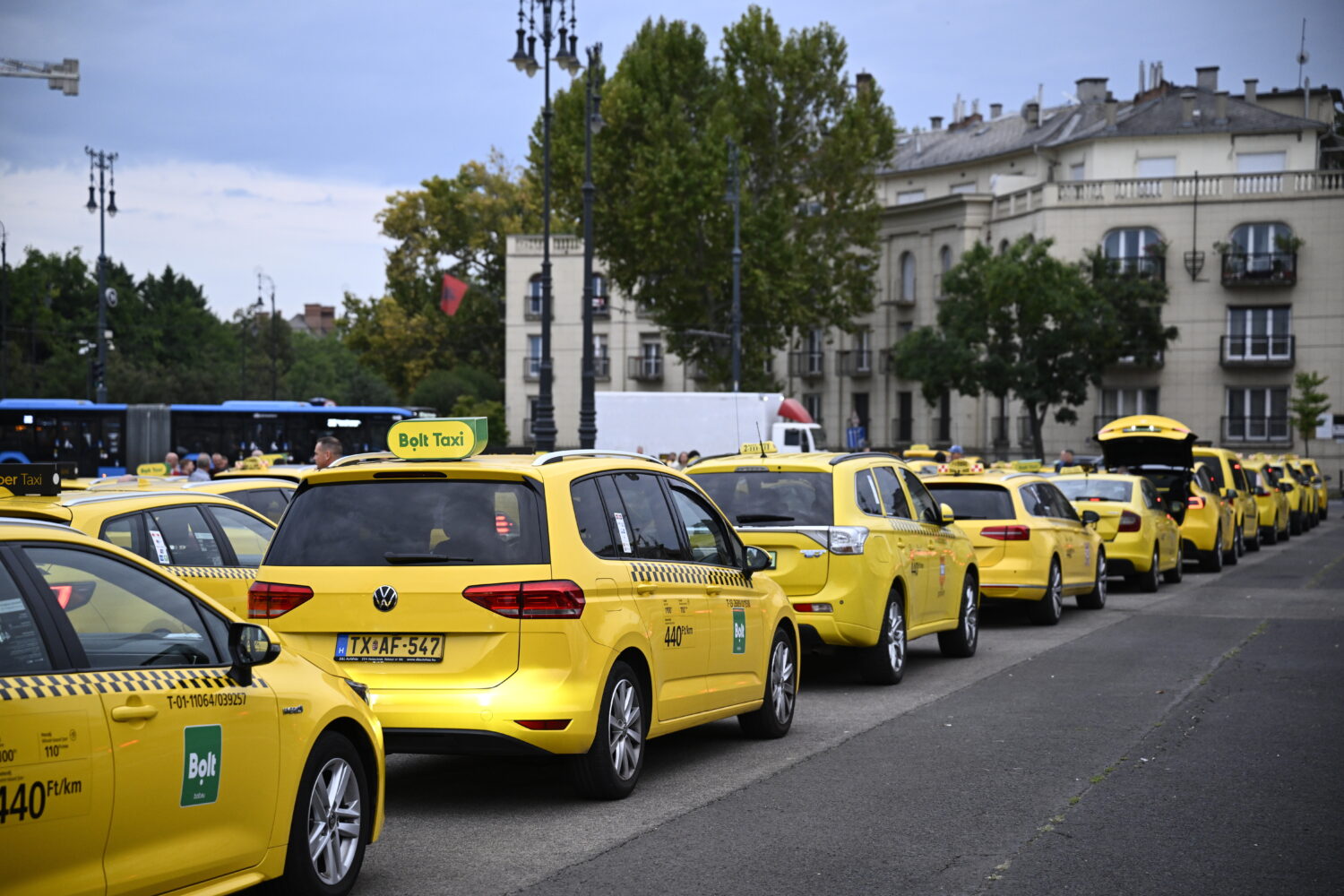
The practical effects of the new regulations led to chaos within the first few days. Due to the high volume of passengers from low-cost airlines during the late-night and early-morning hours, traffic backed up dramatically in front of the terminal area. Many drivers, through no fault of their own, were stuck in traffic for more than five minutes and were consequently forced to pay fines.
This resulted in loud protests and continuous honking, forcing the barriers to be opened in order to bring the chaos under control.
Videos on social media show that the scenes repeated themselves in the days that followed. While the operator states in response to inquiries that the situation is under control, association representatives are urging the public to see the chaotic conditions on site for themselves.
Taxi drivers are also facing additional pressure from the Budapest Traffic Center (BKK). The agency has made it clear that drivers are under no circumstances allowed to pass on the additional costs of the new access system to passengers. For example, a taxi driver would be in breach of contract if they were to take a customer not directly to the desired terminal (e.g., Terminal 2A), but to a cheaper alternative parking lot located approximately 1,100 meters away. To enforce this regulation, the BKK announced stricter official inspections of the starting and destination points of airport transfers.
Related article
EV Charging Networks Introduce Peak-Hour Restrictions
Major operators are reducing charging speeds, increasing prices, or temporarily shutting down chargers during evening peak. Continue reading
Via Világgazdaság; Featured photo: MTI/Bodnár Boglárka