In this world, Hungary needs a strong military — not because we want war, but quite the opposite: because we want peace, because we want to live in peace, said Prime Minister Péter Magyar at the opening event of the 20 August state celebration on Thursday in Budapest.
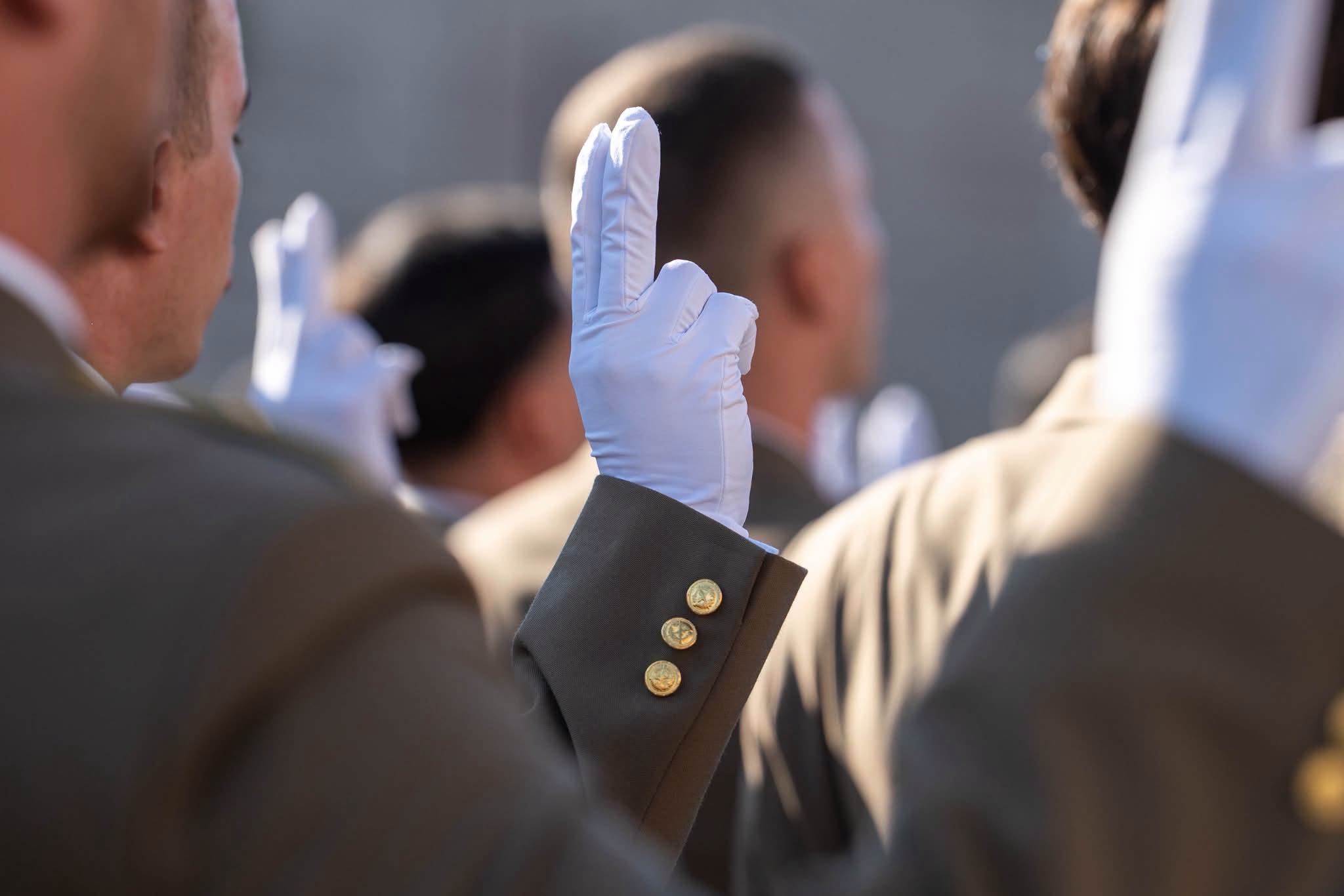
Speaking to soldiers at the flag-raising ceremony and officer commissioning held on Kossuth Square on the occasion of the feast day of Saint Stephen, the founding king of the state, the Prime Minister said they were beginning their service in an extraordinary period.
There is a war in Europe, the world is more unpredictable than it has been at any point in many decades, new weapons systems are emerging, and warfare is changing in the space of months as much as it previously changed in decades. He warned that in the 21st century, a country’s security can be threatened not only at its borders, since attacks can also target its IT systems, energy supply, transport networks — that is, its critical infrastructure.
Modern national defence therefore means military strength, technological expertise, and rapid response capability all at once, he pointed out. He noted that in recent weeks the entire country had been able to see what this means in practice, when one of the most important pillars of Hungary’s energy supply — the Paks nuclear power plant — came under threat. When help was needed, the military helped; soldiers are present on the water, in the air, and on the shores — not in dress uniform, but because Hungary needs them, he said.
He emphasized that peace requires good and capable diplomacy, as well as allies. Hungary is a member of NATO and the European Union, and the duties, responsibilities, and opportunities that come with those memberships are a fundamental given today and will remain so tomorrow.
But peace also requires strength of one’s own — the Hungarian Defence Forces must be a military that both the Hungarian people and their allies can count on: well-equipped, well-trained, technologically modern, and above all well-led; and “for that, we need you,” he added.
Péter Magyar stressed that there is something no technology will ever replace, and that is character.
You may have in your hands the world’s most advanced combat vehicle, the most precise weapons system, satellite reconnaissance — yet in the end, a single person, a single officer, must make the decision, the prime minister told those attending the commissioning ceremony, adding that this is why the most important equipment a military leader carries is not what they wear on their body, but what they carry within: their knowledge, their judgment, their sense of responsibility, their humanity, and their honour.
The Prime Minister drew attention to the fact that rank does not replace knowledge, orders do not replace thinking, technology does not replace people, and force can never — never — replace honor.
Péter Magyar also spoke about the fact that while Hungary asks its newly commissioned officers for service, loyalty, preparedness, and courage, it must also give in return: it is the duty of the state to provide modern equipment, adequate training, a predictable military career path, fair recognition, housing security and family security, and a leadership culture in which performance — not political connections — is what counts.
Péter Magyar said: Saint Stephen knew full well that founding a country is not a single decision, not a single battle, not a single law — building a country is the persistent work of years, decades, and centuries.
The Prime Minister put it this way: in every day of glory and every grey ordinary day lies the persistent work that transforms a country into a homeland. What is needed for this are institutions, laws, knowledge, allies, and people who are willing to take responsibility for it, he added.
He added that this is precisely why it is particularly special that military officers are being commissioned on 20 August, because a state is truly a state only when it is capable of defending its citizens.
A country is truly strong when it has sons and daughters who say: if I am needed, I will be there. “You are saying this today — this is the message you are sending to Hungary, and we thank you for it,” said Péter Magyar. He noted that preparation takes place in peacetime, but its significance becomes clear in times of hardship.
In his ceremonial address to the newly commissioned military officers, Péter Magyar held up the heroes of the 1848–49 revolution and war of independence — Artúr Görgei, János Damjanich, and György Klapka — as examples to be followed.
He recalled that in the aftermath of the revolution, a genuine Hungarian military force had to be organised within a matter of months. This required Artúr Görgei, whose story teaches us that military leadership is not a matter of volume or uniform, but of knowledge, preparedness, and responsibility, he said.
He drew the officers’ attention to the fact that they would receive their rank, but from this point on they would need to earn their authority.
The prime minister added that the story of János Damjanich, who was of Serbian origin, serves as a reminder that the homeland is a commitment, a community, a loyalty. Whoever feels this homeland as their own works for it and, when necessary, defends it, he stressed.
He continued: György Klapka became a symbol of perseverance — when the war of independence had already been lost, Komárom held out. And when he finally surrendered the fortress, he secured conditions that also protected his soldiers. A good commander is not defined by how many men stand behind him, but by how firmly he stands behind those entrusted to him. Because a good officer takes responsibility, said Péter Magyar.
Artificial intelligence was used for the translation of parts of the original Hungarian text.