A new representative survey suggests that most politicians from the Tisza Party remain relatively unknown outside their core voter base, with only a handful achieving moderate levels of public recognition.
The poll, conducted by research institute Europion on 23 April 2026, examined how well respondents could identify leading Tisza politicians based on photographs rather than names, in an effort to reduce overstatement bias in traditional survey methods.
The study used a nationally representative sample of 1,200 respondents aged 16 and above, with results weighted by demographic factors including age, gender, education level, settlement type, and region. Additional weighting variables included recalled voting behaviour from the most recent parliamentary elections and indicators of digital literacy.
Photo-based methodology aims for more accurate recognition
Unlike conventional polling that asks respondents to name politicians, Europion presented participants with photographs and asked them to identify the individuals. According to the researchers, this approach reduces the influence of guesswork or social desirability bias, which can inflate perceived recognition rates in phone-based surveys.
The institute argues that visual recognition provides a more conservative but politically relevant measure of public awareness.
Top recognition rates still below half of respondents
Among the leading figures associated with the Tisza Party (excluding party leader Péter Magyar), István Kapitány recorded the highest recognition rate, correctly identified by 42% of respondents.
He was followed by Márk Radnai with 37%, while Anita Orbán and Zsolt Hegedűs were recognised by more than 30% of those surveyed.
Further down the list, Kriszta Bódis (24%), Bálint Ruff (23%) and Ágnes Forsthoffer (22%) were identified by roughly a quarter of respondents, while András Kármán (15%) and Andrea Bujdosó (13%) remained largely unfamiliar to the broader public.
If you missed it: Who are the new ministers? A closer look at the first seven in the Tisza government
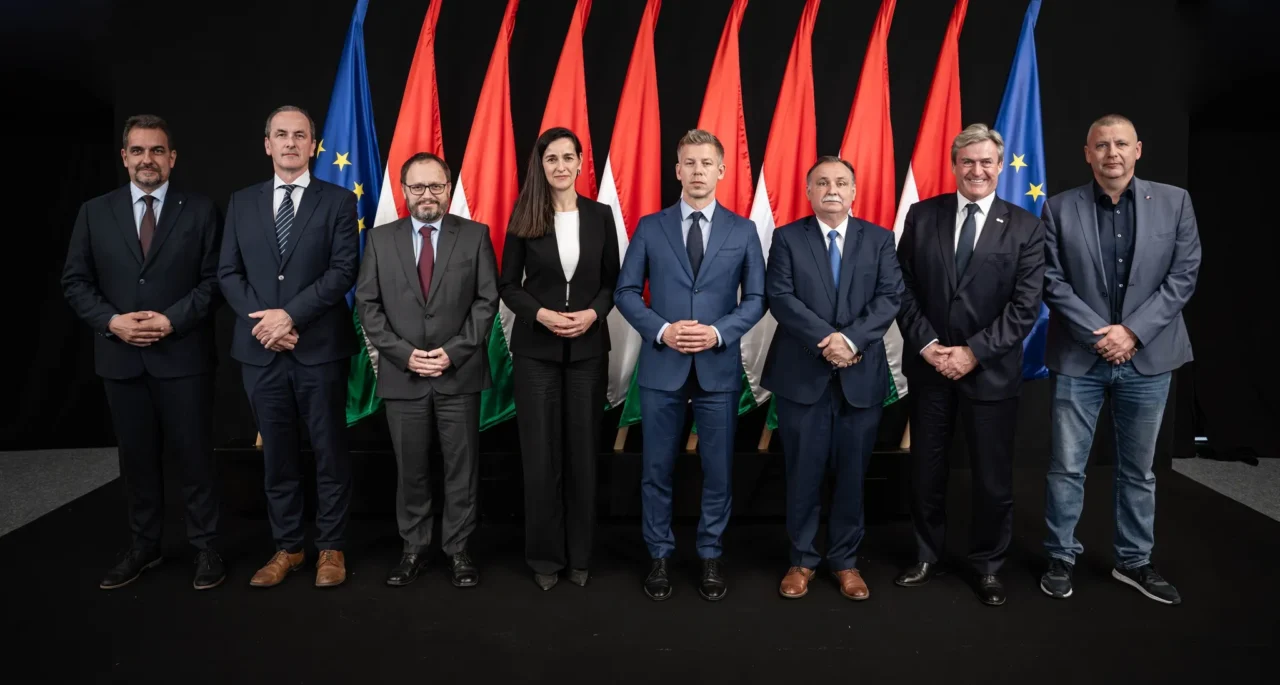
Péter Magyar and the first 7 ministers of the Tisza government. Photo: Facebook/Orbán Anita
Clear divides across education, geography and political affiliation
The survey highlighted significant disparities in recognition levels across different social groups.
For example, István Kapitány was correctly identified by 62% of university graduates, compared with just 28% among respondents without secondary school qualifications.
Political affiliation also proved decisive: 63% of Tisza voters recognised Kapitány, while the figure dropped to 23% among Fidesz supporters. According to Europion, this pattern was consistent across all measured politicians, with significantly higher recognition within the party’s own electorate.
Gender differences were less pronounced, although men generally showed slightly higher recognition rates than women. Exceptions included Márk Radnai, Kriszta Bódis and Andrea Bujdosó, where differences were minimal or non-existent.
Anita Orbán, Andrea Bujdosó and Ágnes Forsthoffer. Photo: Facebook/Orbán Anita
Age and urban-rural gap also visible
Older age groups tended to show higher recognition levels overall, although some younger respondents stood out in specific cases.
Márk Radnai was correctly identified by 56% of respondents aged 16–29, the highest figure within that category. Younger respondents also showed relatively higher familiarity with Bálint Ruff and Kriszta Bódis, which researchers suggest may be linked to their earlier media and public roles.
Geographically, respondents in Budapest and larger cities consistently demonstrated higher recognition rates compared with those in rural areas, although the gap was less pronounced for István Kapitány than for other politicians.
Gradual visibility increase expected
Overall, the findings suggest that, with the exception of Péter Magyar, most Tisza politicians remain primarily known within their own political base, with broader public recognition still in an early phase of development.
Europion notes that this visibility gap is likely to narrow as political roles and national exposure increase over time.
If you missed it: Breaking: Péter Magyar announces new ministers