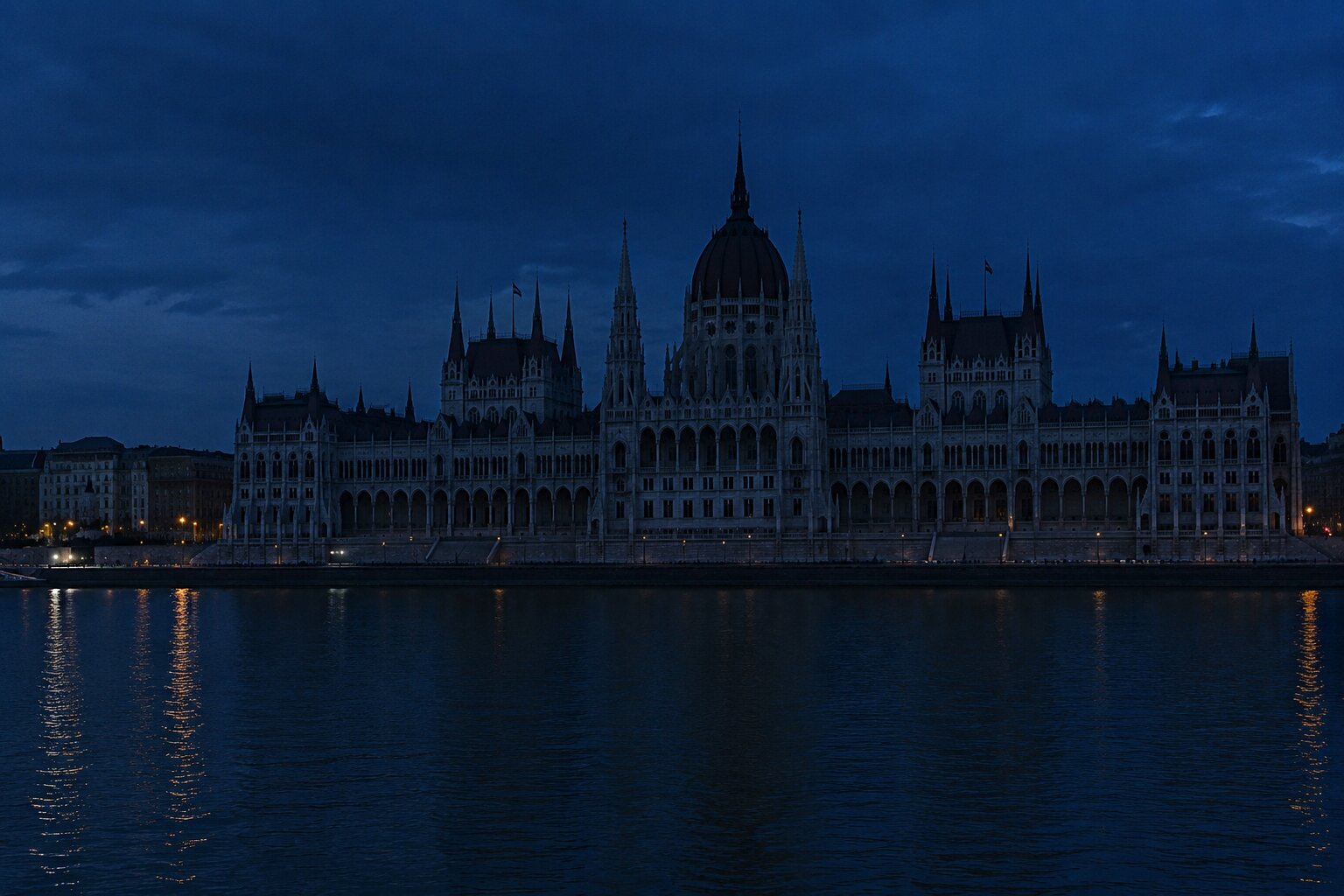
Hungary is rolling out nationwide energy-saving measures—from expanded remote working to switching off decorative lighting—as the country prepares for the first complete shutdown of the Paks Nuclear Power Plant in its 44-year history. The second-to-last generating unit at Paks was shut down at 1:30 a.m. on Sunday due to the continuing drop in the Danube’s water level, Prime Minister Péter Magyar announced.
The prime minister stressed that the plant is now producing only 240 megawatts, and that “tomorrow, for the first time in 44 years, it will be completely shut down.”
The Paks plant’s normal output is 2,000 megawatts.
Péter Magyar announced on Saturday that due to a significant drop in the power plant capacity of Hungary’s electricity system, the Hungarian Electricity Transmission System Operator (Mavir) had activated the protocol established for major system disruptions.
At that point, he indicated that all of Hungary’s available backup power plants are operating and on standby, including plants that have been out of service for a long time and are in extremely poor condition. All deployable power plants have been supplied with the necessary fuel.
Under a government decree that came into force on Saturday evening, large industrial consumers may be disconnected from the power supply if they fail to carry out the required reduction in consumption.
“Households are at the very end of the restriction chain. The burden is borne first by the state, large companies, industrial plants, and institutions with deferrable energy consumption. The system operator may only turn to cutting power to Hungarian families’ homes when all other options have been exhausted. This is what systemic change looks like in practice,” Péter Magyar said earlier.
In the interest of energy conservation, the government has ordered a halt to rail freight traffic from Monday during the most critical time window, between 5 p.m. and 10 p.m., and has mandated remote working for the first three days of next week across all public administration positions where continuous task performance permits it.
In addition, market companies and employers are being asked to also provide remote working arrangements in the coming days for all employees whose work can be performed remotely, and to reduce the energy consumption of office buildings to the lowest possible minimum.
The decorative and non-essential lighting of all state institutions will be switched off, and the highest possible level of energy-saving measures is expected of every municipality in Hungary, said Péter Magyar.
Artificial intelligence was used for the translation of parts of the original Hungarian text.