by Curlan Campbell
- Interim injunction prevents NIS Board from demolishing historic site
- Technical assessment scheduled to be completed by 31 August 2026
- Drill Yard site forms part of the Antilles Complex, Fort George precinct and historic St George’s
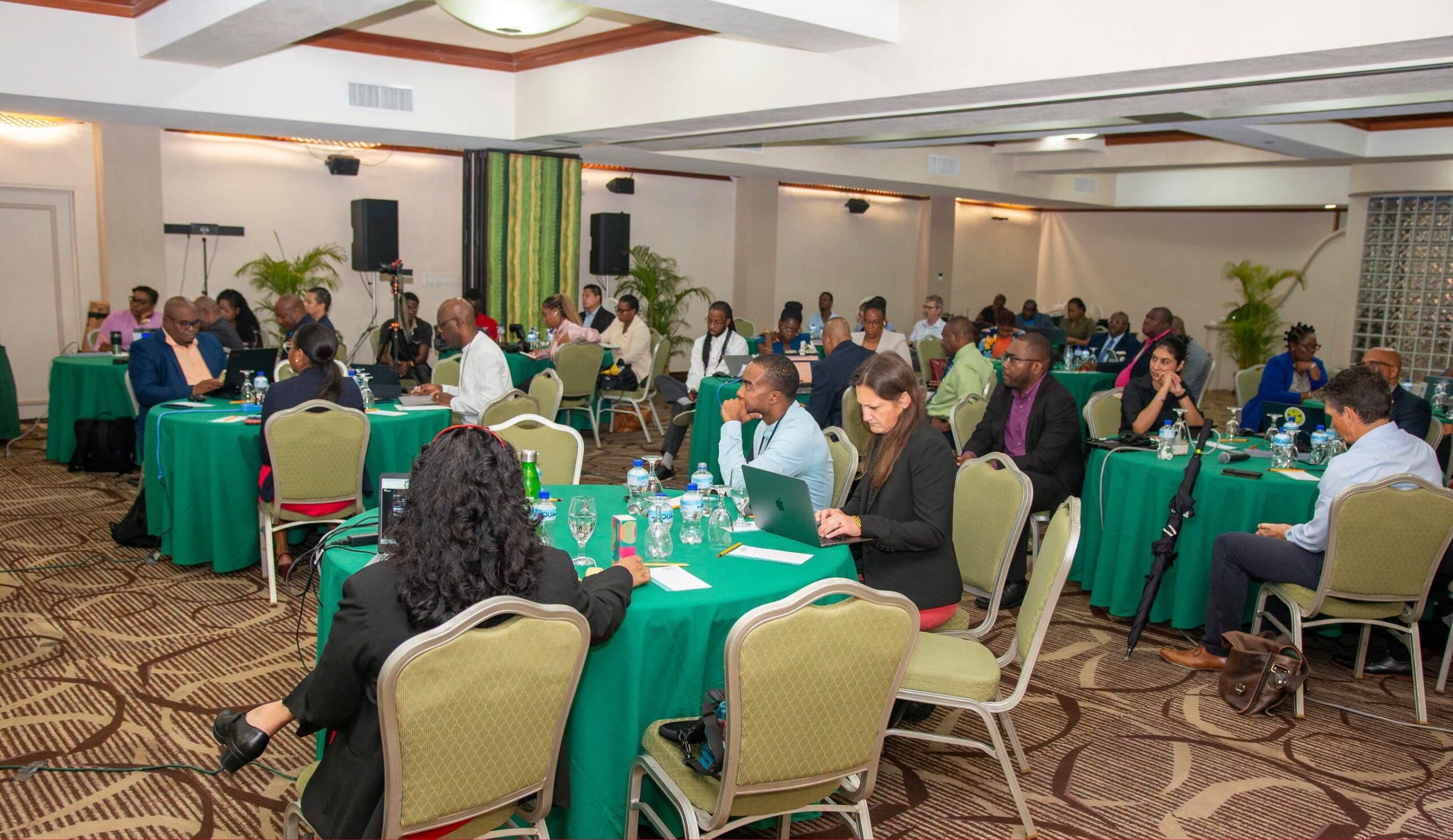
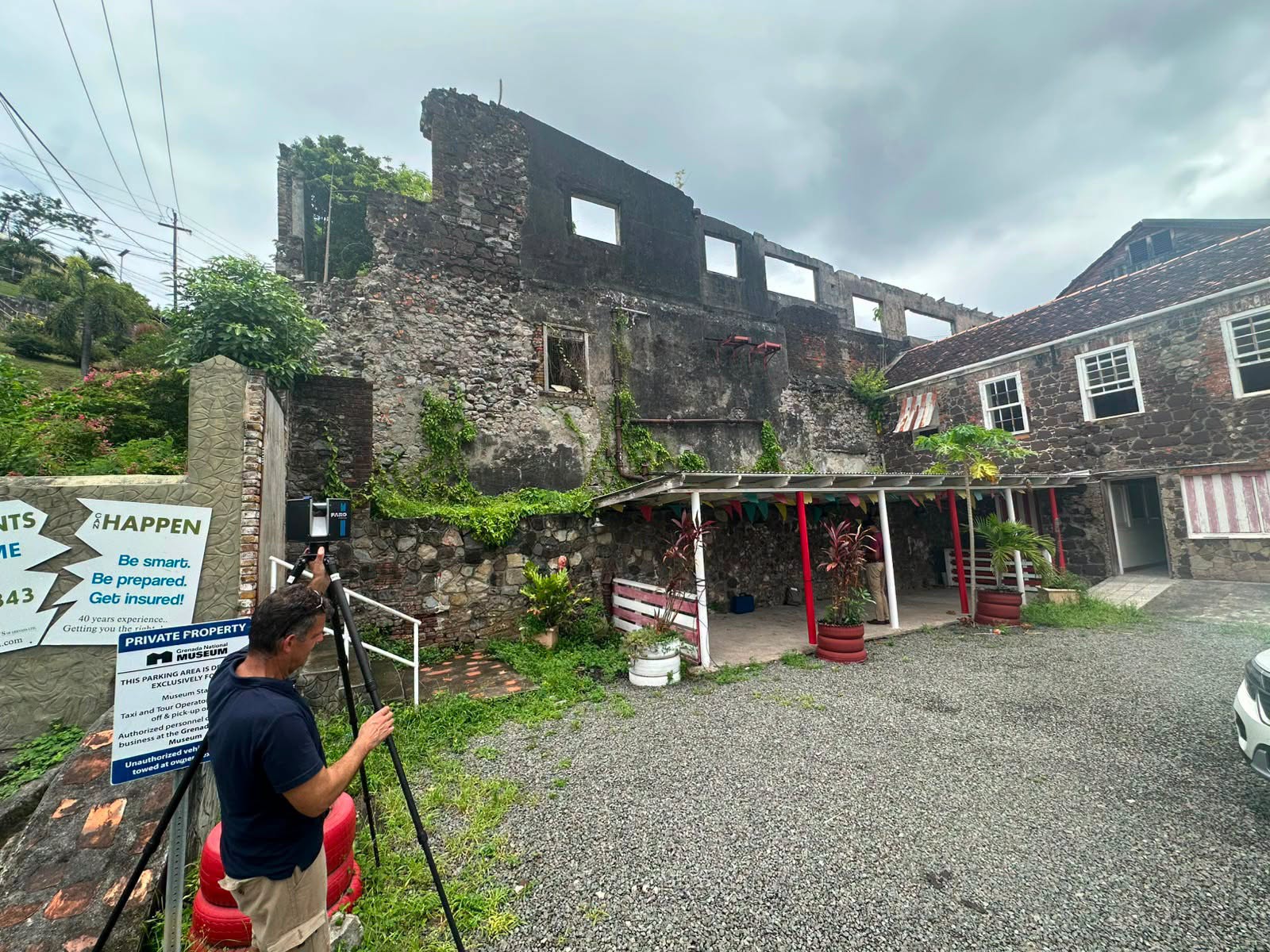
An international team of technical specialists is in Grenada currently undertaking a detailed assessment of the historic Drill Yard in order to explore options for securing, stabilising and rehabilitating the site. Their visit follows an interim injunction granted by the court in favour of the Grenada National Trust (GNT), temporarily preventing the National Insurance Scheme (NIS) Board from demolishing the historic site pending an assessment of its preservation potential. The technical assessment is scheduled to be completed by 31 August 2026.
The delegation is being led by Mark van den Bos, who is coordinating the assignment remotely from the Netherlands with members of his technical team. Van den Bos was also one of the experts who took part in the desk review of documents relating to the Drill Yard, organised jointly by the Grenada National Trust (GNT) and the International National Trusts Organisation (INTO).
Among the specialists involved is Bas Notenboom, a civil engineer and scanning scientist, who serves as Team Leader and Managing Director of Lead 3D in the Netherlands. The team working on the ground in Grenada comprises Robin Koot, a construction engineer specialising in heritage sites, and Isabella van den Bussche. Koot and van den Bussche bring experience from comparable assignments currently being undertaken on the Dutch Caribbean islands of Curaçao and Bonaire.
The team has commenced its on-site work at the Drill Yard, examining the condition of the historic property and assessing the technical requirements for its preservation and potential rehabilitation. The initiative is being undertaken in collaboration with the GNT and INTO.
Under the Consent Order of the Supreme Court of Grenada, the GNT is required to make urgent arrangements with UNESCO and/or related organisations for the specialist team to come to Grenada and commence relevant assessments of the Drill Yard. The Order also requires urgent hoarding works to secure the front building and protect the public from the risks associated with its deteriorated condition.
For Dr Ezra Matthias, 1st Vice President of the Grenada National Trust, the development represents an important opportunity to examine the site before any irreversible decision is taken. “The Drill Yard matter is no longer only a dispute over one threatened building on Young Street. It has become a national opportunity.”
Matthias stressed that the 31 August deadline should not be interpreted as requiring the entire technical review to be completed by that date. “The Order does not say the full review must be completed by 31 August. It says the specialist team must be on the ground, and the assessment process must have commenced by then,” he said.
That distinction, he argues, provides Grenada with a critical window to secure the building, bring in appropriate expertise and determine what options exist for the historic structure. For the GNT, the issue has always been about finding a responsible balance between public safety and preservation. “The Trust has not argued that public safety should be ignored,” Matthias said. “It has been argued that safety and preservation must be handled together.”
He said the significance of the Drill Yard extends far beyond the condition of the building itself. The site forms part of the Antilles Complex, the Fort George precinct and historic St George’s, with connections to Grenada’s court and prison system, colonial administration, enslavement, punishment, Fedon’s Rebellion, military use and civic life. “The question, therefore, is not whether danger should be addressed. It must be,” Matthias said. “The question is whether Grenada should move from danger to irreversible demolition before determining what can be stabilised, retained, documented, salvaged or reused.”
The court-supervised process has also triggered an international response. Through the International National Trusts Organisation (INTO), conservation specialists, engineers, archaeologists and heritage professionals from several countries have been brought into discussions surrounding the Drill Yard.
Matthias said the international desk review demonstrated that Grenada’s choices are not necessarily limited to simply leaving the building untouched or demolishing it. He stated that van den Bos has recommended a condition survey and structural appraisal, with stabilisation recommendations and a scope for further work. A preservation or structural engineer experienced in historic masonry, supported by a conservation architect and documentation specialists, is being considered.
According to Matthias, a 3D laser scan of the Drill Yard has been proposed as part of the technical assessment. The scan would create a detailed digital record of the structure, enabling heritage and engineering specialists internationally to study the site remotely while ensuring that an accurate record is preserved for future reference.
He also noted that the ICOMOS — International Council on Monuments and Sites — International Scientific Committee on Fortifications and Military Heritage (ICOFORT) has offered specialist support. Its proposed involvement includes examining the structural condition and safety of the site, exploring options for preservation, rehabilitation or adaptive reuse, developing a cost-effective roadmap for its long-term management, and advising on heritage assessment and salvage procedures.
Matthias indicated that an ICOFORT team is scheduled to visit Grenada from 2–4 September, 2026, bringing additional international expertise to the assessment of the Drill Yard. “This is not ordinary technical assistance,” Matthias said. “This is a high-level heritage mobilisation.”
Matthias believes the international mission should also become a learning opportunity for Grenada. “The arrival of this expertise can do more than assess the Drill Yard.” He wants Grenadian engineers, architects, planners, students, historians, museum workers, builders, contractors, tour guides and cultural practitioners to benefit from exposure to preservation engineering, historic masonry assessment, 3D scanning, building archaeology, conservation architecture and adaptive reuse planning.
“Grenada should not treat the visiting experts as people who come, inspect and leave,” Matthias said. “The government should organise knowledge-transfer sessions, technical briefings, student observation opportunities, Museum and GNT workshops, and public lectures.”
For Matthias, the Drill Yard is also a warning about the wider condition of Grenada’s heritage estate. He pointed to forts, churches, estates, public buildings, indigenous sites, petroglyphs, monuments, historic districts and military sites across Grenada, Carriacou and Petite Martinique that require greater documentation, maintenance and investment.
“Without a maintenance budget, condition audit, emergency stabilisation fund, heritage-risk register and standing protocol before demolition, every distressed heritage site in the national inventory is vulnerable to the same sequence: neglect, decay, engineering risk, public-safety concern and demolition,” he said.
He argued that Grenada should use the Drill Yard experience to establish a more systematic approach to heritage protection rather than repeatedly responding only when buildings reach a crisis point. He believes the outcome of the Drill Yard process could have significance beyond Young Street and even beyond Grenada. “Grenada has shown that a Small Island Developing State can mobilise local law, statutory heritage duty, public advocacy, media attention, citizen concern, international expertise and court-supervised cooperation to slow down irreversible loss and demand evidence before demolition.”
The immediate task, however, remains straightforward: secure the building, begin the specialist assessment, document what remains and allow the evidence to guide the next decision.
“The Drill Yard has not yet been saved,” Matthias acknowledged. “But Grenada has gained time, allies, expertise and a path.” The court matter is not the end of the controversy, but the beginning of a potentially important national heritage initiative. “The pause is not a victory,” he said. “What Grenada does with the pause will determine the victory.”
NOW Grenada is not responsible for the opinions, statements or media content presented by contributors. In case of abuse, click here to report.