by Dr Candia Mitchell Hall
The following excerpt is the text of an address delivered at the joint mass of La Mode, Beaulieau and Vendomme at the Church of Our Lady Help of Christians in commemoration of Emancipation Day after the mass on 2 August 2026.
Greetings to the church. Happy Emancipation to all of us.
I am honoured to talk to you on the topic “Emancipation: Our Collective Business of Freedom”. Emancipation has been defined by many learning institutions, politicians, scholars, social thinkers and cultural artists over the years. According to Collins Dictionary, Emancipation means the act of being free or the state of being liberated. From this definition, emancipation appears to be a verb (an action word); it suggests that freedom comes with the responsibility of acting like free peoples.
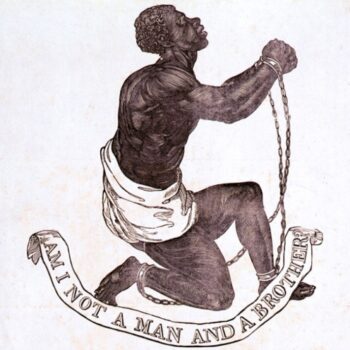
Today, I want to remind us of the significance of Emancipation and Emancipation Day and our role in understanding the contributions we must make to the business of freedom. No doubt, Emancipation Day is an important day for all Caribbean peoples as it marks a milestone in our historical and social development. It marks our freedom from the bondage of Slavery.
And when I say “our”, I am talking about our collective selves as a people. 82% of Grenadians are descended from West Africans. That means that we are all connected to the experience of Slavery and Emancipation. Our West African ancestors fought for freedom when they were enslaved on the plantations using different means of resistance — including running away for long and short periods of time, idling/malingering on the estates, burning the plantation, destroying livestock, female resistance, and commemorations like Jab-Jab, which was called Cannes Brules (burning cane) to define a sense of freedom.
When slavery was finally abolished on 1 August 1838, our ancestors celebrated their emancipation with thanksgiving to God at church and joy in the streets. They celebrated with singing, drumming and dancing. They hoped that Emancipation would mean better working conditions, free education for their children and improved literacy for themselves, better health care, the opportunity to buy land, better housing, better infrastructure — better roads, social services and the right to vote and exercise the franchise. Afro-Grenadians, the former enslaved peoples, soon learnt that these freedoms had to be fought for. Emancipation was a process; it was never finished in 1838.
One of the first lessons Afro-Grenadians learnt was that Emancipation had to be shared collectively; it meant that the community had to come together to secure economic freedom. So the Black community came together and pooled their resources together via the su-su or what is called Len Hand, Gayap and Partner across the Caribbean to buy land to establish their “free villages” to live as free people. They wanted a “piece of land” as Grenadians would say. When the Su-Su rotated and a member got their “su-su hand” they felt a sense of freedom. Afro-Grenadians built their little houses, and as small as it was, they converted it into a home. They purchased more land as time went by so that they could free themselves from the oppressions of the employers on the estates. They established and developed the peasantries and went into large-scale farming so that they could sell their own produce in the markets and secure their own profits instead of working under a plantation system that exploited them by paying low wages.
I wish to commend the church for the instrumental role it has played in the social emancipation of the Black community in Grenada in the areas of education, literacy and leadership it has sponsored so that the Black community could be emboldened with the tools of freedom over the long history of colonisation. The good news of the church and its stance on compassion, love, kindness and justice for all has played a major role in conflict resolution, poverty eradication and peace in our Grenadian society.
As time went by, the descendants of the enslaved peoples emerged as key players in the business of freedom. T A Marryshow, a son of poor Black parentage, established a newspaper, The West Indian, to educate the people about their rights and agitate for better conditions. As a trade unionist, he fought for better working conditions for Caribbean people. And on his home turf in Grenada, as a politician, he fought for universal adult suffrage so the people could vote for their own representatives as full citizens. On the regional level, he agitated for the West Indies Federation, a University of the West Indies, and a Caribbean Union of Teachers among others.
Grenada also produced Eric Gairy, the Father of Independence, who was also a stalwart in the business of freedom. Gairy led Afro-Grenadian people into a state of freedom by standing up to their oppressors. He founded the Grenada Manual and Mental Workers Union, one of the largest trade unions in Grenada, which played a major role in resetting the working conditions of Afro-Grenadians. In 1951, Gairy led one of the major protest actions in the Caribbean when hundreds of workers joined with him to strike against the low wages paid to workers on the estates. Workers were paid 25 cents daily, which meant that they could barely make ends meet. Under Gairy’s leadership, Afro-Grenadians secured increases in their wages, sick leave and annual leave with pay, and land for the landless.
Then came Maurice Bishop, a charismatic lawyer and his young group of community activists who saw the injustices in the system and sought to reset the conditions of the masses. While many Grenadians who lived through the Grenada Revolution wish to forget some aspects of it, many agree that Bishop contributed to a sense of freedom through the achievements of the revolution in education and literacy programmes, increased scholarships for Grenadians to study abroad, increased employment, better/more housing, the elevation of national pride, a strong focus on agriculture and improved health care for the people.
The point is, as Dr Wendy Grenade has argued, Emancipation comes with a great responsibility in every age. Emancipation was never finished in 1838 — it was the entry point. I agree with Dr Grenade. Emancipation comes with the responsibility of fighting against the “isms” and “schisms” of our age that enslave us. It means fighting against racism—hence we saw the rise of the Black Power Movement and Black Lives Matter in Recent Times. When women fought for their rights, we saw the rise of the women’s movement. When children were being abused, we saw movements to protect children, and when human rights were breached, we saw the rise of human rights groups.
What the movements of emancipation are saying to us is that we all have a responsibility to understand the meaning of emancipation in every age. Emancipation was not an act that was only lived in the past or one that we simply read in the textbooks of history. Emancipation refers to how we address the lingering problems and free ourselves and communities from injustice and mental bondage.
Marcus Garvey told us — he warned us — that we must emancipate ourselves from mental slavery, and Bob Marley reminded us in his timeless classic “Redemption Song.” We must remember the lessons from the past to truly experience emancipation in the present.
In this age, our freedoms are still tied to the global world because we are connected to the entire planet via the worldwide web. The internet has many advantages, but there are also many disadvantages, some of which threaten our sense of community when used inappropriately in small islands like Grenada.
If anything at all, the Grenada Revolution should have taught us — even those who were born in the aftermath — how to live with disagreements and differences. Let us not use social media to bully each other, or assassinate the characteristics of others, cut down or malign the integrity of our neighbours. Let us use social media to uplift, spread kindness, educate and unite.
As the season of election is fast approaching, let us support the political parties of our choosing, but let us remember to respect the decision of others to support the opposing side.
Also, we must protect the environment. It is our civic duty as responsible citizens. Let us not litter; let us keep our surroundings clean and preserve our beautiful natural and cultural landscape. It is important for us to get rid of our trash responsibly. Let us be mindful of our communities and leave our spaces cleaner than we found them.
Let us teach the younger generations how to resolve conflicts. They should not resort to violence to resolve conflict; rather, they should rely on community support, mutual respect, and shared values to de-escalate disagreements. Let us eradicate gender-based violence in our society. Males, you have been entrusted with the tasks of leading, protecting and loving the family as Christ loves the church. Females are entrusted with nurturing, caring and supporting. Let us find the middle ground and build strong families for a better, brighter Grenada.
Our elders are living archives of history, memory and collective life experiences. They hold vital community memory. Let us create spaces where the youth and the elders can interact so that the invaluable wisdom and knowledge they hold is not lost on the grapevine of time. Let us return to our polite traditions of greeting each other in the morning, afternoon and evening. A good morning, good afternoon, good night, excuse me please, thank you, blessings and so on can go a long way in forging solid community networks.
Let us remember to preserve our folklore, sayings and stories — our distinct Grenadian cultural practices for future generations. The other day someone described their own behaviour as “Ge-Gerry” and it dawned on me that we should create a register of Grenadian words and concepts for future generations. I have not heard the term “Ge-Gerry” for more than 30 years — not that I am dating myself. We are losing some of our Grenadian expressions to the ravages of time. Preservation is key.
Let us cherish the living traditions of survival and resilience. I am talking about our distinct Grenadian cultural expressions like Jab-Jab, ShortKnee and Vieux Corps, Moko Jumbies and so much more. These cultural traditions remind us of the Black experience — the horrors of slavery, the unfulfilled promises of emancipation and the commemoration of ourselves through the very symbols that were demonised. Let us honour those who kept these expressions alive and let us transmit the best of ourselves to the future generations.
Let us teach the children that they are the future. Let us provide a childhood that keeps their innocence intact. Let us encourage our children to play with each other instead of spending all their time on their tablets and computers. Let us teach them to play marbles, morale, hopscotch and other traditional games that boost team spirit, cooperation, and promote laughter and togetherness. Let us remind them of the beauty and strength they possess inside.
True emancipation is within our reach; but it is an act we must all engage. We too must carve out the kind of emancipation we want to experience. Let us fight to eradicate poverty and help the poor and needy around us; let us fight for justice and for true liberation for all.
Let us remember the words of the song writer who said, “if you see your sister falling by the way/stop and say you’re going the wrong way…if you see your brother falling by the way/stop and say you’re going the wrong way…we’ve got to try a little kindness, show a little kindness, shine your light for everyone to see.”
In shining our light, we would create the kind of emancipation our ancestors would be proud of. The business of emancipation is not finished. We are all responsible for emancipating ourselves and our communities.
Let us do our part to ensure that we all play a role in experiencing true freedom every single day of our lives!
Dr Candia Mitchell Hall is a tenured lecturer of Caribbean Culture, Heritage and Memory Studies at The University of the West Indies, Mona Campus.
NOW Grenada is not responsible for the opinions, statements or media content presented by contributors. In case of abuse, click here to report.