After decades of control, digital dissent is reshaping Tigray’s politics.
Since 1991, when the Tigray People’s Liberation Front (TPLF) consolidated political power, the party systematically prevented challenges to its authority by denying the people of Tigray access to free and independent media.
For decades, the party’s deception and brutality were concealed behind a tightly controlled propaganda apparatus comprising Tigray TV, Dimtsi Weyane TV, and Weyin Gazette.
These institutions functioned not as public media but as instruments of political control, shaping public perception and suppressing dissent. The party ensured that no alternative media outlets could operate within Tigray, effectively monopolizing the flow of information.
Attempts to establish privately owned newspapers and monthly magazines emerged in the 2000s, reflecting early aspirations for media pluralism. Himbasha, Rehan, and Dehay were among the first independent publications in Tigray.
However, persistent pressure, intimidation, and threats from authorities forced them to shut down, reinforcing the party’s monopoly over public discourse.
The rise of social media posed a new challenge to the TPLF’s information dominance. Recognizing the threat, the party adapted by establishing a coordinated social media network known as Digital Weyane, tasked with disseminating both information and misinformation.
Yet in recent years, the party’s grip over mainstream media and its once formidable digital machinery has begun to weaken. The decline is visible not only in the diminishing influence of traditional propaganda outlets but also in the fragmentation of its social media networks. Most of the party’s prominent social media activists have either switched sides or been arrested by the TPLF for publicly challenging it.
Platforms once used for intimidation and mobilization are increasingly beingused to challenge the party’s authority, expose its failures, and articulate alternative political visions.
This erosion marks a significant shift in Tigray’s political landscape. The TPLF’s strategy of information dominance, central to its ability to govern without accountability, is being undermined by the very technologies it sought to weaponise.
The rise of independent digital voices, particularly among young people, signals a broader transformation: a move away from fear-based compliance towards a more open and contested political sphere.
Satire Weaponized
Like a dying horse struggling to remain upright, the TPLF is making every effort to retain control over Tigray’s political narrative. In recent months, the party has increasingly relied on elderly figures to appeal to the public, particularly the youth.
In August 2025, a man seemingly in his sixties or seventies appeared on party-controlled media attempting to rally young people behind the TPLF. “We will fight; we will struggle because you are with us,” he declared. In May 2026, an elderly woman of similar age appeared insisting that “we cannot say we are free when (Prime Minister) Abiy is still telling us to sod off.”
These attempts at mobilization, however, have been met with a markedly different response from younger generations. TikTok clips titled “ትውድብስ እዙይ የጠፈኦይ”, translated as “The party knows best”, have been trending for weeks.
The videos mock both the woman featured in the original recording and the message she delivered. The phrase has since become a meme used sarcastically to ridicule the very idea it was intended to promote.
The response was not merely humorous; it carried a clear political message. Young people rejected attempts to drag Tigray into another destructive conflict.
The youth are increasingly determined to resist calls for war and pursue peace as a form of political struggle. Their digital activism reflects not only frustration but also a strategic shift towards non-violent resistance. More importantly, it demonstrates that the TPLF is losing its long-held grip on Tigray’s political narrative.
Equipped primarily with phones and social media platforms, young people have begun pushing back against what they perceive as a renewed propaganda campaign. Many increasingly believe that the party, whose rule has been associated with brutality and loss, cannot be defeated militarily. Instead, political resistance amplified through social media offers a path towards challenging its dominance.
This youth-led resistance is not unprecedented. During the Tigray war, young people played a crucial role in countering the federal government’s attempts to restrict access to information.
Despite severe limitations, they organized and disseminated information, contributing to a broader resistance movement that ultimately pressured federal forces to withdraw from Tigray. That experience now appears to be resurfacing, this time directed at the TPLF itself.
The party now finds itself in unfamiliar territory. The tools it once used to shape public opinion are being turned against it. Empowered by digital platforms and past experience, young people are challenging the party’s authority in ways that would have been unimaginable a decade ago.
Their resistance suggests a profound transformation: a shift from fear-based compliance to digitally mediated dissent, and from militarised struggle to civic defiance.
Martyrdom Questioned
For more than fifty years, the concepts of martyrs and martyrdom have occupied a central place in Tigray’s political imagination. From the seventeen-year armed struggle against the Derg regime to the recent Tigray war, generations of families have sacrificed their sons and daughters for causes they believed were just and necessary.
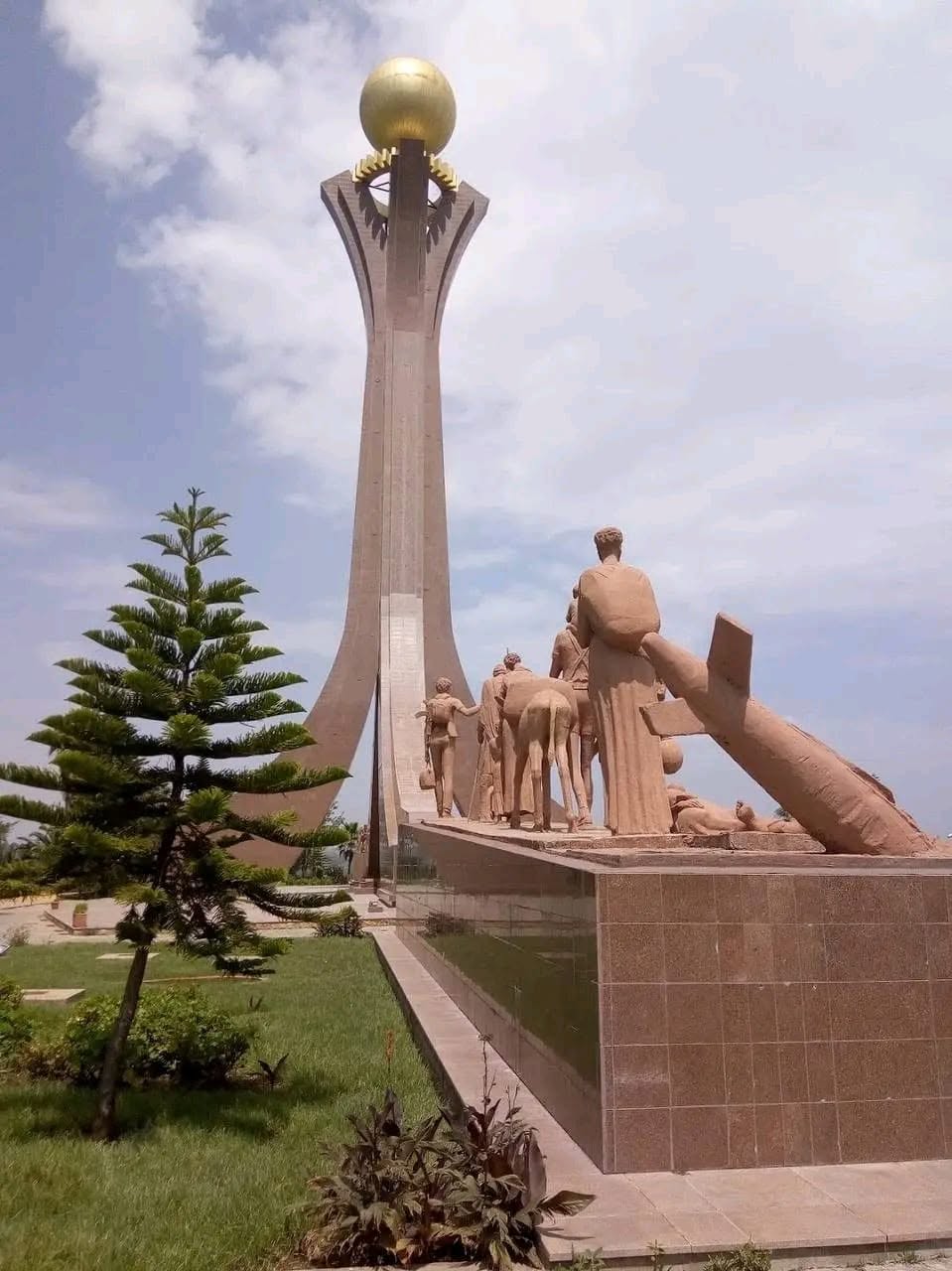
The landscape of Tigray is marked by monuments to these sacrifices, including the Tigray Martyrs’ Memorial Monument in Mekelle.
Historically, when calls to arms were issued, many people in Tigray rallied in defence of their land and freedom. This included resisting the attempt by Abiy Ahmed’s government to subjugate the region by force. The willingness to fight was rooted in a collective narrative that framed sacrifice as noble, necessary, and inseparable from Tigray’s identity.
However, the lies propagated by the TPLF, combined with repeated cycles of war, are forcing many people to question this narrative. Many are recognizing that the sacrifices made during the 2020–2024 war did not end their suffering.
Instead, Tigray has emerged more isolated, impoverished, and traumatised. Worse still, the TPLF continues to forcibly recruit young men and women for another possible conflict.
At present, Tigray is experiencing widespread forced conscription. The youth, however, are actively resisting. Through social media campaigns, they are exposing these practices and drawing attention from mainstream media. Digital activism has become a powerful tool for exposing abuses.
When residents of a district in Mekelle fought back with stones against officials attempting to forcibly take students from a school, the incident was immediately circulated online. The widespread attention forced the mayor of Mekelle to issue what many regarded as a disingenuous apology.
Forced recruitment had reportedly continued for months across Mekelle and other parts of Tigray with the knowledge and approval of the TPLF. The party’s public denial came only after the incident attracted significant online attention and media coverage.
The attempt by TPLF leaders to deny such visible and documented practices raises deeper questions. If they can deny something so widely witnessed, what else have they concealed over the past fifty years?
This moment is prompting a profound re-evaluation of martyrdom. Generations have been sacrificed, yet these sacrifices have failed to deliver prosperity, democracy, or stability. The promise that martyrdom would lead to a better future has not materialised.
Instead, many are confronting the possibility that those sacrifices were exploited to sustain a political project that failed to deliver.
The growing scepticism towards martyrdom is not a rejection of those who gave their lives, but a reassessment of the political structures that demanded those sacrifices. It reflects a determination among young people to break the cycle of war and reclaim a future not defined by perpetual conflict.
Breaking the Silence
For decades, expressing criticism of the TPLF was an inherently risky act. The party governed Tigray with an iron fist, suppressing dissent through every mechanism available.
Labelling opponents as ባንዳ (banda), meaning “traitor”, became a routine political tactic. Through grassroots structures and tight information control, the TPLF cultivated an atmosphere of fear and intimidation.
This created a binary political reality: one was either with the party or against it. Fear of ostracization and being branded a banda discouraged open criticism and stifled debate.
This climate of intimidation culminated in the introduction of a proclamation that effectively seeks to turn Tigray into a police state.
Yet social media has begun dismantling the fear that once silenced the population.
Initially, criticism of the TPLF emerged through anonymous accounts operating under fake names. Over time, many individuals have stepped forward publicly, using their real identities to express their views and expose suffering within their communities.
Only a few years ago, openly reporting forced recruitment or arbitrary arrests was unthinkable. Fear of retaliation prevented people from speaking out, while others believed exposing internal repression would weaken Tigray’s unity and strengthen external enemies, particularly the federal government. In the name of unity, many issues were ignored or concealed.
That dynamic has shifted. There is growing recognition that internal repression can no longer be hidden behind the language of unity. Many within Tigray’s political elite increasingly believe the TPLF must first be confronted before the region’s future can be discussed through genuine internal dialogue.
Social media has made this transformation possible. It has broken the monopoly of fear and created space for grievances to be expressed without permission from those in power. A new generation is challenging the political environment that once suppressed dissent.
Political Sunset
The TPLF’s political legacy is now increasingly contested. Its leaders appear unable or unwilling to recognize that their time may be passing. Although they are unlikely to withstand the youth movement reshaping Tigray’s political landscape, they appear willing to pursue policies that could deepen instability.
A useful historical parallel can be drawn from Winston Churchill’s final election campaign in 1945. During his tour of British cities, Churchill was encouraged by large crowds that gathered to see him. His wife, however, sensed that public sentiment was shifting.
Churchill and his party remained confident of victory, unaware of the changing mood around them. It was only when a stone was thrown at him during his final campaign speech that alarm bells began to ring. As his wife had feared, Churchill lost the election decisively.
TPLF leaders would benefit from hearing a similarly candid warning. They need someone capable of telling them that their political era in Tigray may be ending. If they lack such an adviser, or refuse to listen, the youth of Tigray have already assumed that role.
Through persistent and creative digital activism, young people are making clear that the future does not belong to an ageing political establishment.
The social media movement emerging in Tigray shows no signs of fading. It is driven by a generation that has witnessed war, loss, and manipulation and is determined to build a different future.
The Arab Spring demonstrated how decentralised digital mobilization can undermine entrenched political structures. More recently, youth-led online activism in Bangladesh showed how digital movements can force political change even under repression.
There is little reason to doubt that Tigray’s youth can produce a similar transformation. Their struggle is rooted in lived experience, sustained by digital connectivity, and driven by a desire for peace, accountability, and renewal. As the TPLF’s authority continues to erode, Tigray appears to be entering a new political chapter — one shaped not by a single party’s dominance, but by a generation refusing to inherit a legacy of conflict.
Query or correction? Email us
While this commentary contains the author’s opinions, Ethiopia Insight will correct factual errors.
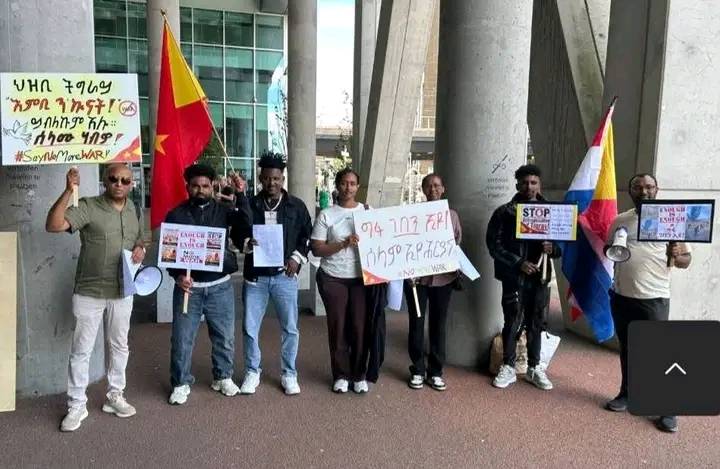
Main photo: Members of the Tigrayan diaspora in the Netherlands take part in a protest against the TPLF’s reported forced recruitment of civilians in Tigray. July 2026. Source: Social media.
Published under Creative Commons Attribution-NonCommercial 4.0 International licence. You may not use the material for commercial purposes.