This sweeping wartime law threatens rights, dissent, and due process.
When I first read Proclamation No. 366/2018, prepared under the authority of Tigray’s reinstated prewar council, I did not initially believe what I was reading. It is a 44-page, 81-article instrument presented as a defense proclamation to “safeguard the existence and security of the people of Tigray”. In structure, however, it is far more than a wartime administrative measure.
The proclamation opens with an existential preamble. It defines an expansive “enemy” and extends its reach to persons inside and outside Tigray. It imposes compulsory mobilization duties and establishes wartime institutions under presidential command. It criminalizes obstruction of recruitment, criticism of military mobilization, and media activity.
It introduces broad crimes against Tigray’s constitutional order and sovereignty, authorizes death penalties, restricts bail, permits trials in absentia, allows anonymous witnesses and closed hearings, and grants warrantless arrest and search powers. Some of its gravest provisions are made retroactive to 3 November 2020.
This is not a normal law. It is not even an ordinary authoritarian law. Compared with the restrictive legal instruments used by Abiy Ahmed’s government, including states of emergency, security prosecutions, and laws constraining speech, this regional proclamation stands out for its concentration of brutality.
We have not seen, from the federal government, a single legal instrument of this kind that so openly combines forced mobilization, media repression, retroactive criminal punishment, exceptional procedure, warrantless security powers, and death-penalty crimes within one regional framework.
This is TPLF’s brutal machinery of law.
I analyze it as law not because it deserves legal dignity — it does not — but because it may be imposed on the people of Tigray by force through police, prosecutors, courts, security organs, local administrations, and military structures. A document can be illegitimate and still ruin lives if armed institutions enforce it. That is why it must be challenged before it becomes normalized.
Manufacturing Enemies
The first defect is constitutional. Tigray, as a regional state within Ethiopia’s federal order, does not have unlimited authority to enact a sweeping criminal-security code covering treason, espionage, territorial sovereignty, constitutional order, military mobilization, media licensing, special criminal procedure, and the death penalty.
A regional state is not a sovereign republic. It cannot legislate as if it possesses independent authority over war, national defense, external enemies, and capital punishment.
The problem is even deeper because the institution claiming to enact this proclamation is itself defective. The prewar council reinstated by the TPLF has no credible constitutional mandate in 2026. Its political authority expired long ago.
Tigray has passed through war, the Pretoria Agreement, an interim administration, fractured political leadership, and a collapse of normal constitutional continuity. A body that lacks democratic legitimacy cannot return through factional control and claim authority over life and death.
This is foundational illegality, not procedural inconvenience. A constitutionally defective council cannot create crimes, define enemies, impose compulsory military service, deny bail, authorize warrantless searches, or approve a death penalty framework.
When an unlawful authority drafts a criminal code, the result is organized coercion wearing legal language.
Article 2 defines “enemy” with frightening breadth. It does not merely cover an armed force attacking Tigray. It includes any state, group, force, person, or body that directly or indirectly harms the psychological, economic, or national interests of the people of Tigray. This is political elasticity designed for abuse.
Such a definition could reach an opposition party criticizing mobilization, a journalist reporting forced recruitment, a diaspora activist condemning the TPLF, a former official challenging the restored council, or an ordinary citizen questioning war policy. Once “enemy” includes indirect psychological or economic harm, almost any dissent can be reframed as hostile activity.
Article 4 then extends the proclamation to persons inside or outside Tigray, regardless of citizenship or place of origin. The effect is an extraterritorial ambition without constitutional foundation.
A disputed regional body is attempting to project criminal authority beyond Tigray’s territory, potentially over diaspora speech, international advocacy, foreign-based media, and political criticism abroad. A law that defines the enemy everywhere can turn anyone into an enemy.
Criminalizing Society
Article 5 declares that eligible Tigrayans have a duty to answer a call for resistance or defense. Article 8 punishes failure to join the Tigray Army or perform frontline or rear duties after being called. It allows fines, detention for nonpayment, and compulsory performance. Article 16 punishes officials or responsible persons who exempt eligible individuals from national duty.
Article 17 is one of the most dangerous provisions. It punishes hiding a person required to fight, assisting deserters, obstructing recruitment, or using media or other methods to prevent the people or army from participating in resistance. In aggravated cases, penalties may reach 15 to 25 years. Media institutions may face fines, license cancellation, and confiscation.
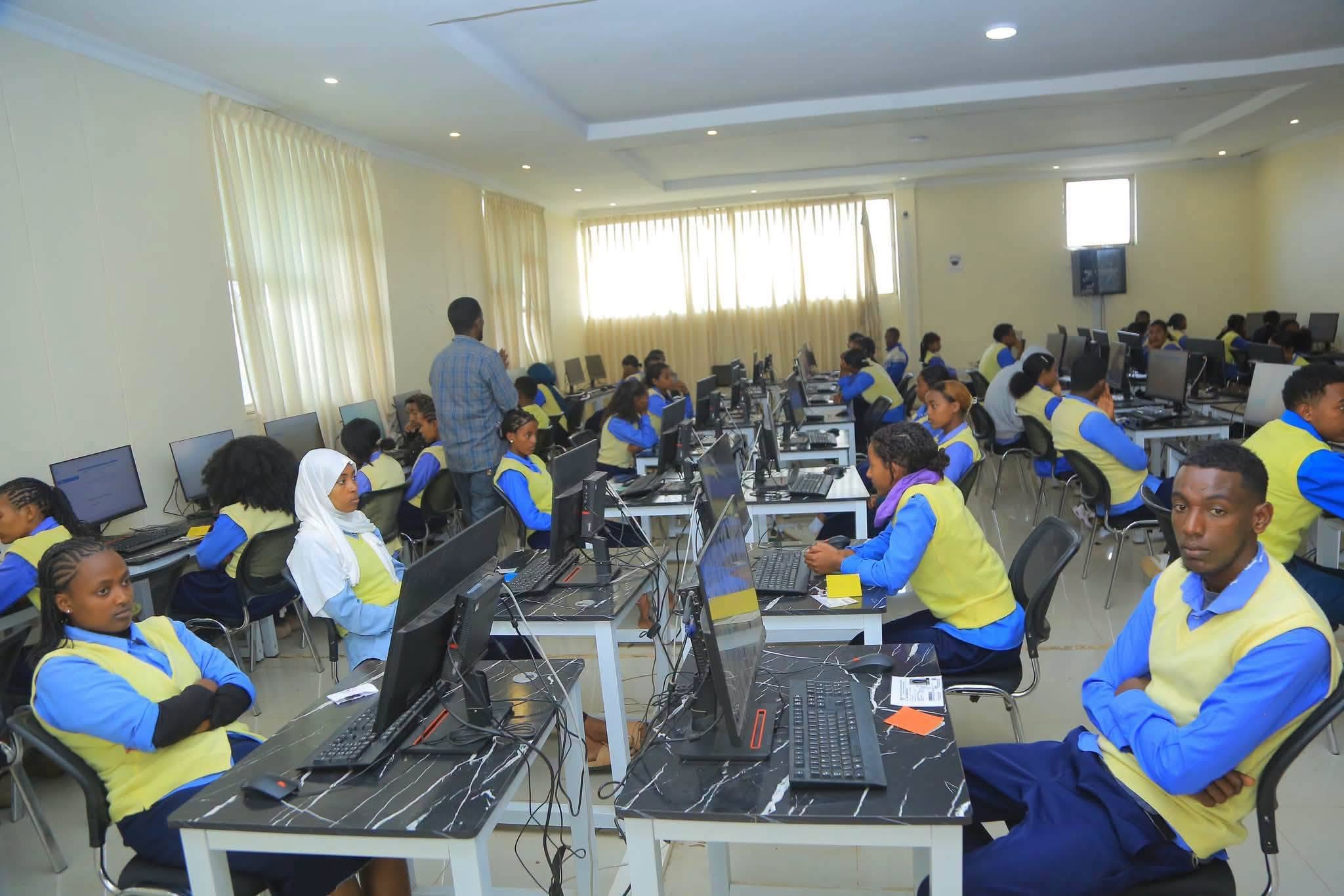
The provision cannot be read outside Tigray’s current reality. Reports of forced recruitment have emerged from multiple areas of the region. Young people, including students, have reportedly been pressured, detained, rounded up, or compelled into military structures. Against that background, Article 17 appears designed to criminalize public resistance to coerced recruitment.
A mother hiding her son from another war could become a criminal. A journalist reporting recruitment abuses may be accused of discouraging mobilization. An opposition party condemning coercion may be prosecuted for obstructing defense. A rights advocate documenting the detention of youth may be treated as weakening the army.
Article 18 punishes speech, writing, images, or other expression that diminishes the honor of “the struggle”, sacrifice, fighters, families of fighters, Tigray’s mothers, people, flag, and anthem. It is drafted in the vocabulary of reverence, but its legal function is repression.
“Diminishing honor” is an ideological weapon. It can be used against journalists, artists, historians, activists, grieving parents, political opponents, and citizens who criticize commanders or question the human cost of war. It turns memory into a state-controlled field.
Tigray needs honest debate about sacrifice, leadership, accountability, and the future of its youth. Article 18 would replace that debate with a criminalized mythology.
Lawless Justice
The gravest danger lies in the death-penalty architecture. Article 36 punishes crimes against the constitutional order of Tigray and allows life imprisonment or death where the act gravely disrupts public peace and security.
Article 38 allows life imprisonment or death for inciting war in aggravated circumstances. Articles 39 and 40 punish acts against Tigray’s political sovereignty, territorial integrity, unity, or constitutional territory, again allowing life imprisonment or death.
Article 44 punishes collaboration with the enemy, including propaganda, information, economic support, transport, or other cooperation. Article 45 punishes espionage. Article 46 punishes genocide and includes starvation as a weapon of war or blocking food and medicine into Tigray.
Some of these subjects are serious in any legal system. Espionage, genocide, war crimes, and collaboration with hostile forces may properly be criminalized by lawful authorities under clear standards. But here the framework is fatal: vague political-security crimes are drafted by an illegitimate regional authority, enforced through militarized institutions, and attached to irreversible penalties.
The death penalty cannot be placed inside a factional legal order built on broad enemy definitions and weak safeguards.
The procedural provisions complete the machinery. Article 63 denies bail for offenses punishable by 15 years or more. Because many offenses are broadly framed and heavily punished, detention could become routine in political-security cases.
Article 66 permits trial in absentia for offenses punishable by more than five years after public notice. In a society marked by displacement, fear, disrupted communication, and political fragmentation, this is an invitation to judgment without meaningful defense.
Article 68 allows anonymous witnesses, testimony behind screens, closed hearings, and broad evidentiary admission. Articles 74 and 75 authorize warrantless arrest and search in broad security circumstances, including at any time and place for crimes against Tigray’s existence and security. This is security rule with judicial decoration.
Article 70 provides that a death sentence becomes enforceable only upon approval by the President, who may commute it to life imprisonment. The same political structure that commands the army, leads mobilization, and defines existential enemies is given the final gatekeeping role in executions. That is a devastating collapse of separation between political command and criminal punishment.
Article 81 makes Articles 35 through 48 retroactive to November 3, 2020. Retroactive criminal law is one of the clearest signs of abusive legality. It allows authorities to rewrite the past, select enemies after the fact, and transform old political disputes, wartime associations, survival decisions, media work, or factional disagreements into present crimes.
Legal Resistance
Accountability for atrocities is essential. But accountability requires lawful authority, independent institutions, clear crimes, fair procedure, and non-retroactive standards. Retroactivity in the hands of a disputed political body is revenge by proclamation.
This illegitimate proclamation must be challenged domestically, even if many Tigrayans understandably distrust federal courts because of lack of representation, political bias, and the federal government’s own failures.
Distrust of federal institutions cannot mean surrendering the legal field. Constitutional challenges, public interest litigation, professional statements by lawyers, rights petitions, and coordinated legal objections should be filed from the beginning.
At the same time, international mechanisms must be activated. Communications should be submitted to UN Human Rights Council Special Procedures, including mandates on arbitrary detention, freedom of expression, extrajudicial executions, the independence of judges and lawyers, torture, and human rights defenders. Regional and intergovernmental human rights bodies should also be engaged.
The federal government appears unable or unwilling to stop this from the beginning. Addis Ababa’s failures in implementing the Pretoria Agreement, protecting civilians, enabling the return of displaced people, and creating a credible political settlement have helped produce the vacuum in which this proclamation is emerging. But federal failure cannot excuse TPLF authoritarianism. One abusive order cannot legitimize another.
Tigray faces real danger. That danger cannot be answered by a regional death penalty code imposed by a council without legitimacy. A wounded society needs civilian protection, constitutional restoration, accountable leadership, independent courts, free media, and a credible peace process.
Proclamation No. 366/2018 should be challenged, withdrawn, and defeated before it becomes a machinery of fear over the people it claims to defend.
Query or correction? Email us
While this commentary contains the author’s opinions, Ethiopia Insight will correct factual errors.
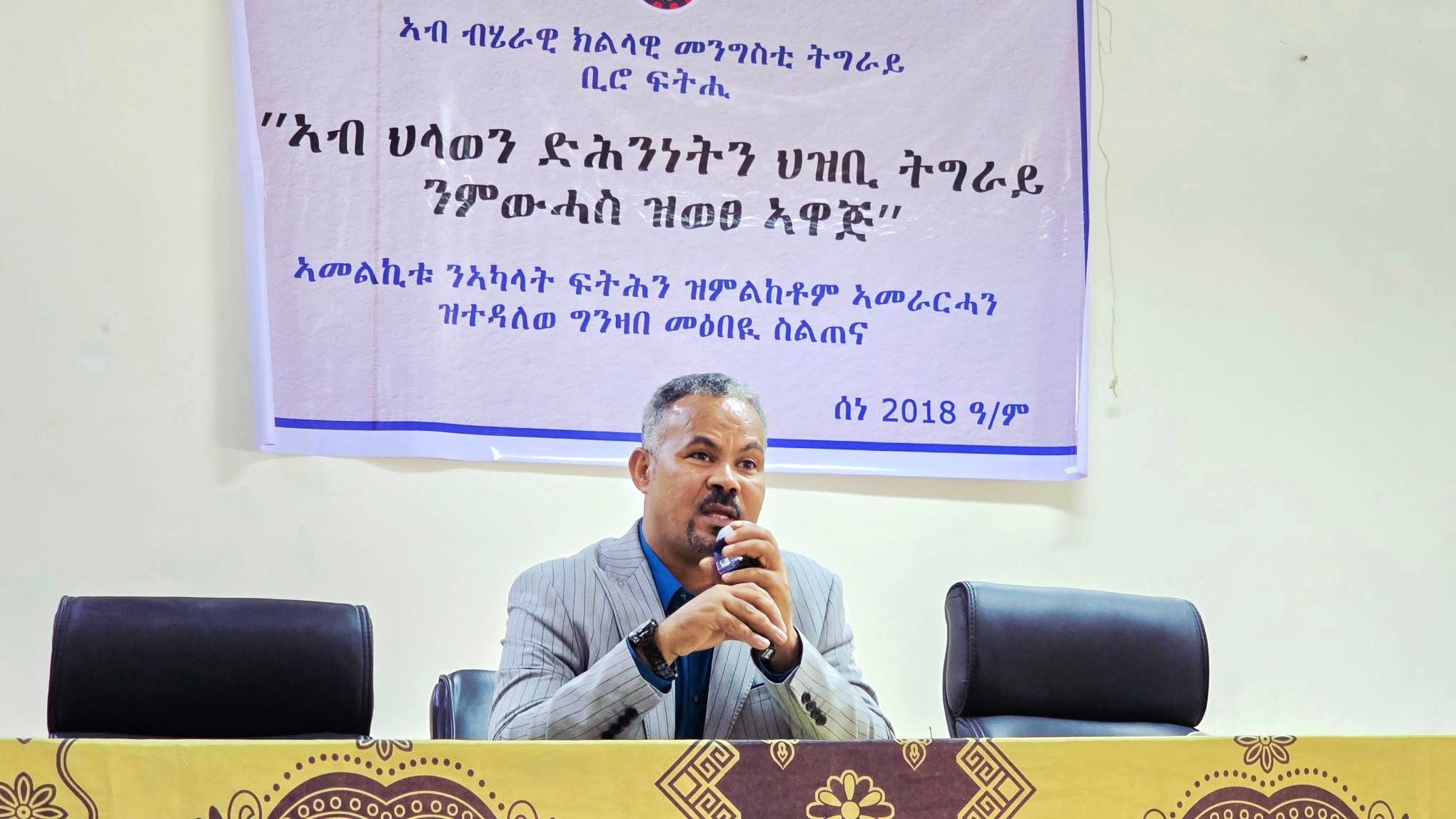
Main photo: Amanuel Assefa, Deputy President and Head of the Bureau of Justice, in a meeting with judicial officials discussing wartime legislation in Mekelle, 12 June 2026. Source: Office of the President, Tigray.
Published under Creative Commons Attribution-NonCommercial 4.0 International licence. You may not use the material for commercial purposes.