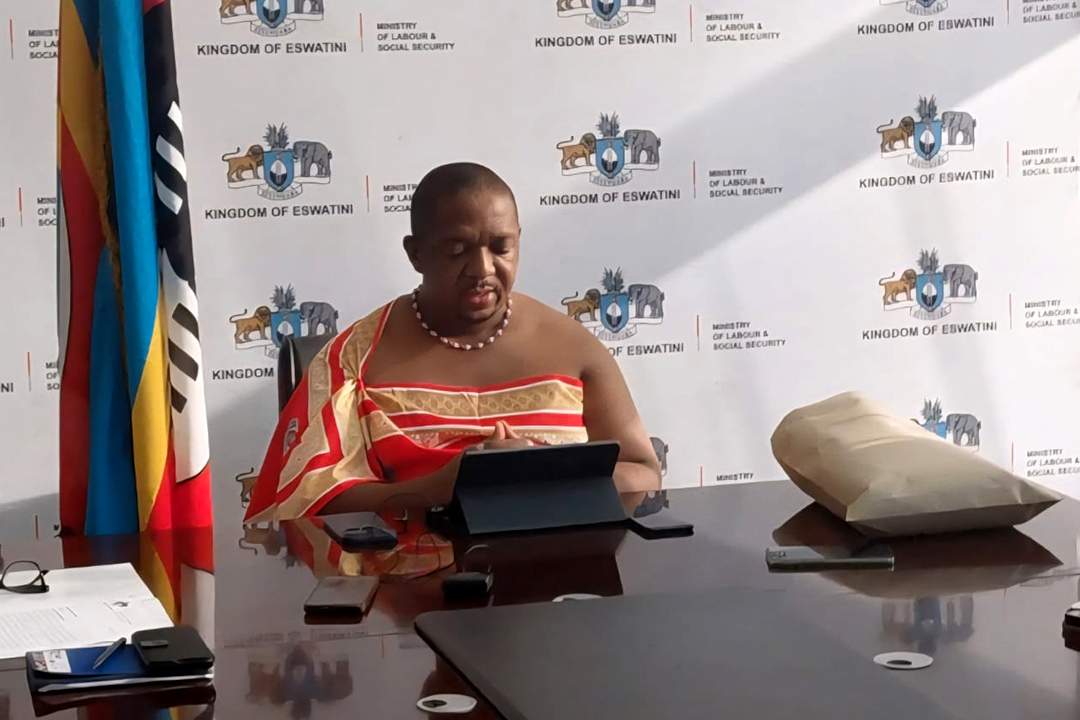
… CBE insists tender followed all legal requirements
… 30% local participation rule remained non-negotiable
… Bank says E2.79 billion project on track
… Warns against anti-investor narratives
… Eswatini remains open for business
BY MBONGENI NDLELA
MBABANE – Central Bank of Eswatini (CBE) Governor Dr Phil Mnisi has come out strongly in defence of the Bank’s procurement processes and the Kingdom’s investment climate, warning that calls to exclude companies with foreign shareholding from public tenders could undermine investor confidence and damage Eswatini’s reputation as a business-friendly destination.
In a media statement issued on Monday, Dr Mnisi addressed concerns raised in a Sunday Times article that questioned the participation of companies with foreign shareholding in public procurement processes, including the highly publicised Central Bank headquarters development project.
The Governor stressed that the Central Bank operates strictly within the country’s legal framework and cannot discriminate against legally registered companies simply because they have foreign shareholders.
“The Constitution of the Kingdom of Eswatini, the Public Procurement Act, the Eswatini Investment Promotion Act and regional investment agreements all provide for fairness, transparency and non-discrimination,” said Dr Mnisi.
He argued that economic empowerment and local participation should be promoted through lawful mechanisms rather than exclusionary practices that could violate existing laws and investment agreements.
Investor Confidence at Stake
The Governor warned that narratives portraying foreign-owned or foreign-partnered companies as unwelcome could have far-reaching consequences for the country’s economy.
He said foreign investors contribute significantly to job creation, skills transfer and capital inflows, while also helping to create competition that ensures value for money in public procurement.
According to Dr Mnisi, discouraging foreign participation could send negative signals to both domestic and international investors, who view policy consistency and regulatory certainty as critical factors when making investment decisions.
His intervention comes at a time when Eswatini continues to position itself as an attractive destination for foreign direct investment in sectors such as manufacturing, mining, infrastructure, financial services and technology.
Economic analysts have long argued that attracting investment while simultaneously empowering local businesses requires a delicate balance between openness and citizen economic participation.
Dr Mnisi maintained that the country’s laws already provide avenues for supporting local businesses through targeted empowerment programmes, local content requirements where legally permissible and capacity-building initiatives.
CBE Project Under Spotlight
The Governor also addressed concerns surrounding the Central Bank’s flagship construction project, which has generated significant public interest.
He dismissed suggestions that the procurement process was unfair, insisting that the tender was conducted in accordance with international best practices and included adequate safeguards for transparency and accountability.
Dr Mnisi revealed that, from the outset, the Bank made it clear that firms participating in the project were required to include at least 30 percent local shareholding by construction companies.
He noted that bidders who failed to meet this threshold were automatically disqualified.
The Governor further disclosed that some local contractors had requested that the Bank reduce the mandatory local participation threshold from 30 percent to 10 percent. However, the Bank refused in order to preserve meaningful participation by emaSwati-owned companies.
“This demonstrates that the Bank was not seeking to exclude local firms but was, in fact, actively promoting their involvement,” he said.
Project Value Clarified
In another key revelation, Dr Mnisi clarified that the contract awarded for the project is valued at E2.79 billion, not the E2.9 billion figure that has been widely reported in some quarters.
He explained that the project was awarded as an Engineering, Procurement and Construction (EPC) contract, which places responsibility on the contractor to deliver the project within agreed specifications, timelines and costs.
The Governor also pointed out that all payments under the contract are made in Emalangeni through local commercial banks, ensuring that a significant portion of the project’s financial activity remains within the domestic economy.
Where funds leave the country, he said, it is primarily for the procurement of specialised equipment, scarce expertise and construction materials that are not readily available locally.
Local Firms Partnered with Foreign Companies
One of the most notable disclosures in the statement was that the top three locally registered contractors on the Construction Industry Council registry all participated in the bidding process alongside foreign partners.
According to Dr Mnisi, this reflects the reality of modern infrastructure development, where local and international expertise often combine to deliver large-scale projects.
He emphasised that all bids were evaluated strictly on merit, pricing and compliance with procurement requirements before the winning bidder was selected.
Eswatini Open for Business
Beyond the tender controversy, the Governor’s statement carried a broader economic message.
He reaffirmed the Central Bank’s commitment to supporting Government’s objectives of inclusive economic growth, resilience, sustainable development and the attraction of foreign direct investment.
“Eswatini remains open for business,” declared Dr Mnisi, urging all stakeholders to contribute constructively towards a shared vision of prosperity for the Kingdom.
For Dr Mnisi, the issue extends beyond a single tender. It is about protecting investor confidence, safeguarding the country’s reputation and ensuring that Eswatini remains firmly open for business.
Post Views: 73