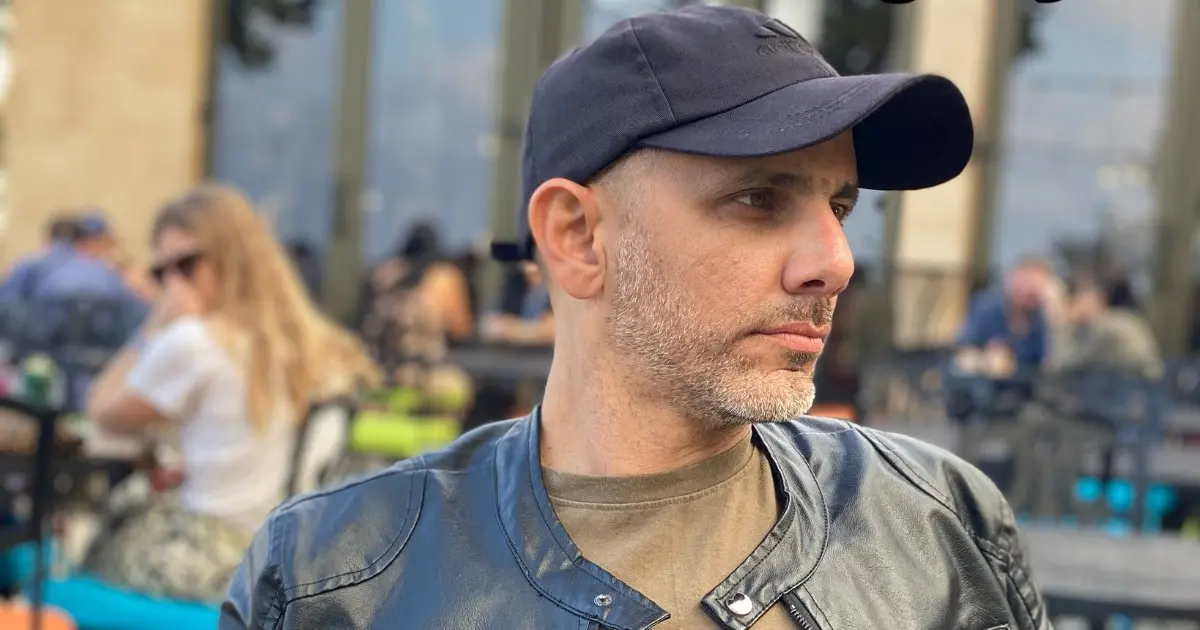
Imprisoned Cuban independent journalist Henry Constantin, File photo: Facebook / Henry Constantín Ferreiro
By Lien Estrada
HAVANA TIMES – During a visit to a librarian friend in Camagüey, I learned that a meeting had been held at his workplace. At the meeting, employees were informed that everyone who contributed to the independent publication La Hora de Cuba was on the government’s blacklist (a way of saying that you are on the country’s political police watchlist). I remember bursting out laughing. Me, blacklisted by a government that calls itself Communist, just for sharing my opinions in a friend’s independent project? I found the whole thing laughable.
If I were threatening society or causing it harm in some way, whether material or spiritual, it might be understandable. But putting my observations and opinions about what I experience into writing… Is that really so dangerous that I should be blacklisted? At the time, 80% of the contributors were women.
On February 15, 2020, I was prevented from traveling to Bogotá, Colombia. I was pulled out of the line and told to wait. Then I was taken into an office, where I was informed that I was under a travel restriction. In other words, I was unable to make my planned trip, even though I had my ticket and all my documents were in order. That is what it means to be blacklisted in Cuba. Even if you complete all the required procedures, or are theoretically entitled to do so, the Communist government claims the authority to prevent you from taking certain actions or carrying out any process whenever it sees fit.
Right now, independent journalist Henry Constantin Ferreiro has been released from a punishment cell, but he has not yet been freed. He remains at a detention facility in Camagüey known as Kilo 7. He is the director of La Hora de Cuba, founded in 2013. That, too, is an example of what can happen when you are blacklisted.
Another example is when police officers show up at your home with a summons from State Security and order you to meet with them. Failing to appear can be very dangerous: you could be charged with disobedience. Under the guise of a conversation, they try to conceal the reality: it is an interrogation intended to intimidate you into stopping whatever they consider wrong (illegal), even though, from your perspective, you are simply expressing your opinions.
I imagine that, as Cuba continues to fall apart, the number of people placed on these blacklists grows by the day. The exodus becomes ever more intense. Possible solutions to the country’s economic and social chaos remain nowhere in sight. And it is painful to witness the strategies used by State Security to silence an entire people while trying, at all costs, to portray the country as peaceful and full of hope.
For my part, despite all the exhaustion, losses, and fears I have endured, I take pride in being blacklisted in my own country for these reasons. I am grateful to life for the reward I already feel in knowing that I am not among those who repress others for expressing their feelings, but rather among those who, at some point, asked themselves: Why shouldn’t I share my ideas, experiences, and aspirations…? And I did.
I trust, and my intentions and work are devoted to making it happen, that sooner rather than later I will be able to live in a free, democratic country. A country where no one is punished for creating an independent project. Where speaking one’s mind does not come at such a high price.
Read more from Lien Estrada’s diary here on Havana Times.