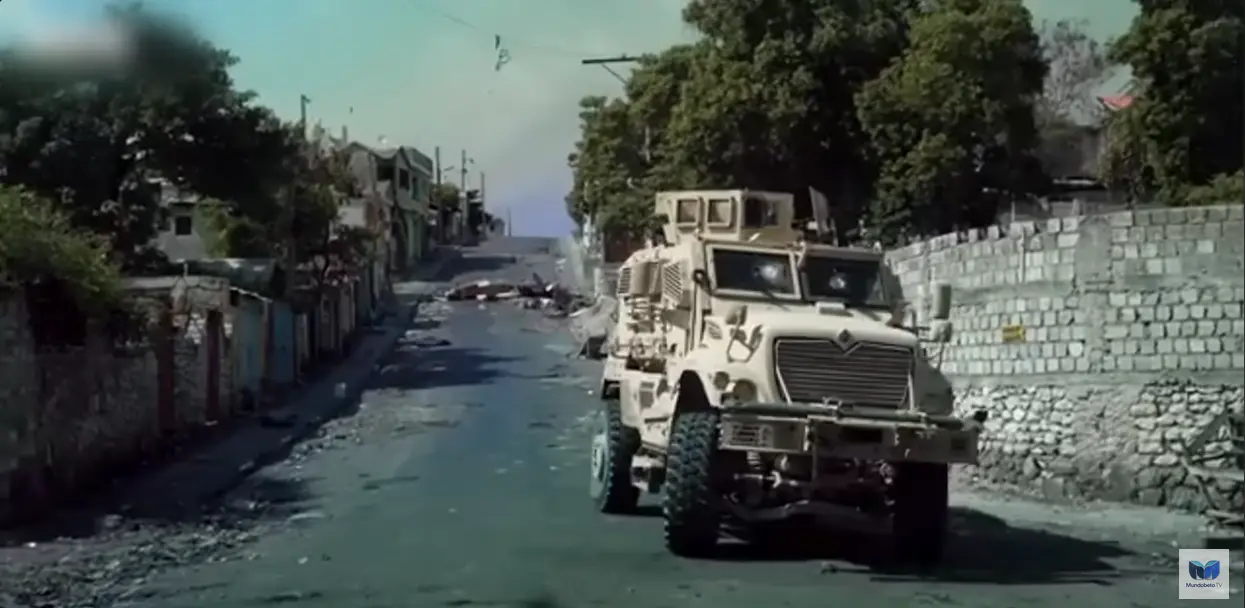
Screenshot BBC in Haiti
By Angry GenXer
HAVANA TIMES – Criminal violence, even in its most extreme forms, is becoming endemic in Cuba.
While at the beginning of this year the most common topics of everyday conversation were the possibility of US intervention and the deportation of Cubans from that country, today the most frequently discussed issues in streets and neighborhoods are the lack of basic services (electricity and water), runaway inflation, and what we might call “the people’s crime blotter.”
A youth gang robbed a small business in Havana, and the police arrived too late.
A couple riding a motorcycle at night near the town of Jaruco were left bleeding profusely on the road, their faces disfigured and their vehicle stolen. Miraculously, they survived, but neither the perpetrators nor the motorcycle were ever found.
A man wearing a doctor’s coat entered the waiting room of Havana’s prestigious Institute of Cardiology, approached a nurse who was talking on her cell phone, held a knife to her throat, and stole her phone. That was the end of the story, with patients and medical staff left in a state of panic and the authorities taking no action whatsoever.
A farmer had a pair of oxen stolen. The police arrived a week after the incident, the animals were never recovered, and, to make matters worse, the courts ordered the farmer to pay a hefty fine for “failing to protect” a resource considered important to the State.
Stories abound of organized gangs operating in communities across the country, generally calling themselves “Los 300” (The 300), and terrorizing residents who possess anything of value.
Tourists are victims of robberies and scams.
All these incidents are recounted among neighbors and on social media. Even well-known intellectuals and other public figures report burglars breaking into their homes in neighborhoods once considered safe, such as Havana’s El Vedado.
Sometimes people manage to take justice into their own hands, resorting to vigilante violence before law enforcement officers arrive.
In any case, Cuba has lost its former, much-publicized status as a “safe country.”
“Things Are Even Worse Than Haiti Here!”
This phrase has been used in Cuba for years. Our neighboring country is perceived here as an example of extreme poverty. But today, comparisons with Haiti increasingly refer to crime: there, criminal gangs have virtually taken control of the country.
Although high levels of organized crime and gang activity have historically existed in other, more developed and “institutionalized” Latin American countries, such as Mexico, Colombia, and Venezuela, Haiti has become a symbol of the complete breakdown of “law and order.”
What Cuba is experiencing today shares this characteristic. For example, in cases involving stolen cell phones, the police simply refuse to accept complaints from victims, resorting to the legally nonexistent term “theft due to carelessness,” which shifts the blame onto the victim.
It is common to hear Cubans say, “You get robbed and the police are nowhere to be found, but if someone writes something against the government on a wall, the street immediately fills up with patrol cars.”
In recent days, Haiti has become a territory subject to military intervention by El Salvador: President Bukele sent thousands of troops to the Caribbean country with the stated purpose of combating the power of the gangs.
“What We Need Here Is a Bukele!”
Haiti — which came to be ruled by gangs — and El Salvador — under Nayib Bukele’s iron-fist policies — now represent two opposing models through which a large segment of the Cuban population envisions the country’s immediate future.
Bukele’s success in applying the familiar policies of “iron-fist rule” and “zero tolerance” against actual and suspected gang members, breaking the power of the notorious Salvadoran maras, whose reach had already become transnational, has made him a leading example for advocates of “law and order” around the world. El Salvador is now one of the safest countries in the Americas, and its president enjoys undeniable popularity among a large portion of the population, particularly since he has also undertaken certain social development projects.
In Cuba, whenever news of another notorious crime circulates, the phrase “what we need here is a Bukele” inevitably appears in everyday conversations and social media comments.
There are also those nostalgic for pre-1959 Cuba (even within the “revolutionary” camp), who claim that “this didn’t happen under Batista.” In such comments, many self-described “dissidents” even attempt to justify Batista’s repression of political opponents during his 1952–1959 dictatorship, which included systematic torture and extrajudicial executions. These are people who consider it acceptable to apply violent, extreme, and drastic measures against those who threaten public order. Human rights thus become a secondary concern, if they are mentioned at all.
There are also those who advocate US intervention (as in 1898) as a means of restoring order.
People here also talk a great deal about reinstating capital punishment. The death penalty has not been abolished in Cuba, but an informal moratorium on its use has been in place since 2002. Murders, rapes, and violent robberies are the crimes that most frequently provoke such opinions among the Cuban public.
I believe a new “iron-fist” regime would put an end to the possibility of a “democratic” political opening, as desired by the opposition. This is without even mentioning possible consequences such as the militarization of neighborhoods (as happened in Brazil’s favelas) and the criminalization of poverty and protest.
Such a scenario in the potentially near future could open the door to a far-right dictatorship enjoying broad public support. Many people — perhaps the majority — would prioritize “security,” provided they had some access to basic consumer goods and at least theoretical opportunities to “prosper” economically (another condition would be reaching some form of agreement with the United States), over freedom of expression, the release of political prisoners, and the civil rights so strongly demanded by the Cuban opposition both inside and outside the country.
I believe Cuba deserves an alternative to Haiti’s rule by gangs and Bukele-style authoritarianism. Only with genuine human freedom can true public order exist.
Read more from Cuba here on Havana Times.